Lithuania in August: Weather, Crowds and Worth It
August is Lithuania's warmest month: mild Baltic beaches, long days in Vilnius and Trakai, and peak-season prices. Here is who it suits, and who should wait.
On this page
August is the safest bet for a warm-weather trip to Lithuania, but it is warmth on Baltic terms, not Mediterranean terms. You get long daylight, green countryside, working ferries to the Curonian Spit and a full events calendar in Vilnius, paid for with the year's highest prices and the thickest crowds. If your group wants a city-and-coast holiday and can book early, August delivers; if you want quiet cobbles or a cheap trip, it does not.
The trade-off is easy to state. Inland Vilnius averages roughly 22°C (72°F) in August, but the coast at Klaipėda and on the Curonian Spit cools sharply when the Baltic breeze picks up after sundown, so beach plans need a layer for the evening. Read this alongside our honest verdict on whether Lithuania is worth visiting, and the rest is about timing your days around the crowds.
The verdict
Go in August if you want the best odds of dry, mild days, a working beach season on the Curonian Spit and long evenings in Vilnius, and if you are happy to book transport and castles ahead. Skip it if your idea of a Baltic trip is empty old towns, shoulder-season prices or guaranteed 30°C (86°F) beach heat. Couples and families with school holidays get the most out of it; budget travelers and photographers chasing moody light should look at September.
August is also the month when the coast and the capital both operate at full capacity, so the value of your trip depends less on luck than on sequencing: city first, coast second, with a day trip slotted into the city block. That pattern lets you use the long daylight hours in Vilnius and save the sea for the warmest stretch of your trip.
August weather in Vilnius and on the coast
Typical August conditions in Vilnius run to average highs near 22°C (72°F) and lows around 11°C (52°F), and a country-level climate chart for the city puts August rainfall at about 72 mm for the month. Treat these as climate normals rather than a forecast: a given August can bring cooler, wetter spells or a short run of days well above average. Evenings genuinely cool down, so a jacket earns its place in your bag.
A country-level climate chart covering both Klaipėda on the central coast and Vilnius near the Belarus border shows the same shape: July and August are the warmest months, with July marginally ahead and August slightly drier than July in that table. It also notes that the Baltic Sea breeze can drop coastal temperatures quite dramatically, which is the single most useful thing to know before you plan a beach day.
Rain comes as showers rather than all-day drizzle, so the practical response is a waterproof shell and a flexible plan rather than an umbrella-and-hide strategy. Keep a museum or a covered market as your wet-weather swap, and check the radar the morning you plan to be on the spit, where shelter is scarce and the wind is stronger.
Why the coast feels cooler than inland
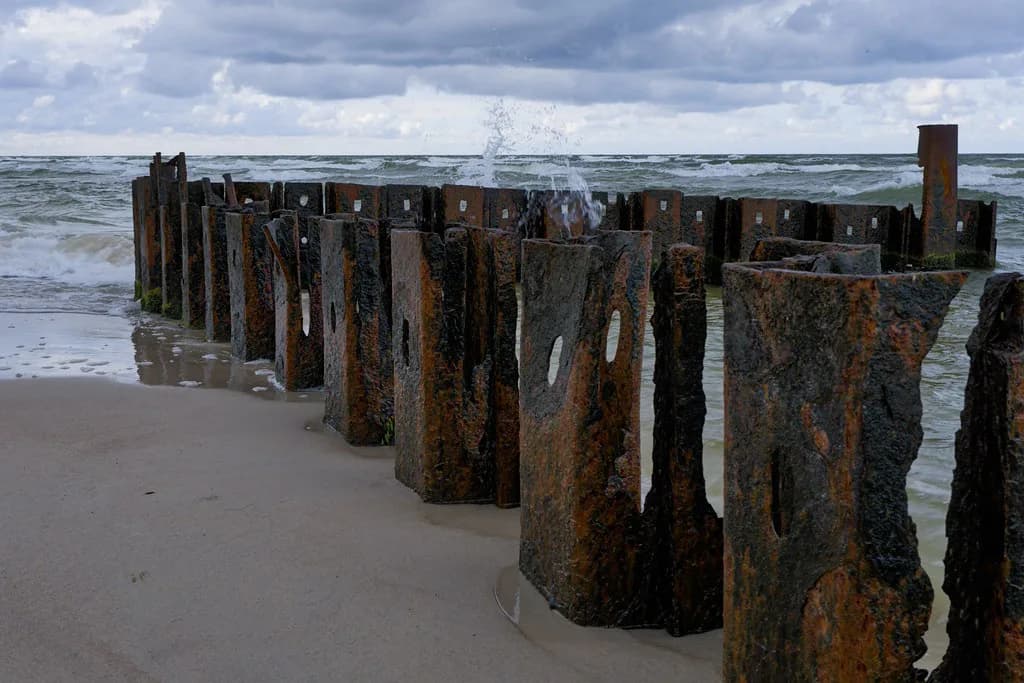
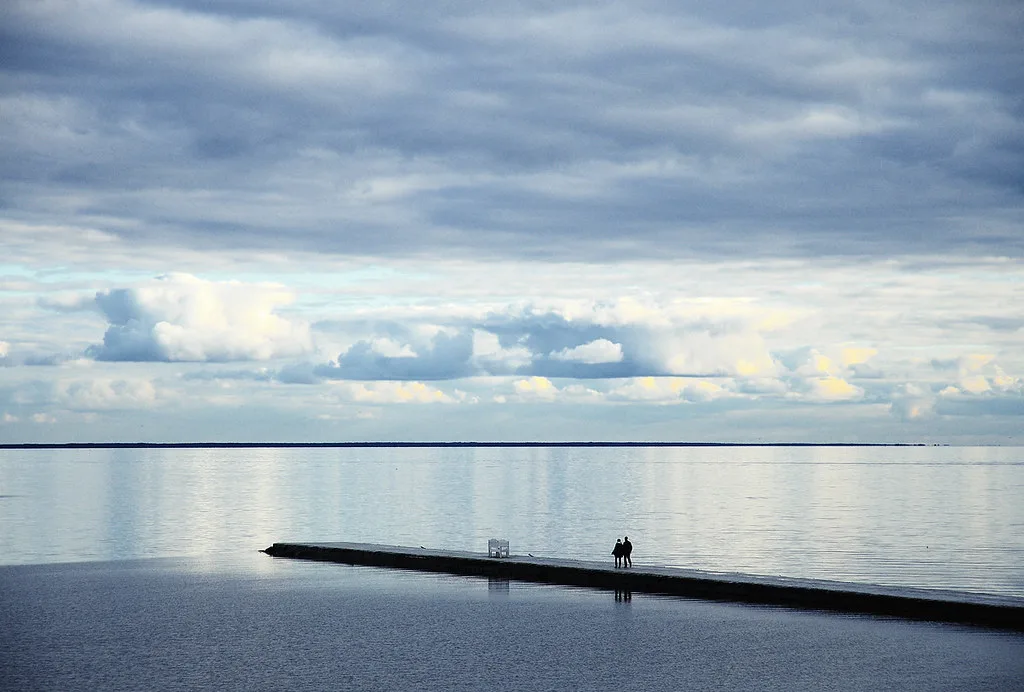
Klaipėda, Palanga and the Curonian Spit sit on the open Baltic, where the sea breeze keeps daytime highs lower than in Vilnius and makes the evening air cool enough for a jumper even in mid-August. That is good news for walkers and cyclists on the spit and less good for anyone expecting to swim in warm water; the sea here is bracing rather than balmy, and most people treat it as a quick dip between beach walks.
The upside is that coastal August rarely feels oppressive, so you can hike the dunes or ride the spit's cycle paths in comfort while inland Lithuania can turn sticky. Plan beach time for the middle of the day and save the evening for Nida's harbour or a Klaipėda old-town stroll, rather than expecting a warm night on the sand.
Vilnius in August
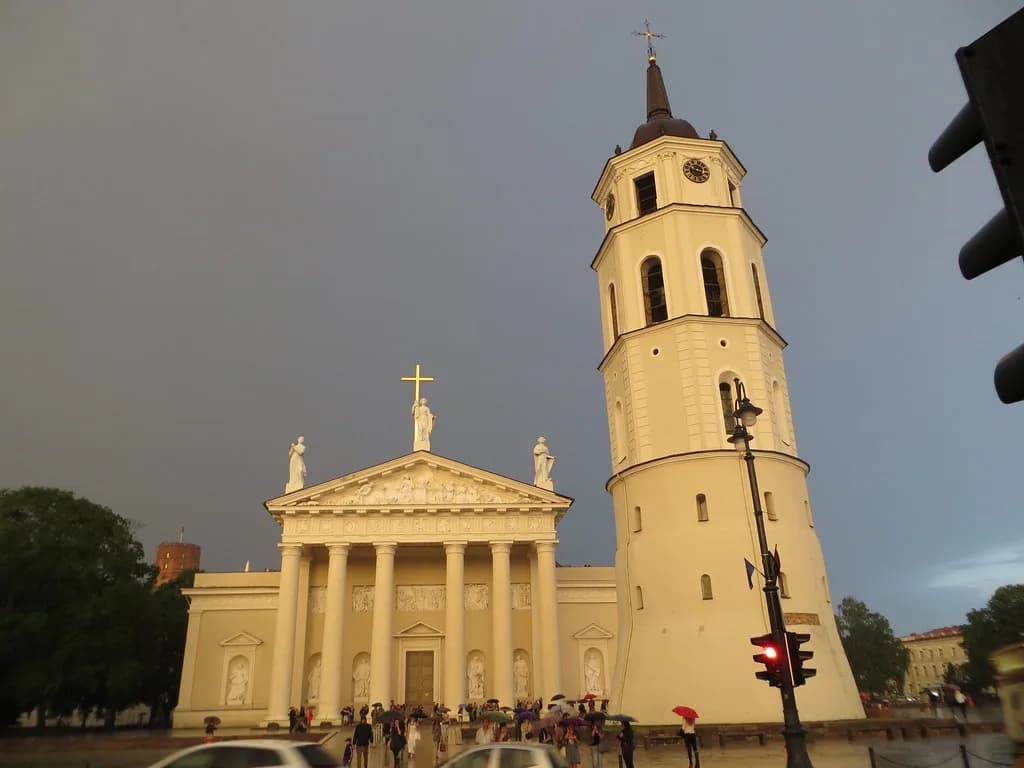
Vilnius in August is at its most sociable, with cafe terraces full and the UNESCO-listed Old Town busy but walkable. Start at Gediminas Castle Tower for the city view, wander the baroque lanes toward the Gates of Dawn, then cross the river into Užupis, the self-proclaimed artists' republic with its wall-mounted constitution. The Museum of Occupations and Freedom Fighters, housed in a former KGB building, is the city's most sobering and most worthwhile indoor stop.
Long daylight is the real August advantage in the city: you can fit a full day of sightseeing and still have light for an evening walk along the river. Two full days covers the Old Town, Užupis and one museum comfortably; a third day is best spent on a day trip rather than adding more churches.
Day trips from Vilnius: Trakai and beyond
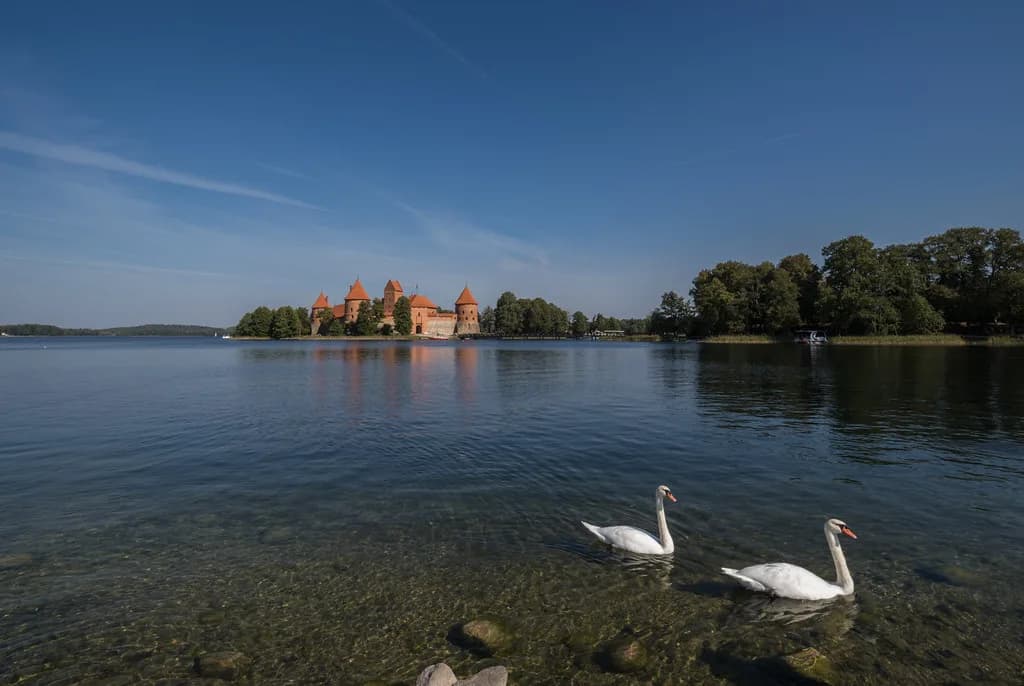
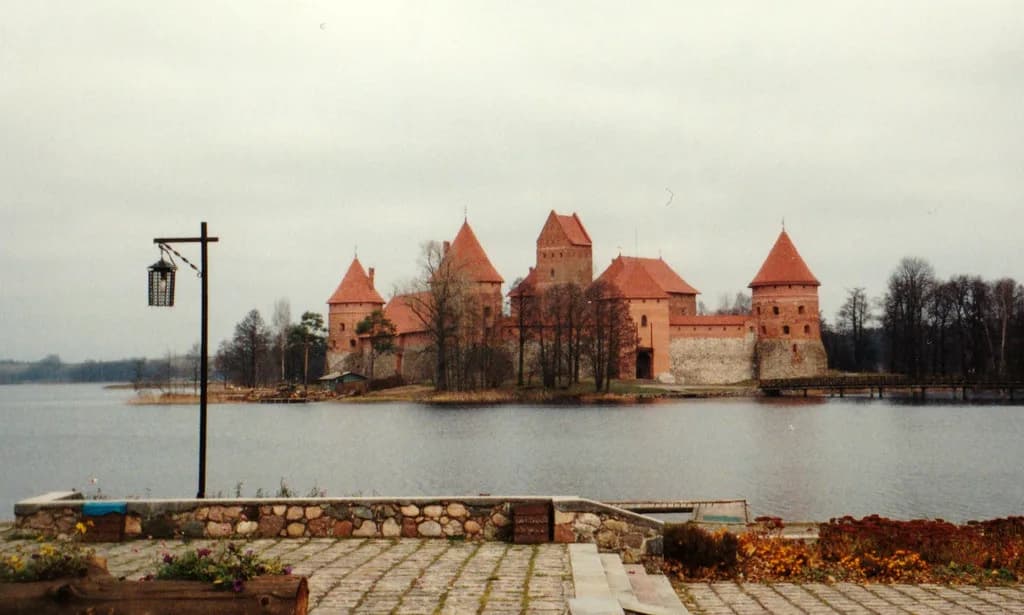
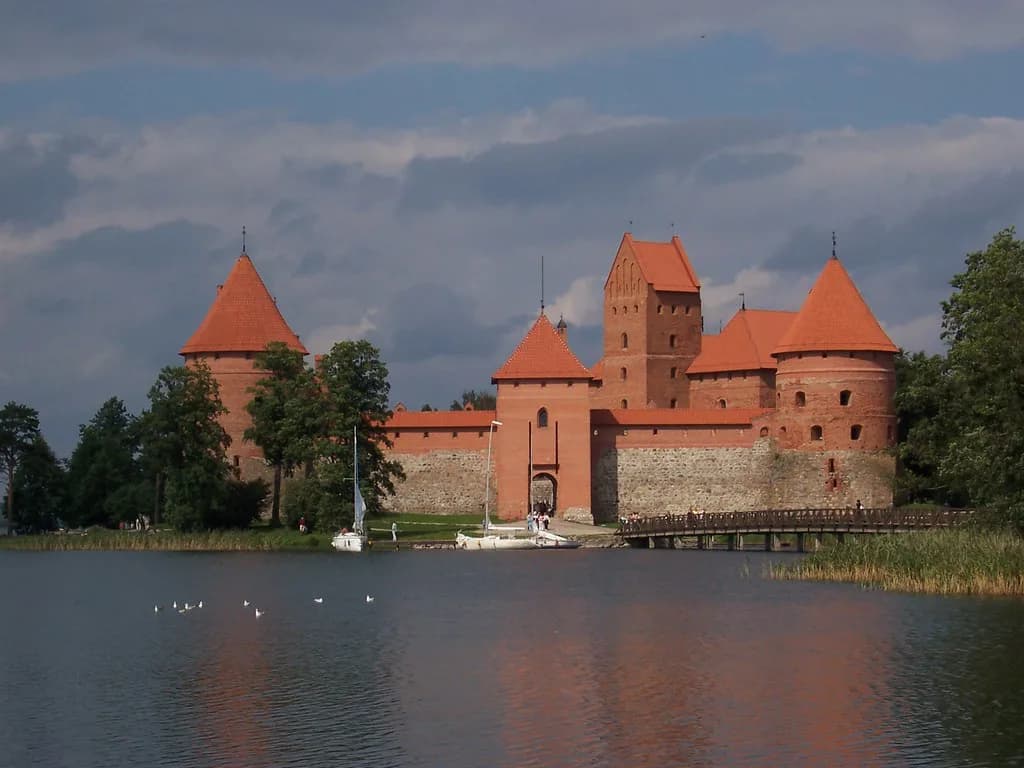
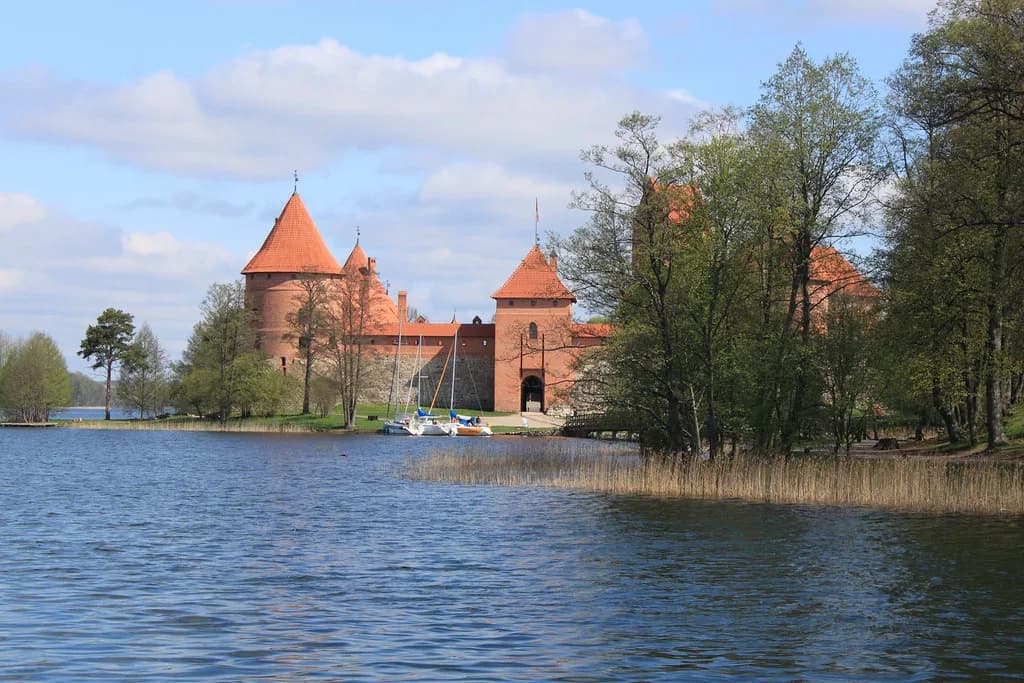
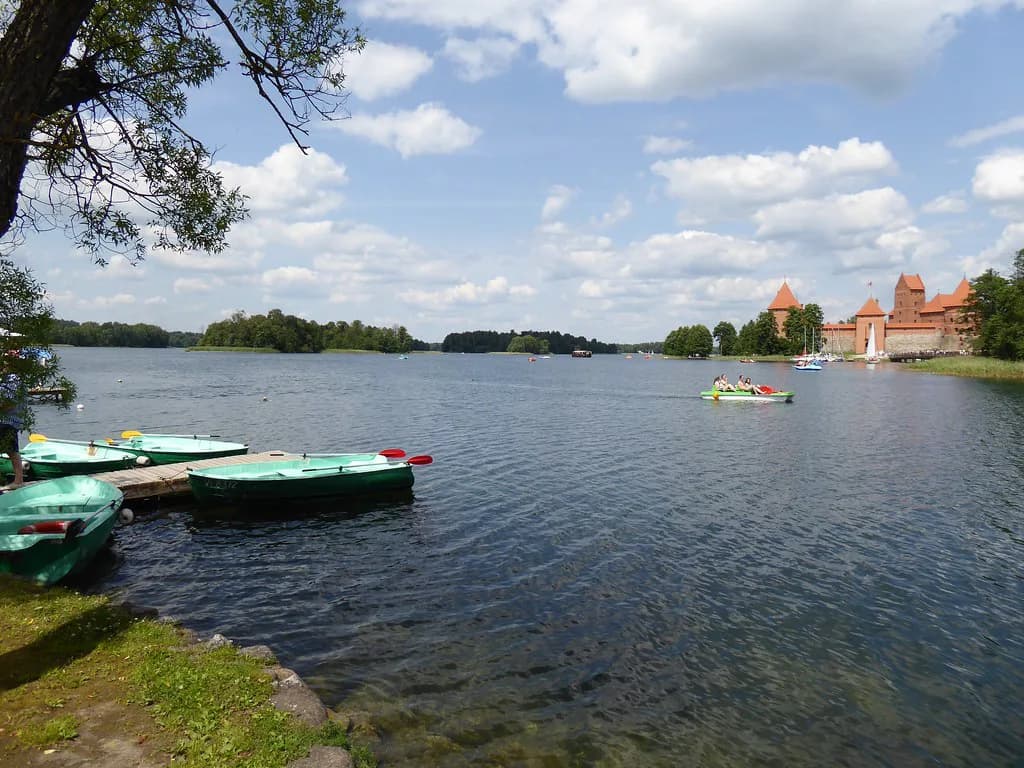
Trakai Island Castle, a red-brick fortress on an island in Lake Galvė, is the classic Vilnius day trip and one of the best places to visit in Lithuania. Trains run between Vilnius and Trakai in roughly half an hour, and the walk from the station to the castle follows the lakeside. Go early: the causeway and courtyards fill by late morning in August, and the light on the water is better before the crowds arrive.
If you would rather drive, renting a car in Lithuania opens up the Hill of Crosses near Šiauliai and the coast in one loop, but it also means paying for fuel and parking and dealing with summer traffic on the coastal roads. For a short August trip, the train-and-bus combination is simpler, and the Trakai line is the easiest introduction to Lithuanian rail.
Kibinai, the crescent-shaped pastries stuffed with meat or vegetables, are the traditional Trakai snack and the reason many visitors linger in the town after the castle. Eat before or after the castle rather than at peak lunch hour, when the small kitchens around the lake get backed up.
Kaunas and the Hill of Crosses
Kaunas, Lithuania's second city, makes a worthwhile half-day or full-day stop between Vilnius and the coast, with its interwar architecture and a lively central square. The Hill of Crosses near Šiauliai is a different kind of detour: a pilgrimage site covered in thousands of crosses, moving and strange, but remote enough that it works best as a stop on a northbound drive rather than a there-and-back trip from Vilnius.
Both are easier to justify in August, when long days give you more hours for the road, but neither replaces the coast in a short itinerary. If you have five days or fewer, pick Trakai plus either Kaunas or the spit, not all three.
The Curonian Spit in August
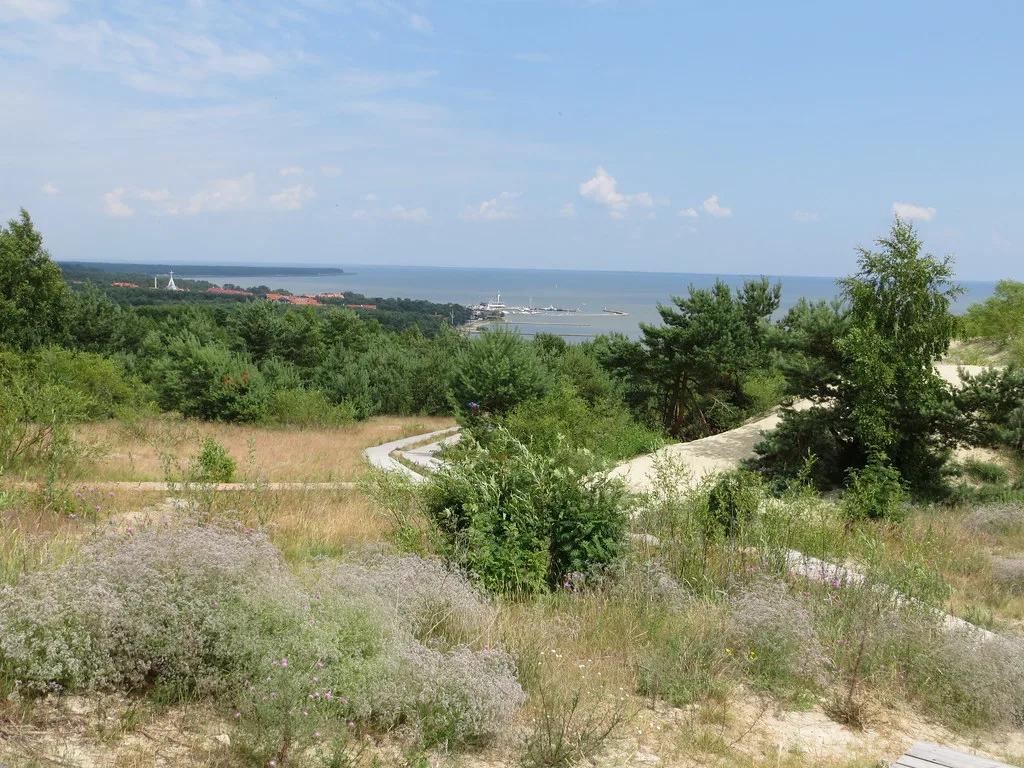
The Curonian Spit is a 98 km sandspit shared with Russia and protected as a UNESCO World Heritage Site, with pine forest, dunes and the resort villages of Juodkrantė and Nida. The artists' village of Nida, the Dead Dunes and the Parnidis sundial on the dune are the headline stops, and the spit's flat cycle paths make it one of the region's best places to ride a bike.
Getting there is the bottleneck. You cross by ferry from Klaipėda to Smiltynė, and in peak August the car queue at the ferry terminal can eat hours, so foot passengers and cyclists move far faster than drivers. Leave the car on the mainland, take the ferry on foot and use the local buses or a rented bike on the spit; you will see more and wait less.
The August 15 public holiday
August 15 is the Feast of the Assumption of Mary, a public holiday in Lithuania, which means a long weekend effect: fuller hotels, busier day-trip trains and higher demand around the coast. The holiday falls in the middle of peak season, so the crowd pressure is real on both sides of it.
Book your Trakai train and any ferry crossing for the days around the 15th as early as you can, and treat that window as the busiest part of an already busy month. If your dates are flexible, the first week of August and the last ten days tend to be marginally calmer than the holiday weekend itself.
Crowds and prices
August is the most expensive month to visit Lithuania, with accommodation and car hire at their annual peak and the coast commanding a premium. Expect to pay more for a room in Nida or Palanga than in Vilnius, and budget for higher restaurant bills in resort towns. Whether that adds up to an expensive trip depends on your style; our guide to whether Lithuania is expensive breaks down real trip costs by category.
The practical saving is to book early rather than to chase last-minute deals, because August demand leaves little slack. Reserve Trakai tickets, ferry crossings and any popular restaurant before you travel, and you will spend your holiday on the sight rather than in a queue.
Rain and realistic expectations
August rain arrives as short, heavy showers, so plan around them with a waterproof layer and a couple of indoor options per city. Mosquito repellent is worth carrying near the lakes around Trakai and on the spit, where standing water and warm evenings bring them out.
Do not build your trip around guaranteed sunshine. A week in August can include two grey days and still be a good holiday, provided you have a museum, a covered market or a long lunch to fall back on.
How many days you need
Five to seven days is the realistic August route: two or three days in Vilnius with a morning at Trakai, then a train or drive to Klaipėda and two days on the Curonian Spit. That gives you the capital's museums, one castle day trip and enough coast time to justify the journey west without rushing the ferry.
If you only have three or four days, drop the coast and concentrate on Vilnius plus Trakai and Kaunas; the spit rewards a slower visit and is frustrating as a day trip from the capital. Longer trips can add the Hill of Crosses on the drive north or a couple of nights in Palanga.
August versus May, June and September
June gives you nearly as much daylight and slightly fresher crowds, while September brings cooler, quieter days and lower prices once the school holidays end. May is greener and cheaper still but cooler and less reliable for the beach, and Lithuania in June is the closest thing to an August experience with a little more breathing room.
Choose August if warmth and a full events calendar matter more than crowds and cost; choose September if you want the same landscapes with fewer people and a lower bill. If your dates are fixed by school holidays, August is still the right call, just book early and plan around the 15th. Our guide to the best time to visit Lithuania sets out the full month-by-month picture for anyone still deciding, and it is worth weighing the same shoulder-season logic when you ask is Latvia worth visiting on the neighbouring leg of a Baltic trip.
Plan Your August Trip
August works for Lithuania when you treat it as a Baltic summer rather than a Mediterranean one: long days, mild temperatures, a bracing sea and busy but manageable cities. Book Trakai and the Curonian Spit ferry ahead, travel the spit on foot or by bike, and keep a wet-weather plan in reserve.
If crowds and peak prices are dealbreakers, shift to September or June and accept slightly cooler weather. Either way, size your trip at five to seven days and put Vilnius first, the coast second.
Explore more Lithuania trip-decision guides
Frequently Asked Questions
What is the weather like in Lithuania in August?
August is one of Lithuania's two warmest months, with typical highs around 22°C (72°F) and lows near 11°C (52°F) in Vilnius and roughly 72 mm of rain across the month. The coast is cooler and breezier, especially in the evening, so pack a layer even on a beach day. These are climate averages, not a forecast, so expect variation from year to year.
Is August a good time to visit Lithuania?
It is the best month for warm-weather trips that combine a city and the coast, with long daylight, working ferries to the Curonian Spit and a full events calendar. The cost is peak-season prices and the thickest crowds of the year. If you want quiet streets and lower bills, June or September are better choices.
Is it beach weather in Lithuania in August?
Yes, in the sense that the Curonian Spit and Palanga have a real beach season, but the Baltic is bracing rather than warm and the sea breeze cools the coast after sundown. Most visitors swim briefly and spend more time walking or cycling the dunes. Do not expect Mediterranean heat.
How warm is the Baltic Sea in Lithuania in August?
The Baltic off Lithuania is cool even in late summer, and the breeze makes the air feel cooler than inland Vilnius. Swimming is a short dip for most people rather than a long soak, and a warm layer is useful on the beach in the evening. Check local sea conditions on the day you plan to swim.
Is August crowded in Vilnius?
Vilnius is busy but walkable in August, with full cafe terraces and steady traffic through the Old Town and Užupis. The real crush is on day trips: Trakai fills by late morning and the Klaipėda ferry queue to the Curonian Spit is at its worst. Go early and book ahead.
Is August 15 a public holiday in Lithuania?
Yes, August 15 is the Feast of the Assumption, a public holiday, which creates a long-weekend effect in the middle of peak season. Expect fuller hotels, busier day-trip trains and higher demand around the coast. Book accommodation and key transport for that window as early as possible.
How many days do you need in Lithuania in August?
Five to seven days is realistic: two or three in Vilnius with a morning at Trakai, then two on the Curonian Spit via Klaipėda. With three or four days, skip the coast and focus on Vilnius, Trakai and Kaunas. Longer trips can add the Hill of Crosses or Palanga.
Is August or September better for Lithuania?
August is warmer and livelier, with longer days and a full events calendar, but it is the most crowded and most expensive month. September is cooler and quieter with lower prices once school holidays end. Choose August for warmth and atmosphere, September for space and value.
Sources
Trip-decision notes
Optional updates when we publish or revise a destination verdict.
You might also like
Continue reading
More guides you'll find useful