Money in Lithuania: Cards, Cash and Costs
Lithuania uses the euro, and cards work almost everywhere. Here is how cash, ATMs and exchange function, and how to budget for Vilnius, Kaunas and the coast.
On this page
Lithuania uses the euro, so there is no currency puzzle to solve on arrival and no need to hunt for 'Lithuanian money' at the airport. The euro replaced the litas on 1 January 2015 at a fixed rate, and cards are widely accepted in cities and towns, which means a modest amount of cash as backup is enough for most trips. The real decisions are about which card you tap, where you withdraw euros and how you read prices, though it is worth checking current prices and dates before you book.
Budget expectations matter more than currency mechanics. Lithuania sits in the middle of the European price range: cheaper than Scandinavia and Germany, broadly comparable to Poland and Latvia, and pricier than Albania or Bosnia and Herzegovina. Vilnius and the coastal resorts in July and August cost the most, while Kaunas and smaller towns are gentler on the wallet. If you are still deciding on the destination itself, our look at whether Lithuania is worth visiting covers the trade-offs beyond money.
The verdict: euros, mostly by card, a little cash
Bring a euro-denominated debit or credit card, keep a small cash reserve for the exceptions, and skip the airport exchange desk entirely. That combination covers almost every situation you will meet in Vilnius, Kaunas, Klaipėda and the resort towns. Cash matters mainly for small purchases, rural stops and the occasional venue that has not moved to card.
Who this suits: travelers who prefer tapping a card and checking a banking app over counting notes. Who should plan differently: anyone relying on a single card with heavy foreign transaction fees, or arriving with only US dollars expecting to pay in cash, since prices and change are in euros.
What currency does Lithuania use?
The currency is the euro, written EUR and shown with the € symbol on price tags, menus and tickets. One euro divides into 100 cents, and you will handle 5, 10, 20 and 50 euro notes far more often than the larger denominations. The European Central Bank's changeover page confirms the adoption date and the mechanics of the switch.
That makes life simple for anyone arriving from Germany, France, the Netherlands or the other euro-area countries: no conversion arithmetic, no leftover coins to spend down before the border. Travelers from the United States, the United Kingdom or the Balkans outside the eurozone still need to watch the exchange rate on their card.
Euro since 2015: what happened to the litas
Lithuania joined the euro area on 1 January 2015, when the euro replaced the litas at an irrevocably fixed rate of one euro to 3.45280 litas. The litas had been the national currency until then, and the old notes and coins are no longer in circulation.
For a visitor this is history rather than a practical concern: you cannot pay with litai, and no shop will quote you a litas price. Lietuvos bankas, the central bank, has exchanged litas banknotes and coins at the fixed rate for an indefinite period, but there is no reason to bring old notes with you.
Cards vs cash: where your card works
Card acceptance in Lithuania is broad. Credit and debit cards work in the great majority of shops, restaurants, hotels, museums and ticket machines in the cities, and contactless payment is the default at most counters. You will still find the occasional place that does not accept card payments, so carrying a little cash as backup makes sense.
The pattern to expect: cards everywhere in Vilnius Old Town and central Kaunas, cards at fuel stations and supermarkets, and cash more useful at small rural vendors, markets and the odd family-run café. Tipping and small purchases are easier with a few euro coins in your pocket.
ATMs and withdrawing euros without getting stung
ATMs are easy to find in Lithuanian cities and towns, and even smaller villages are likely to have at least one, which makes withdrawing cash simple. Bank-branded machines at branches are the safest default; standalone machines in tourist squares can carry heftier fees.
The reflex that saves money is to decline dynamic currency conversion. When a machine or card terminal offers to charge you in your home currency rather than in euros, take the euro option and let your bank do the conversion, because the on-screen rate usually includes a markup.
Withdraw larger amounts less often rather than small sums repeatedly, since fixed fees hit every transaction. If your bank charges a percentage plus a flat fee, one bigger withdrawal in Vilnius or Kaunas will usually beat three small ones on the road.

Currency exchange and the airport trap
If you arrive with dollars or pounds and need euros in hand, exchange at a bank branch in town rather than at the airport or your hotel. Airport and hotel desks tend to mark up rates and add fees, which is an expensive way to get the same currency you can withdraw from an ATM.
A practical order of operations: land, tap your card for the bus or taxi if it accepts one, then withdraw euros from a bank ATM near your accommodation. If your home currency is already the euro, none of this applies and you only need to think about card fees.
Typical costs: Vilnius, Kaunas and the coast
Lithuania prices sit in the middle band for the region, so describe your budget in categories rather than exact figures. A mid-range day in Vilnius, with a museum ticket, a casual lunch, coffee and public transport, lands in the moderate range for Central Europe; Kaunas is slightly gentler; Klaipėda and the Curonian Spit resorts peak in July and August.
Accommodation drives most of the variation, and the coastal stretch from Klaipėda to Nida is where summer demand bites hardest. If money is tight, shift your trip to June or September, when prices soften and the weather still works. Our guide to whether Lithuania is expensive breaks the costs down by category.
Independent travel by car changes the arithmetic. Fuel, parking in Vilnius Old Town and any crossing to the Curonian Spit add up, so weigh them against bus and train tickets before committing. Our guide to renting a car in Lithuania covers the practical side.
Is Lithuania cheap, mid-range or expensive?
Compared with its neighbors, Lithuania is mid-range: less expensive than the Nordic countries, broadly in line with Latvia and Poland, and more expensive than Albania, Kosovo or Bosnia and Herzegovina. Food and drink in ordinary restaurants and cafés remain reasonable, while boutique hotels and coastal summer rentals push toward Western European levels. If you are weighing the Baltic options, our verdict on whether Latvia is worth visiting makes a useful cost comparison.
For a US traveler, the bigger variable is the dollar-to-euro rate on the day you travel, not the price tags themselves. Watch the rate for a few weeks before booking and pay with a card that converts at a fair rate.
Paying for transport, museums and tours
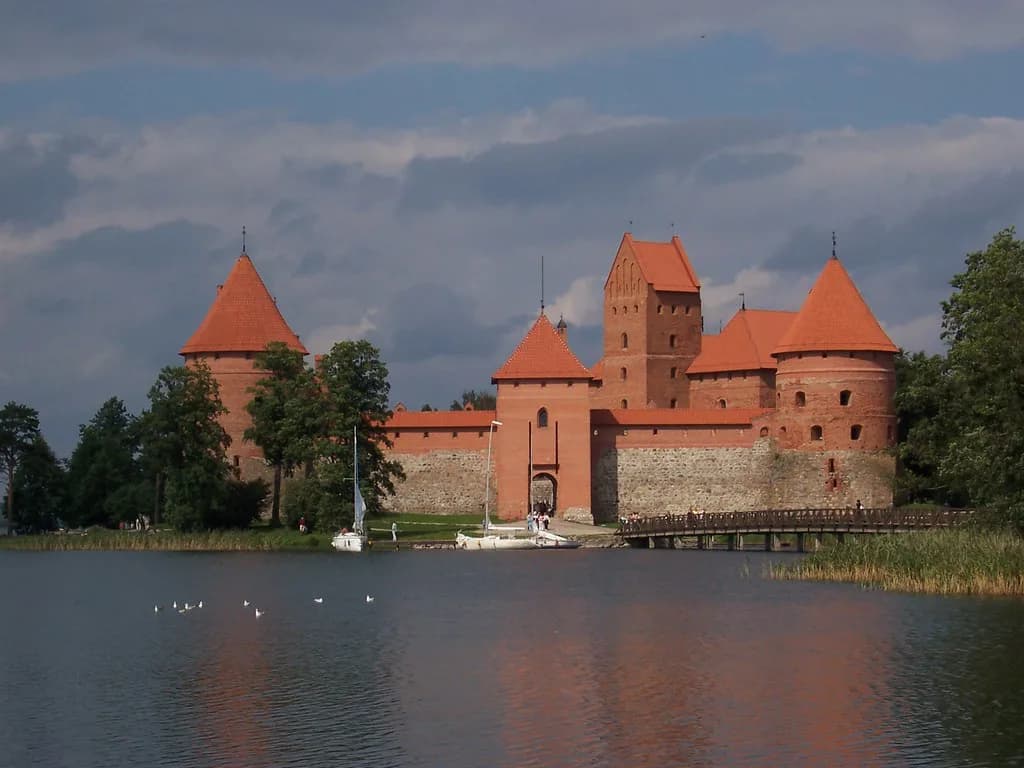
Public transport in Vilnius and Kaunas uses cards and mobile apps more than cash, and museum ticket desks generally accept cards. Guided tours, boat trips on the Neris River and day trips out to Trakai Island Castle usually take card payments too, though a few small operators prefer cash.
Long-distance buses and trains between Vilnius, Kaunas and Klaipėda are booked online or at station counters, and cards work at both. Keep a few coins for luggage lockers and the odd vending machine.
Tipping and restaurant bills
Tipping in Lithuania is discretionary rather than obligatory. Rounding up or leaving around ten percent at a sit-down restaurant is a normal courtesy when service was good, and leaving nothing is not a scandal at a counter-service café. Check whether service is already included on the bill before adding more.
Card terminals often let you add a tip before you tap, and staff will tell you if you ask. For small bills, having a few euro coins makes the gesture easy.

Mobile payments, bank fees and foreign transaction charges
Apple Pay and Google Pay work wherever contactless cards are accepted, which in Lithuania is most of the places you will visit. The cost question is your home bank's foreign transaction fee, often a percentage of each purchase plus a fee on ATM withdrawals outside its network.
If you travel often, a card built for spending abroad pays for itself quickly. Otherwise, use one card for purchases and keep a second as backup in case a terminal rejects the first.
Money mistakes that quietly cost travelers
The classic leaks are small and repeatable: accepting the terminal's offer to charge in dollars, withdrawing cash three times in a day, and exchanging at the airport on arrival. Each one adds a few percent to your trip without showing up as a single line on your statement.
The other mistake is carrying too much cash for a country where cards work almost everywhere. A small float for markets, tips and rural stops is enough, and it reduces the risk of losing a large sum.
When to go and why it changes your budget
July and August are the most expensive months, especially on the coast, while May, June and September offer lower prices and pleasant conditions. April and October are quieter still, with cooler weather and some seasonal businesses running shorter hours.
If your dates are flexible, shifting a coastal week from August to early September can cut costs noticeably without losing much daylight. Our guide to Lithuania in September explains what stays open.
The verdict restated
Lithuania is a straightforward money destination: the euro, wide card acceptance and easy ATMs mean you do not need to plan a cash strategy. Bring a card without punishing foreign fees, withdraw euros from bank ATMs, and keep a little cash for the exceptions.
If you are still weighing the trip, our look at whether Lithuania is worth visiting covers the destination itself. If money is the deciding factor, compare the costs against your home currency first, then book.
Explore more Lithuania trip-decision guides
Frequently Asked Questions
What currency does Lithuania use?
Lithuania uses the euro, which replaced the litas on 1 January 2015 at a fixed rate. Prices, menus and tickets are all shown in euros, and US dollars are not accepted in shops.
Can I use my credit card everywhere in Lithuania?
In cities and larger towns, cards work in the great majority of shops, restaurants, hotels and museums. A few places still take cash only, so keep a small reserve for markets, rural stops and small cafés.
Should I bring cash to Lithuania?
Bring only a modest amount and withdraw more from ATMs as needed. A few euro notes and coins cover tips, small purchases and the occasional cash-only venue, while cards handle the rest.
What happened to the Lithuanian litas?
The litas stopped circulating when Lithuania adopted the euro in 2015. It is no longer legal tender, and you cannot spend old litai in shops.
Should I pay in euros or my home currency when withdrawing cash?
Choose euros. Accepting the machine's offer to charge you in dollars or pounds usually means a worse exchange rate and extra fees.
Is Lithuania expensive for a US traveler?
Lithuania sits in the middle of the European price range, cheaper than Scandinavia and broadly in line with Poland and Latvia. Vilnius and the coast in summer cost the most, while Kaunas and smaller towns are gentler.
Sources
Trip-decision notes
Optional updates when we publish or revise a destination verdict.
You might also like


Continue reading
More guides you'll find useful