Money in Serbia: Currency, Cash vs Card and What to Budget
Serbia uses the dinar, not the euro. See how cash and cards work, where to change money, and how to budget for a trip without surprises.
On this page
Serbia uses the Serbian dinar (RSD), and your euros will not buy a coffee in a Serbian café. Plan to spend dinars for the small daily things, keep a card for hotels and bigger restaurants in Belgrade and Novi Sad, and treat any cash in another currency as something to exchange rather than something to hand over. For the wider trip picture, weigh the Serbia verdict before you fix a budget, because where you go changes what you spend.
The verdict: dinars first, cards second
Assume a cash-first trip with card backup rather than the other way round. Serbia is still a predominantly cash economy outside the main cities, so smaller towns and villages can leave you without a working terminal when you need one most. Carry a few thousand dinars on you and top up in cities, where ATMs and exchange offices are easy to find.
The one number worth remembering is not a fixed rate but a rough sense of scale: one US dollar buys on the order of a hundred dinars, so a 1,000-dinar bill is small money and a 5,000-dinar bill is a meaningful one. The dollar-to-dinar rate moves, so check a converter on the day you travel rather than memorizing a figure.
What currency Serbia uses and what the dinar looks like
The official currency is the Serbian dinar, abbreviated RSD, and the old CSD symbol still appears in some places from the earlier currency code. Don't be thrown by it — the notes in your hand are dinars, and the price on the menu is in dinars. If a price looks bizarrely small or a written code looks unfamiliar, ask for the total in dinars before you pay.
Notes come in 10, 20, 50, 100, 200, 500, 1,000 and 5,000 dinars, and coins run from 50 paras and then 1, 2, 5, 10 and 20 dinars. For daily spending you will mostly handle 100, 200, 500 and 1,000-dinar notes, so break a 5,000 early in a shop or kiosk rather than trying to use it for a coffee.
Exchange rates: reading them sensibly
Rates shift week to week, and the small differences between an exchange office, a bank and an ATM rarely add up to much on a short trip. What matters is comparing the displayed buy and sell rates on the same day and avoiding a poor rate in an airport rush. A recent snapshot put the dollar near 104.6 dinars, with a 30-day range of roughly 102 to 105 dinars, which gives you a fair sense of the scale on ordinary travel days.
Euro cash is the most practical foreign currency to bring, since it is widely exchangeable and easier to read against dinar prices than a third currency would be. Dollar cash also works, but you will get a better feel for value converting from euros. Whatever you bring, do the arithmetic on the board before handing over the notes.
Cash or card: where each works
In Belgrade and Novi Sad, Visa and Mastercard are generally accepted in shops, hotels and larger restaurants, and the cities have plenty of ATMs running around the clock for Visa, Plus, Mastercard, Maestro and Cirrus cards. American Express is a different story: only a handful of shops, car rental agencies and hotels take it, so treat it as a backup rather than your main card.
Once you leave the cities, assume cash. Smaller towns and villages may have no working terminal or no bank nearby, and the practical fallback is cash drawn earlier in a city. If you are renting a car in Serbia and heading into the countryside for a few days, draw enough dinars before you leave the city to cover fuel, food and small fees.
Changing money: banks, exchange offices and what to expect
Exchange offices are the default place to change cash, and rates do not vary dramatically from one office to the next, with no commission charged on the exchange. Offices are typically open Monday to Friday from 08:00 to 20:00 and Saturdays from 08:00 to 15:00, and closed on Sundays and public holidays, so plan your cash around the weekend rather than discovering an empty counter on Sunday morning.
Belgrade's airport has exchange options including 24-hour machines in the departures hall, which is useful if you land late and need dinars for a bus, taxi or snack. Those machines handle up to 200 euros at a time and accept euros, US dollars and British pounds, so they are a stopgap rather than a place to change a large amount at a good rate.
Banks are the safer option for traveler's checks, which most banks will exchange, though you cannot use checks in shops. This is a legacy route with limited practical value on a short trip; cards and cash cover almost everything you will actually pay for.
ATMs and card fees: the practical mechanics
ATMs in the major cities let you withdraw dinars around the clock with a card carrying a Visa, Visa Electron, Plus, Mastercard, Eurocard, Maestro or Cirrus logo, and you can also get a cash advance in a bank during business hours. The catch is on your own bank's side: foreign withdrawals usually carry a fee and a markup, so fewer, larger withdrawals beat repeated small ones.
If you run short and there is no ATM or bank nearby, the post office is a workable fallback for cash access, and Western Union transfers through commercial banks and post offices can move money in an emergency — whatever currency is sent, you receive it in euros. These are recovery options, not a plan: sort your cash before you head to remote areas so you are not relying on them.
How much a trip to Serbia costs: daily budget tiers in words
Serbia sits at the cheaper end of European travel, and your daily spend depends far more on your style than on the city. A lean trip built on hostel beds, bakery food, buses and free sights costs little; a mid-range trip with a private room, restaurant dinners and a few paid entries lands in the same band as budget travel in Western Europe; a comfortable trip with boutique hotels, taxis and wine lists costs what you would expect anywhere in the region.
The items that move a budget most are intercity transport, museum and fortress entries, and restaurant meals in central Belgrade. Rather than guessing at a daily total, price your actual shortlist — one or two paid sights a day, a bus or train between cities, and a mix of bakery lunches and sit-down dinners — and you will get a figure that means something.
Tipping and small daily expenses
Tipping in Serbia is customary in restaurants and cafés, and rounding up or leaving roughly a tenth is the usual habit in sit-down places. For taxis and small services, rounding to the next sensible amount is enough. Carry small notes for this: nobody wants to break a 5,000-dinar bill to leave a tip on a 600-dinar coffee.
Small daily costs add up quietly — coffee, water, a pastry, a bus ticket, a bag of fruit from a market. Budget a modest daily cash allowance for these and keep it separate from your sightseeing money, so you notice when you are running through it faster than expected.
What you'll actually pay for: transport, museums, meals
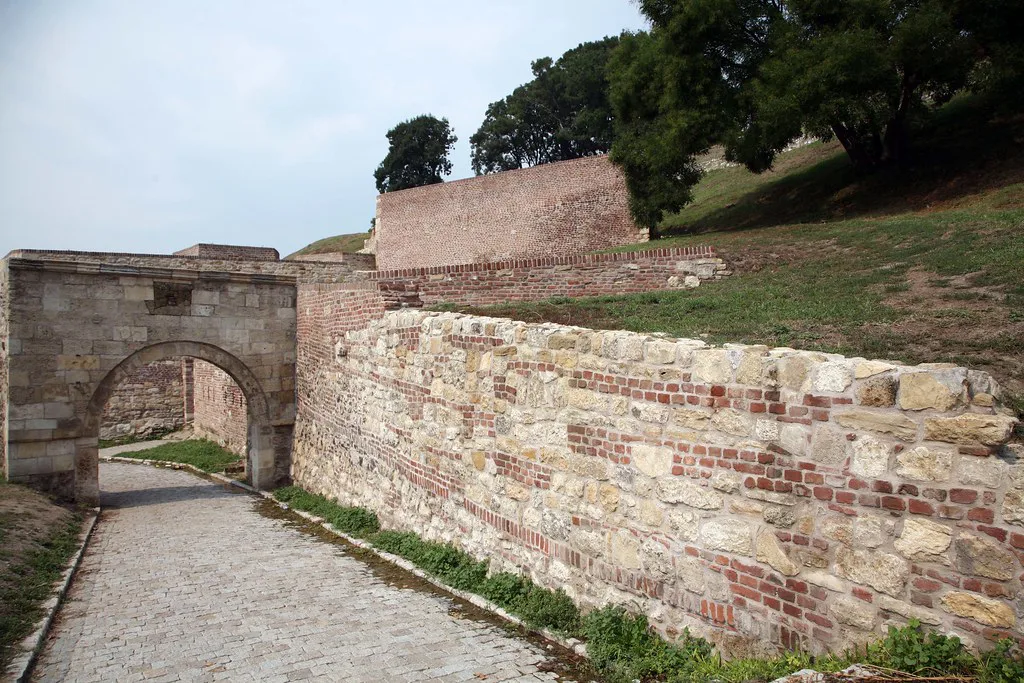
Buses between Serbian cities and local transport in Belgrade are the backbone of a car-free trip, and fares are set by each bus company, so check current prices for your route on the day you book rather than relying on an old figure. Museums and fortress sites in Belgrade and Novi Sad carry modest entry charges by European standards, and many public spaces are free to walk through, which keeps a sightseeing day cheap.
Meals split sharply by context: a bakery or fast-food lunch is pocket change, while a sit-down dinner in central Belgrade with wine can cost several times that. If you want a straightforward city day, pair the best places to visit in Serbia with a bakery lunch and a modest dinner, and you will see more for less.
Money mistakes to avoid on a first Serbia trip
The classic first-trip errors are bringing only euros and expecting to spend them, changing too little cash before a weekend, and leaning on American Express in places that only take Visa or Mastercard. Another is arriving on a Sunday and finding exchange offices shut, with only an airport machine as backup.
There is also a cash-declaration rule worth knowing: if you bring in a large amount and plan to leave with more than 2,000 euros, you must declare it on arrival and present the form at departure, or face confiscation. Carry what you need, declare when it applies, and don't carry large sums that you cannot account for.
Finally, don't over-plan the exchange-rate side of the trip. Rates move, fees vary, and a well-chosen cash withdrawal plus an exchange office visit will serve you better than hunting for a perfect rate across town. Time spent on logistics is time not spent at the places you came to see.
Serbia with euros in your pocket: what works and what doesn't
The euro is not the currency of Serbia, so you cannot pay in euros in ordinary shops, cafés or on public transport. Cash euros are easy to exchange at banks and exchange offices, and that is their real value: they are a convenient starting point for getting dinars, not a parallel currency.
If you are crossing from a euro country by road or arriving with leftover euros from a previous stop, change them on arrival and move on with dinars. Treat any euro price quoted to you — for a tour, a taxi or a private room — as a convenience quote and check the dinar figure before you agree.
Plan Your Money Before You Go
Serbia rewards a simple money plan: bring euros or dollars to exchange, draw dinars from a city ATM, keep cash for smaller towns, and use Visa or Mastercard in Belgrade and Novi Sad. Weigh the Serbia verdict and the best time to visit Serbia against your budget and travel style, and the money side becomes a small detail rather than a daily worry. If you are weighing the wider region, our Romania verdict applies the same head-to-head test to a neighbouring trip.
Explore more Serbia trip-decision guides
Frequently Asked Questions
What currency does Serbia use?
Serbia uses the Serbian dinar, written RSD. The euro is not used in shops, cafés or public transport, though cash euros are easy to exchange for dinars at banks and exchange offices.
Can you use euros in Serbia?
No — euros are not accepted as payment in ordinary Serbian shops and cafés. Bring euro cash if you like, but plan to change it into dinars, since it is one of the easiest foreign currencies to exchange there.
Is it better to use cash or card in Serbia?
Use cards in Belgrade and Novi Sad, where Visa and Mastercard are generally accepted in shops, hotels and larger restaurants. Carry dinars in cash for smaller towns and villages, where terminals may be absent and banks or ATMs are fewer.
How much is $1 in Serbian dinars?
The rate moves, but a recent snapshot put one US dollar at about 104.6 dinars, with the rate ranging roughly between 102 and 105 over a 30-day window. Check the rate on the day you travel rather than relying on a remembered number.
Where should you change money in Serbia?
Exchange offices are the usual choice, with rates that vary little between offices and no commission. They typically close on Sundays and public holidays, so change cash on a weekday or use a bank or airport machine as a backup.
Do ATMs in Serbia accept foreign cards?
ATMs in major cities accept cards with Visa, Plus, Mastercard, Maestro and Cirrus logos, and run around the clock. Expect your own bank to add a foreign withdrawal fee and currency markup, so make fewer, larger withdrawals.
How much cash should you carry in Serbia?
Enough dinars to cover a day or two of food, transport and small purchases when you leave the cities, plus a little reserve. In Belgrade and Novi Sad you can top up easily, so you don't need to carry large sums.
Is tipping expected in Serbia?
Yes, tipping is customary in restaurants and cafés, with rounding up or leaving about a tenth of the bill as the usual practice. For taxis and small services, rounding to the next sensible amount is enough — keep small notes for this.
Sources
Trip-decision notes
Optional updates when we publish or revise a destination verdict.
You might also like
Continue reading
More guides you'll find useful