Is Montenegro Worth Visiting? An Honest Verdict
Yes, Montenegro is worth visiting if you want fjord-like bays, walled old towns and raw mountains in one small country. Here is who it suits, and who it doesn't.
On this page
Yes, Montenegro is worth visiting, provided you treat it as a two-part country rather than a fly-and-flop beach destination. The Bay of Kotor delivers one of the Mediterranean's most dramatic settings, the walled towns of Kotor and Budva carry real Venetian and medieval fabric, and the interior adds the Tara canyon, the primaeval forest of Biogradska Gora and the peaks of Durmitor and Prokletije within a few hours' drive. What you get out of the trip depends almost entirely on how much you are willing to move.
The trade-off is straightforward. A coast-only week in July and August means crowds, cruise-ship surge in Kotor and pebble beaches rather than sand, while a loop that includes the mountains costs you winding road time but repays it with cool nights and empty trails. Montenegro uses the euro, so there is no currency surprise, but peak-season coastal pricing is real and worth planning around.
Decide up front which version you want: a bay-and-beach base with day trips, or a coast-to-mountain circuit of roughly a week to ten days. If your honest answer is a resort with a sandy beach and a short transfer, Croatia or Greece will serve you better; if it is scenery, old stone and altitude changes, Montenegro is one of the best-value answers in Europe.
The verdict: an unusually high ratio of scenery to effort
Few countries this small pack in so much contrast. Within a few hours you can walk a medieval walled town, climb a fortress above a bay that resembles a fjord, and eat lamb stew in a mountain village 1,000 meters (3,280 feet) above the sea. That compression is Montenegro's core argument, and it is why the country suits travelers who prefer three varied bases to one long stay.
The catch is that the compression only works if you drive. The coast is strung along the Adriatic, the mountains sit inland behind it, and public transport between the two is thin. Treat the road network as part of the planning, not an afterthought, and the country opens up; treat it as a nuisance and you will spend your trip in the same bay.
Who will love it
Hikers and mountain travelers get the strongest hand. Durmitor's peaks, the Tara canyon, the Accursed Mountains of Prokletije and the ancient forest of Biogradska Gora form a serious outdoor circuit, with Lake Biograd itself over 400 meters wide and 12 meters deep at its deepest point, and the Tara zip line strung above the canyon. Sailors and boaters get the Bay of Kotor, whose deep-water harbor and string of waterside villages reward time on the water as much as on land.
History browsers have an unusually dense set of stops: Kotor's Venetian palazzi and 1,350-odd fortress steps, Herceg Novi's Kanli Kula fortress and Spanish fort, Perast's sixteen churches and merchant palaces, and Cetinje's royal-era streets and palaces. Couples who want scenery and seafood rather than nightlife will find Perast and the Luštica peninsula far calmer than Budva.
Families do best with a coastal base and short excursions. Budva's old town and marina, the beaches around Sveti Stefan and a boat trip on Lake Skadar keep children occupied without long transfers. Budget travelers should head inland, where family-run restaurants in the Kolašin area serve the country's most affordable and substantial food.
Who should choose somewhere else
Beach-resort loyalists who want sand and a swim-up bar should look elsewhere. Montenegro's coastal beaches are largely pebble, including the well-regarded Kings and Queens beach near Sveti Stefan, and even Velika Plaza near Ulcinj, the longest stretch on the Adriatic, is a wide, open shore rather than a groomed resort strand.
Crowd-averse midsummer visitors will struggle in Kotor and Budva in July and August, when cruise passengers and regional holidaymakers converge on the same small old towns. And travelers who refuse to drive will see a fraction of the country: the mountain parks, Lake Skadar's quiet southern shore and the interior monasteries are effectively car-dependent.
What Montenegro is best known for
The headline images are the Bay of Kotor and its walled town, the fortified old town and marina at Budva, and the mountain parks of the north. Durmitor and the Tara canyon anchor the high-country reputation, while Lake Skadar, the largest lake in the Balkans, spreads across the border with Albania in a bowl of mountains.
Less famous but just as rewarding are the Luštica peninsula, still rural and joined to the mainland by paved road only in the 1970s, and the salt pans at Ulcinj, where an estimated 2,500 greater flamingos gather alongside some 250 other bird species. These are the places that separate a rushed coastal stop from a proper Montenegrin trip.
The coast: Kotor, Perast, Herceg Novi, Luštica, Budva and Ulcinj
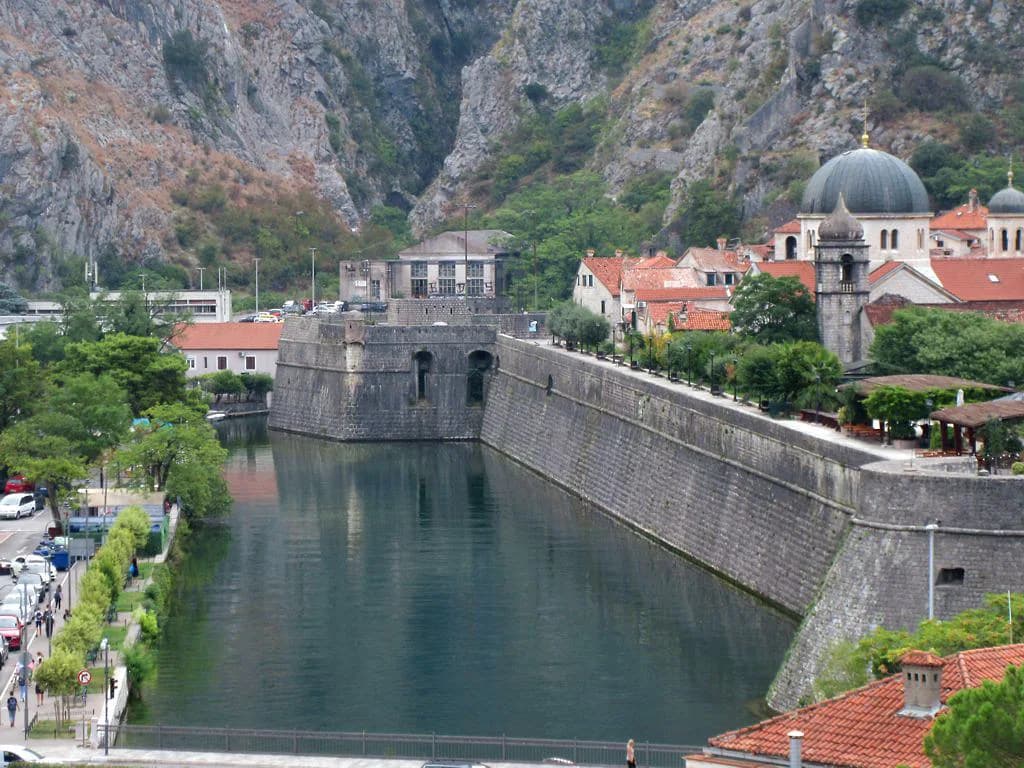
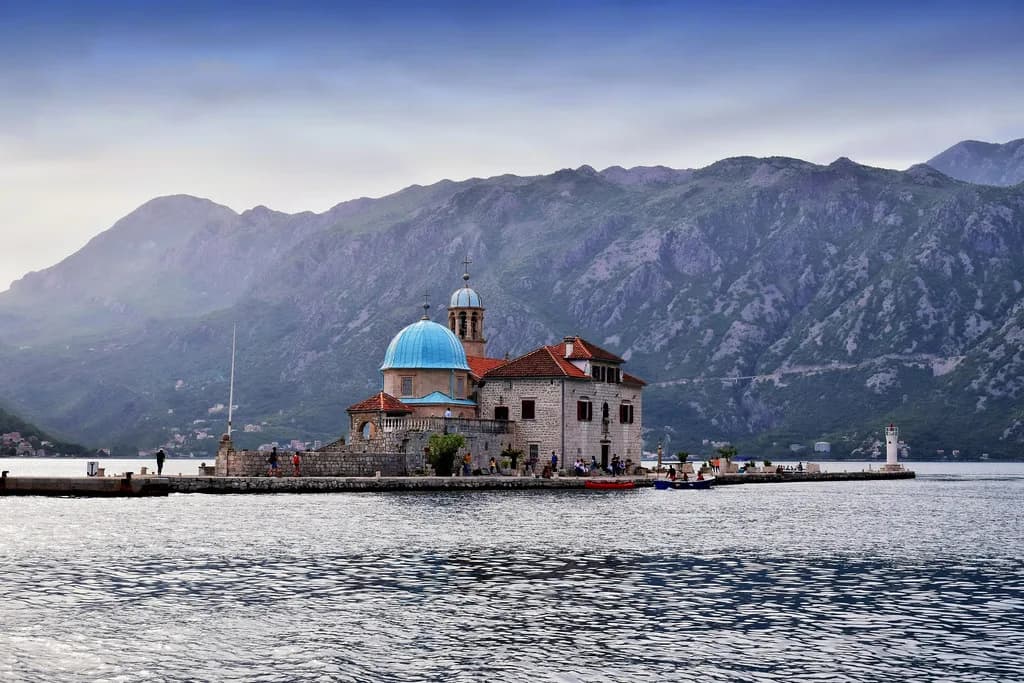
Kotor is the essential stop, a maze of medieval lanes below a fortress that looms roughly 280 meters above the town, reached by a long stair climb of about 1,350 steps. Boats run from Perast across to Our Lady of the Rocks, the 17th-century church on the Adriatic's only artificial island, built according to legend from centuries of sailors dropping rocks after an icon was found on the spot in 1452; the crossing costs around 5 euros.
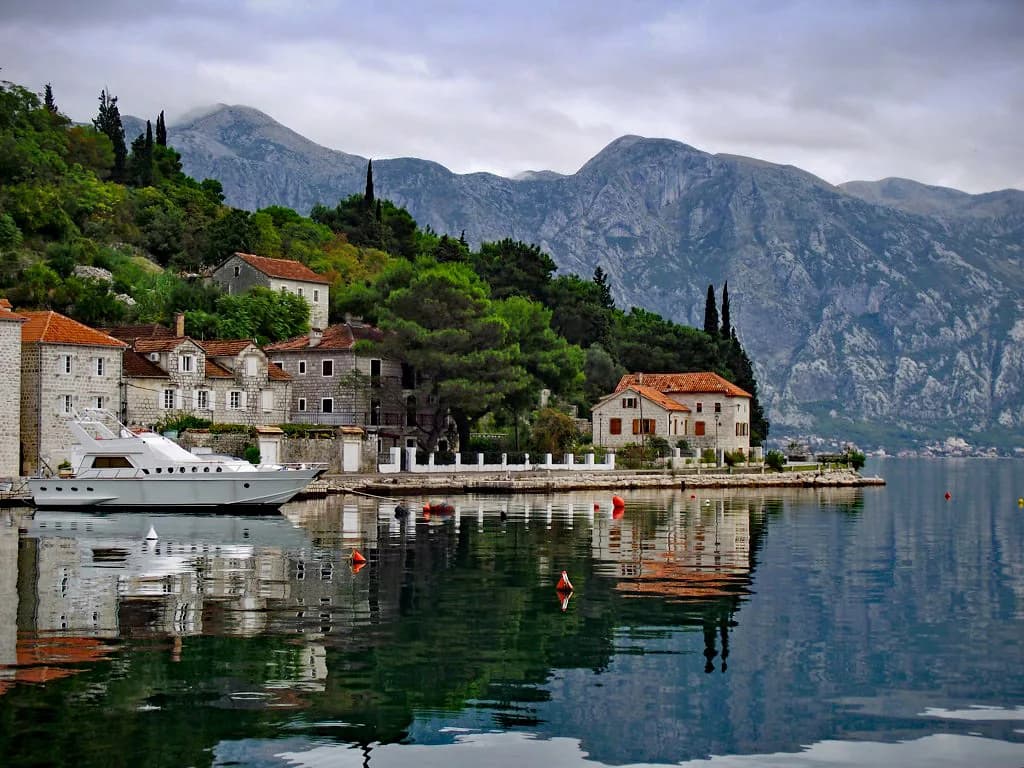
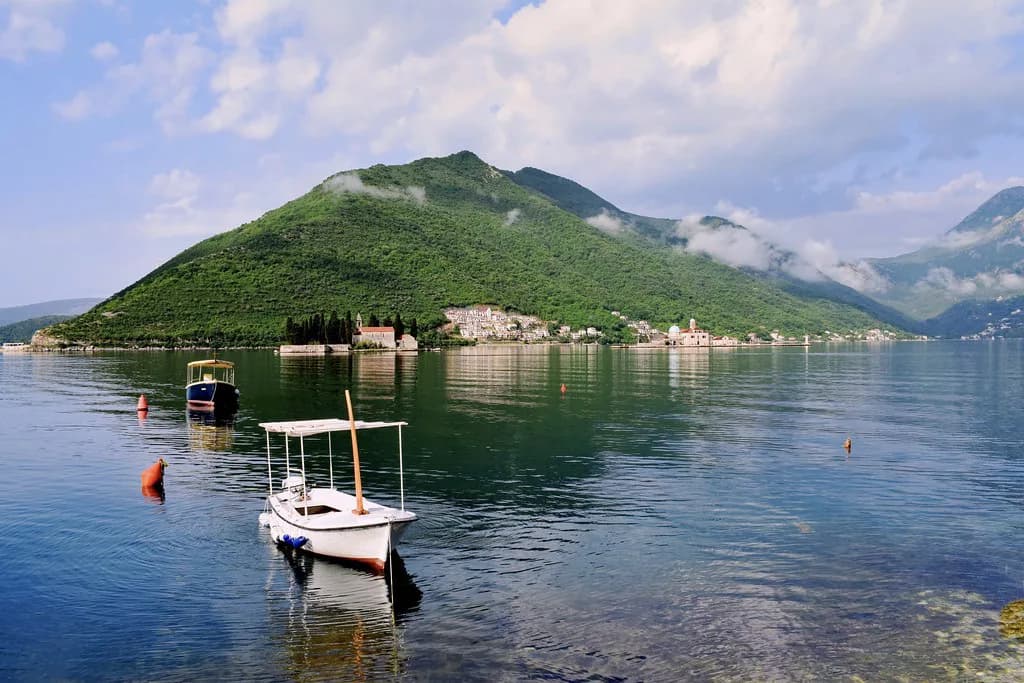
Perast, about 20 minutes from Kotor by car and half an hour from Tivat airport, is the quieter base, with waterside seafood restaurants and baroque palaces from its maritime heyday. Herceg Novi, near the Croatian border below the Orjen range, stacks churches, fortresses and a summer open-air festival stage down a steep hillside.
Budva is the coast's busiest town, with an old town on the water and a marina restaurant scene; neighboring Sveti Stefan is the country's most photographed spot, and its resort has stayed closed since the pandemic, which keeps the surrounding mood quieter. Ulcinj, down by the Albanian border, offers a peaceful old town, the long Velika Plaza beach and flamingo tours on the salt pans.
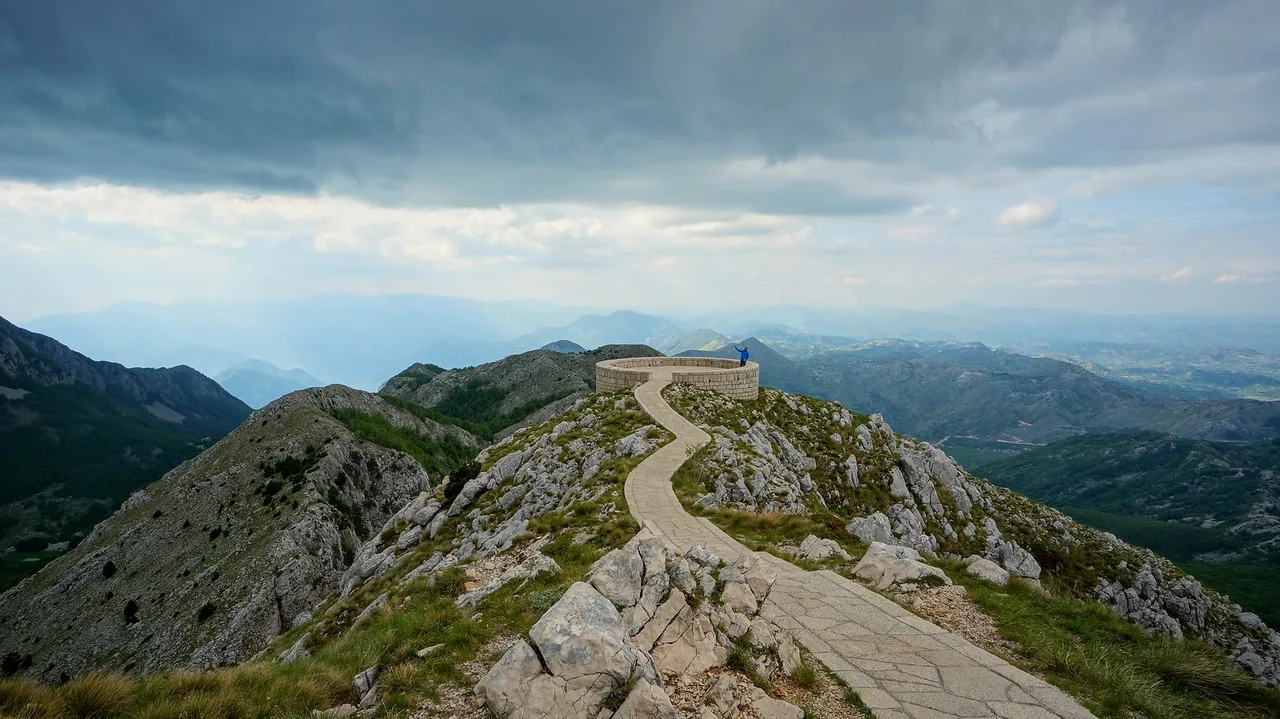
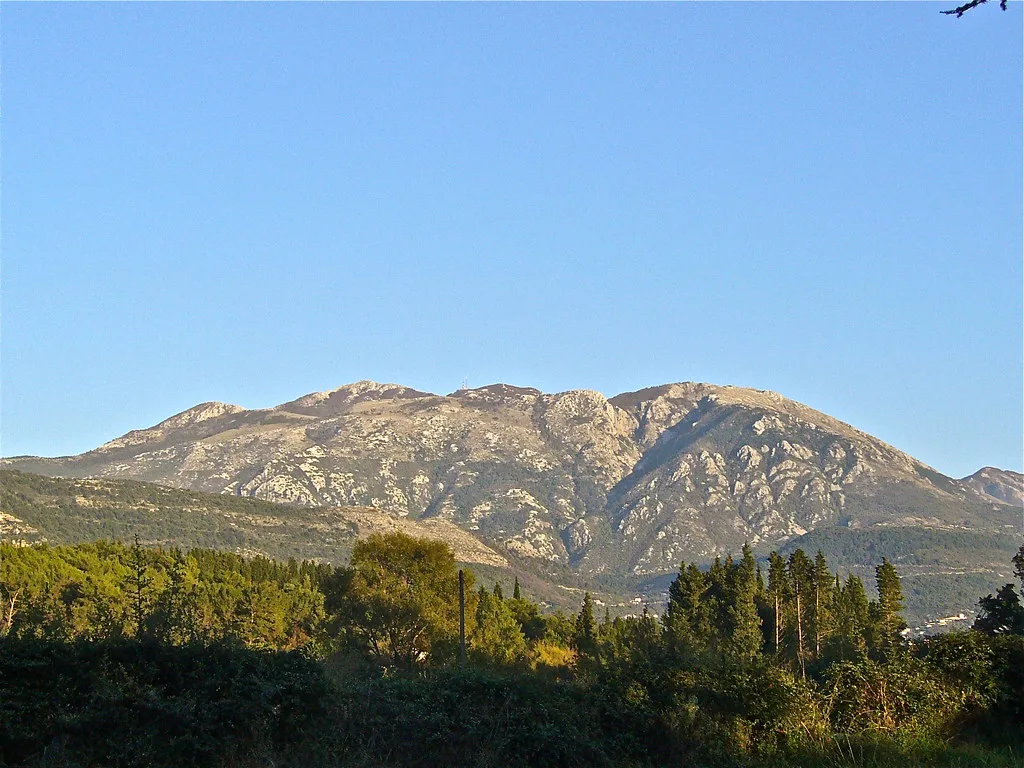
The mountains: Durmitor, Biogradska Gora, Prokletije, Lovćen and Kolašin
Durmitor stands supreme among Montenegro's mountains, snow-capped at its highest point even in summer, and the Tara canyon beside it carries a zip line above what is framed as the world's second-deepest canyon after the Grand Canyon. Rafting, kayaking, canyoning and horse riding fill the surrounding valleys.
Biogradska Gora holds one of Europe's last remaining primaeval rainforests, with trees half a millennium old around a glacial lake. Kolašin, a town of about 2,000 people at 1,000 meters, works as the practical base, with honey farms and family restaurants nearby, and Lovćen and the cliff-hung Ostrog monastery cover the central mountain flank.
Prokletije, the Albanian Alps known as the Accursed Mountains, is the wildest corner, a borderland of long trails and sudden mist that also marks the start of the cross-border Peaks of the Balkans route through Montenegro, Kosovo and Albania. Allow more time than you think for the drives: mountain temperatures can drop to freezing at night in spring even when the coast is at 25°C (77°F).
Lake Skadar and the quiet interior
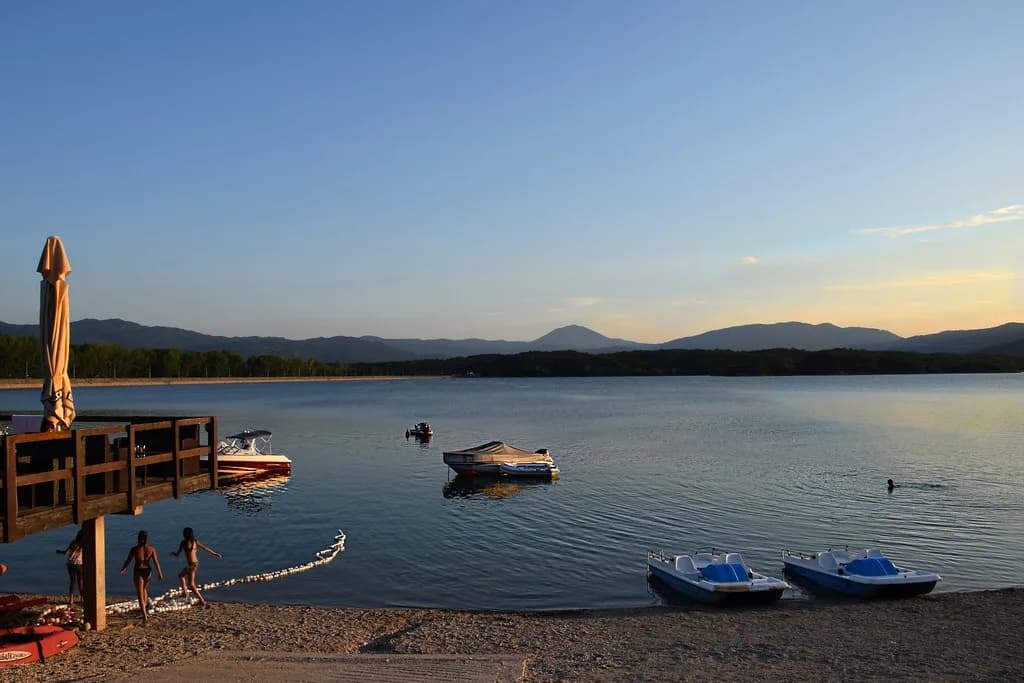
Lake Skadar is the inland counterweight to the coast, easily visited in a day but better with an overnight. Kayak from the lakeside town of Virpazar, taste wine and brandy at family producers such as Buk Winery, then drive the southern shore through fishing villages to the sandy Murići beach, facing the working 14th-century Beška island monastery.
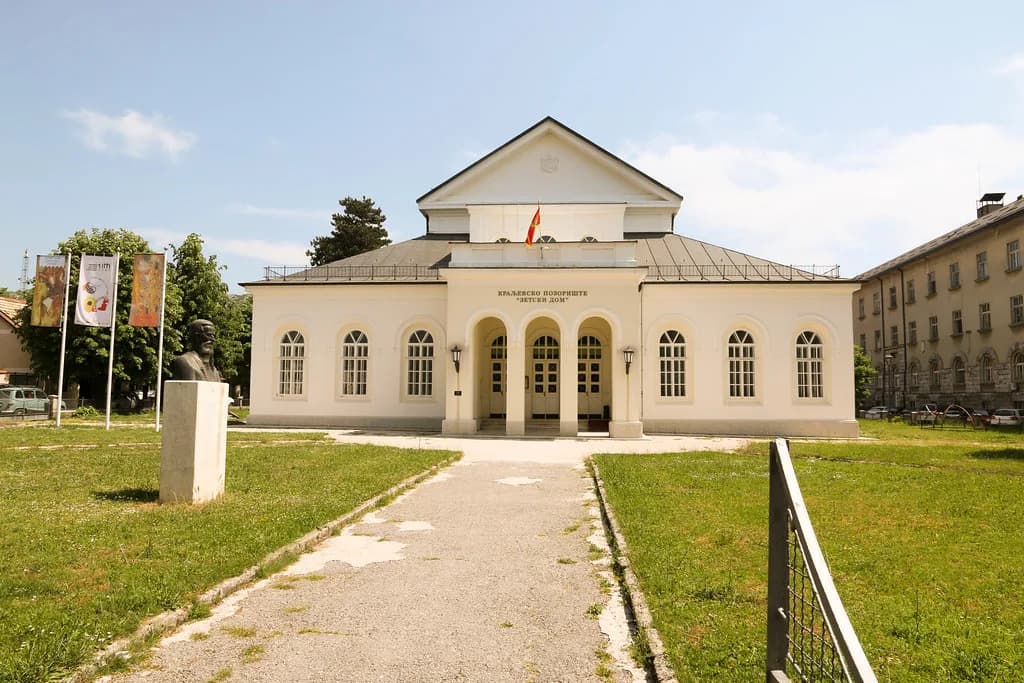
Cetinje, the old royal capital, retains 19th-century palaces and churches and pairs naturally with Lipa Cave and a slow loop back to the bay. This is the part of Montenegro that rewards a spare day more than another hour on the beach.
Drawbacks
Summer crowds are the main one. Kotor fills when cruise ships are in, and the immediate fix is simple: walk five minutes uphill behind the busy streets for a quieter, more authentic side of town. Budva in high season is louder still, so anyone sensitive to noise should base elsewhere and visit.
Roads are slow and winding once you leave the coast, and development along the shore is uneven, with gleaming new marinas sitting beside scruffy stretches. Beaches are mostly pebble, and the weather in the mountains is genuinely cooler and wetter than the coast forecast suggests.
Weather by month: coast versus mountains
The coast runs on a Mediterranean rhythm: mild, wet winters and hot, dry summers, with July and August the busiest and warmest months and sea temperatures at their highest. May, June, September and early October deliver reliable sightseeing weather with fewer people, which is why the shoulder months suit a coast-and-mountains loop best. For month-by-month detail, see the best time to visit Montenegro.
The mountains are a different climate, not a milder version of the coast. Kolašin sits at 1,000 meters, and spring nights there can still fall to 0°C (32°F) while the shore basks at 25°C (77°F), so a mountain leg needs warmer layers even in late spring. Summer is the safest window for high trails in Durmitor and Prokletije.
How many days you need
Three or four days covers the Bay of Kotor well: Kotor's old town and walls, a boat from Perast to Our Lady of the Rocks, and a short run to Herceg Novi or the Luštica beaches. That is the minimum that feels unhurried rather than rushed.
A week opens the coast and one mountain park, typically Durmitor via Kolašin, with Lake Skadar folded in on the way. Ten days to two weeks allows the full loop: bay, Budva and Ulcinj in the south, Skadar and Cetinje in the middle, and Durmitor, Biogradska Gora and Prokletije in the north.
Typical costs
Montenegro uses the euro, so prices are transparent and there is no exchange-rate confusion. Rural food is the value story, with mountain towns like Kolašin serving hearty lamb, pork and trout dishes at prices well below the coastal strip; boat crossings such as the one to Our Lady of the Rocks are modest, around 5 euros.
The coast in July and August is where budgets stretch: waterfront restaurants, marina bars and bay-view accommodation carry the premium. Travelers wanting a clear read on what a trip costs should work through the is Montenegro cheap question honestly, because the answer flips between inland villages and the summer waterfront.
Getting there and around
Tivat airport sits about 30 minutes from Perast and serves the bay directly, while Podgorica airport handles the interior and is roughly 70 kilometers from the Ulcinj coast. Dubrovnik Airport across the Croatian border is a practical alternative for the far south, though allow extra time for the border crossing.
Once there, a rental car is the difference between seeing the country and seeing one bay. Roads along the Bay of Kotor are scenic but slow, and mountain routes demand patience; bus and rail links exist but rarely reach the parks and lake villages on a schedule that suits a short trip.
Coast versus mountains: the trade-off
Choosing the coast means boats, old towns, seafood and swimming, with the bay as the centerpiece and day trips to Skadar or Lovćen as add-ons. Choosing the mountains means trails, forests, canyons and cool air, with fewer crowds and lower prices but more driving and less polish.
The honest answer for most first-timers is both, in a ratio of roughly two parts coast to one part mountains. That split gives you the scenery the country is famous for without spending your whole trip on winding roads.
Verdict by traveler type
Hikers and outdoor travelers should go, and should weight the trip toward Durmitor, Biogradska Gora and Prokletije. Couples do best in Perast or on the Luštica peninsula, away from Budva's noise. Families should base near Budva for short transfers and easy beach days, accepting pebbles and summer crowds.
Sailors should plan around the bay, where the deep-water harbor and waterside villages are the attraction. Budget travelers should head inland for food and lodging value, and history buffs can build a strong itinerary from Kotor, Perast, Herceg Novi and Cetinje alone. Travelers who want a single sandy beach resort should pick a different country.
Plan Your Visit
Montenegro earns a yes for travelers who want variety: a fjord-like bay, walled towns, a rainforest park and a canyon of Grand Canyon scale, all within a day's drive. It earns a no for anyone whose ideal holiday is one sandy beach and a short airport transfer, or who will not drive.
Aim for May, June, September or early October, split your time between the bay and at least one mountain base, and budget in euros with a coastal premium in high summer. Entry rules and documentation are handled on the official government page, and the Central Bank of Montenegro publishes currency information if you want the formal side of the money question.
Explore more Montenegro trip-decision guides
Frequently Asked Questions
Is Montenegro worth visiting?
Yes, if you want fjord-like bays, walled medieval towns and raw mountains in one small country. It suits travelers who move between a coastal base and the interior; it suits beach-resort loyalists and non-drivers far less.
What is Montenegro most famous for?
The Bay of Kotor and its walled town, the old town and marina at Budva, and the mountain parks of Durmitor, Biogradska Gora and Prokletije. Lake Skadar, the largest lake in the Balkans, and the Tara canyon are the other headline draws.
How long do you need in Montenegro?
Three or four days covers the Bay of Kotor comfortably. A week adds one mountain park, and ten days to two weeks allows a full loop taking in the southern coast, Lake Skadar, Cetinje and the northern mountains.
What's the best month to go to Montenegro?
May, June, September and early October balance reliable sightseeing weather with smaller crowds. July and August are hottest and busiest on the coast, and mountain nights are cold even in spring, so layers matter at altitude.
Is Montenegro expensive?
Inland towns and family-run mountain restaurants are noticeably cheaper than the coastal strip. The Bay of Kotor and Budva carry a summer premium for waterfront dining and bay-view lodging, and the country uses the euro throughout.
Do you need a car to see Montenegro?
A car makes a large difference. The mountain parks, Lake Skadar's quiet southern shore and interior monasteries are hard to reach by bus or rail, and coastal roads are scenic but slow, so build extra driving time into any loop.
Is Montenegro good for beaches?
The beaches are largely pebble, including the well-regarded stretch near Sveti Stefan, though Velika Plaza near Ulcinj is a long, wide shore. Travelers who want fine sand and resort facilities should look at other Adriatic destinations.
Is Kotor crowded with cruise ships?
Kotor gets busy when cruise ships are in port, especially in midsummer. Walking a few minutes uphill behind the main streets quickly thins the crowds and gives you a quieter, more local side of town.
Sources
Trip-decision notes
Optional updates when we publish or revise a destination verdict.
You might also like
Continue reading
More guides you'll find useful