Renting a Car in Bulgaria: Is It Worth It for Your Trip?
A car in Bulgaria makes sense for Rila, the mountains and small towns that buses skip. Here is what renting involves, who can drive and when to skip it.
On this page
Rent a car in Bulgaria if your trip runs through the mountains, the monasteries or small towns that buses reach slowly or not at all, and skip it if your plan is Sofia, Plovdiv and a Black Sea resort. The country rewards a self-drive loop and punishes it in the same trip if you spend days circling for parking. Whether Bulgaria is worth visiting at all depends on where you want to go, and a car decides how much of that list you actually see.
Rental rates here are among the lowest in the European Union, and the practical hurdles are modest for US drivers: a license held for at least a year, a credit card in your own name and a minimum age of 21. The real decisions are where you pick up, how many days you genuinely need the car and whether the cross-border paperwork justifies extending the trip into Greece, Romania or Serbia; if that last question is what is holding you up, our Serbia verdict covers whether the detour across the border earns its place.
The verdict: who should rent and who should not
Rent if your itinerary is Rila Monastery, the Belogradchik Rocks, the Rhodope or Balkan mountain villages and a slow run along the Black Sea coast — a car turns a week of awkward connections into a comfortable loop. Do not rent if you are flying into Sofia for a city break, moving to Plovdiv by train and ending at a resort where everything is walkable. Parking, one-way streets and Cyrillic signage make an urban day in a rental car more stressful than a tram ride.
Rental rates are low enough that a car often costs less than two people would spend on separate bus tickets plus taxis to trailheads and monasteries. The trade-off is that fuel, parking and a possible young-driver surcharge add up, so the case for a car rests on how many out-of-town sights you plan to reach rather than on the daily rate alone.
What a rental car unlocks
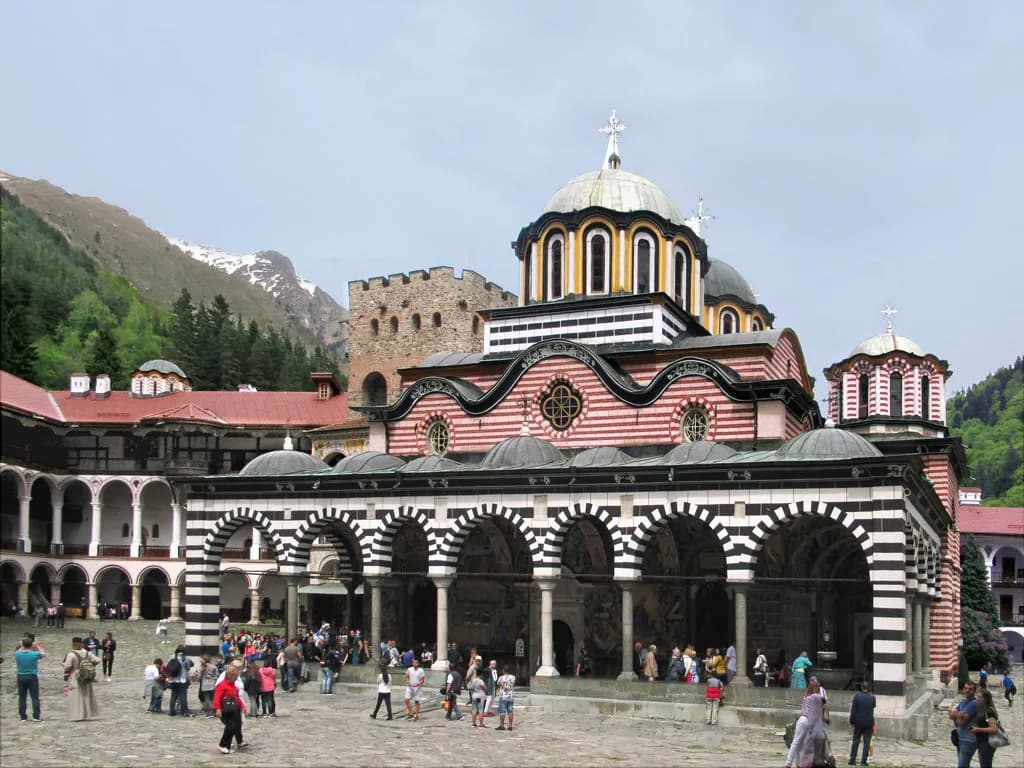
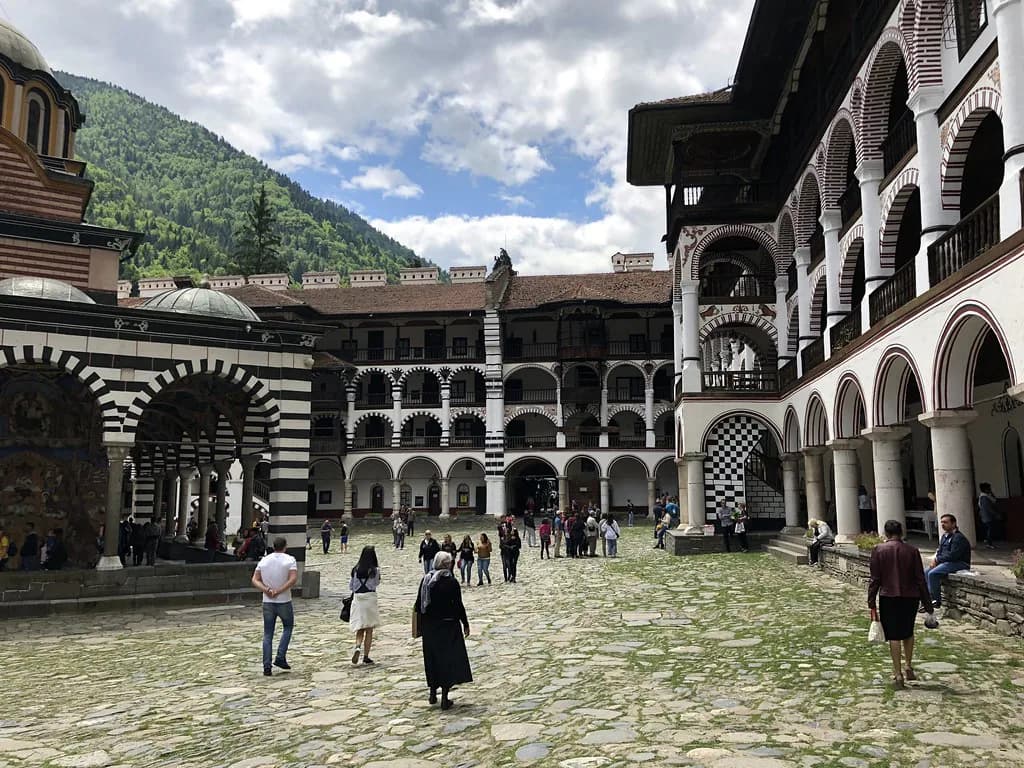
The headline is Rila Monastery, tucked into a forested valley south of Sofia, which is far easier on your own schedule than on a day tour. Add the Belogradchik Rocks in the northwest, the medieval churches of Nessebar on the coast, and the mountain roads around Bansko, and you have the core of a two-week loop that no bus timetable strings together comfortably. Enterprise's Bulgaria guide points to Rila Monastery, the Belogradchik Rocks and Nessebar as the kind of out-of-town sights where a car earns its keep.
A car also gives you the freedom to stop at roadside monasteries, Thracian tombs and village wineries that never appear in a transfer itinerary. If you are weighing which of these merit the detour, the best places to visit in Bulgaria outlines what each region offers and who it suits. Timetable-dependent travel is possible, but the hours you lose waiting are the hours you would have spent at the next sight.
Where a car becomes a liability
Sofia and Plovdiv are the weak points: dense center streets, limited parking and enforcement that does not favor a confused foreign driver. Varna and Burgas are manageable for a drop-off but miserable for a day of errands, and the resort strip around Sunny Beach and Golden Sands is walkable enough that the car sits idle while you pay for it. Pick the car up on the way out of the city rather than at the start of a city day.
Peak summer along the coast brings traffic and scarce beach parking, which is one reason to compare a July trip against a shoulder-season one. If the coast is the point of the trip, our guide to Bulgaria in July covers what the crowds and heat are like, and the Black Sea coast is better served by a base with parking than by a car you move daily.
Rental requirements for US drivers
Enterprise lists the Bulgarian rental conditions as a valid driver's license held for at least one year, a credit card in the driver's name, a minimum age of 21 and a maximum age of 75. Younger drivers face restrictions on car class and a young-driver fee: a 3.60 EUR per day young-driver fee applies to drivers aged 21 to 22 on compact, intermediate, standard and full-size classes, while minis and economy cars can be rented from 21 and larger classes wait until 23. These are operator policies, not Bulgarian law, so check the terms of whichever company you book with.
Europcar's rental terms require a passport or national ID, a credit card valid beyond the return date and — if your license is not in a language readable in Bulgaria — an International Driving Permit carried alongside it. Debit cards, cash and prepaid cards are not accepted for the deposit, so a US traveler without a major credit card in their own name should sort that out before booking. Fuel policy varies by product, so confirm whether you return full-to-full or prepay a tank you will not be reimbursed for.
One-way and cross-border rentals
Taking the car into a neighboring country is possible but needs the company's prior approval and costs extra: Enterprise quotes 6 EUR per day for out-of-country use plus a 60 EUR fee for the green card insurance document, with permission required before you leave Bulgaria. That makes a Sofia-to-Greece or Varna-to-Romania extension a real line item rather than an afterthought, and the fee applies per rental rather than per border.
One-way rentals within Bulgaria are common between Sofia, Plovdiv, Burgas and Varna, but the drop-off fee is set by the company and the route, so price both ends before committing. Returning the car to the airport you flew into is usually the cheapest way to end a loop, even if it means a longer final drive.
What it costs
KAYAK's Bulgaria data puts the average rental at about 22 USD per day, roughly 157 USD per week, with small cars averaging around 13 USD per day and vans and SUVs noticeably more. Its month-by-month figures show October as the cheapest month at roughly 41 USD per day on average and April as the most expensive at around 92 USD, so shoulder-season trips can halve the rental bill. Treat all of these as indicative — rates move with dates, car class and how far ahead you book, and the aggregator suggests booking about a week out for below-average prices.
On top of the rate, budget for fuel, parking in cities and any young-driver or cross-border surcharge, all of which can swing a week's total by a meaningful margin. Fuel in Bulgaria is priced in leva, and prices at the pump are posted clearly at every station. If you want a broader sense of how far your money goes, our breakdown of whether Bulgaria is cheap covers daily budgets beyond the car itself.
Fuel, tolls and driving costs
Bulgaria charges for motorway use through an electronic vignette rather than a windscreen sticker, and rental companies often include it or sell it at pickup — ask at the counter so you are not caught by a camera fine. Toll charges on the main motorways are modest compared with Western Europe, but the total depends on your route, so treat fuel and vignette as the two variable costs to plan around.
Fuel stations are frequent on the main corridors and rarer on mountain roads, so fill up before heading into the Rhodopes or toward Belogradchik. KAYAK notes that fuel in Bulgaria has historically cost close to double US prices per gallon, which is worth factoring into a long loop even at modest European rates.
Driving rules that catch visitors out
Headlights must be on at all times, day and night, and honking in urban areas between 10 pm and 6 am is illegal except to prevent an accident. On one-way streets you park on the left where parking is permitted, and at fuel stations you avoid the red pumps, which are reserved for service vehicles. These are small rules that generate disproportionate fines for visitors who assume US habits carry over.
You are also legally required to carry a fire extinguisher, reflective jacket, first-aid kit and hazard triangle, which rental companies normally supply — check they are in the car before you drive off. The Cyrillic road signs are readable once you learn a handful of place-name patterns, and a phone mount with an offline map saves a lot of wrong turns.
Speed limits and road conditions
Speed limits for cars are 50 km/h (31 mph) in towns, 90 km/h (56 mph) outside them, 120 km/h (75 mph) on expressways and 140 km/h (87 mph) on motorways, and cameras enforce them. Main routes between Sofia, Plovdiv, Burgas and Varna are fast and well surfaced, while secondary mountain roads are narrow, patched and slow going.
Allow more time than the distance suggests once you leave the motorway, especially on the passes toward Rila and the Rhodopes. Drivers can be aggressive — sudden lane changes and shoulder overtaking are common — so defensive driving matters more than speed.
Winter driving and mountain routes
Heavy snowfall is possible in winter, and mountain routes can require tire chains, particularly on the higher passes and around ski areas such as Bansko. Rental companies do not always fit winter tires by default, so ask specifically if you are traveling between December and March. Snow tires and chains are about staying mobile on mountain roads, not about guarantees of clear weather.
If your plan centers on mountain driving, the best time to visit Bulgaria page explains how seasons change road access and conditions across the country. Spring and autumn generally give you the mountain roads without the snow risk, at the cost of some higher-altitude closures.
Picking up at Sofia Airport versus city locations
Sofia Airport (SOF) has the big international brands, which makes an arrival-day pickup simple if you are heading straight for Rila or Plovdiv. City-center locations can be cheaper but add a taxi ride and a drive through traffic before you are even out of the capital. If you plan a night or two in Sofia first, collect the car on your last morning and leave the city directly.
Europcar operates in Sofia city, Bourgas Airport, Varna International Airport and Plovdiv, so you can plan a loop that starts in one city and ends at another without backtracking. For a coast-and-mountains itinerary, picking up in Sofia and dropping in Varna or Burgas is usually the cleanest solution.
Car rental versus buses and trains
Bulgaria's bus network is extensive and cheap, with frequent services between major cities, but rural and mountain connections are slow and sometimes nonexistent. Trains are comfortable on the main lines and slow on the branch routes, and they do not reach Rila Monastery, Belogradchik or most of the coast's smaller coves. KAYAK's own tip is blunt: public transport is less centralized and less accessible than in Western Europe, which is why many travelers rent.
For a Sofia–Plovdiv–Burgas city itinerary, buses and trains win on cost and stress every time. For a Rila-and-Rhodopes loop or a coast crawl with beach stops, a car wins clearly. The crossover is roughly when you add a third out-of-town sight that buses do not serve directly.
How many days you actually need a car
Three to five days covers Rila Monastery, the Seven Lakes and a run to Plovdiv or Bansko without rushing. A week lets you add Belogradchik, Veliko Tarnovo and a stretch of coast, and two weeks lets you loop the country with time to stop. Renting for the whole trip only makes sense if the whole trip is out of the cities.
For a coastal August trip, a car for the resort days is usually wasted money, but a two- or three-day rental to explore nearby coves and towns is worth it. Our Bulgaria in August guide explains what the coast is like at peak season, when parking and traffic are the real cost of having a car.
The final call by traveler type
City-break travelers and couples doing Sofia, Plovdiv and a resort should skip the car and use buses and trains. Mountain and monastery road-trippers, families with gear and anyone planning a multi-region loop should rent — the rates are low and the freedom is real. Budget travelers can decide by counting out-of-town sights: two or more and the car pays for itself.
Families heading to the Black Sea benefit from a car for the shoulder seasons and for day trips away from the resort strip, but should avoid moving it daily in August. If you are still weighing the destination itself, the answer to whether Bulgaria is worth visiting is a firm yes for the mountains and the coast beyond the big resorts.
Explore more Bulgaria trip-decision guides
Frequently Asked Questions
Is renting a car in Bulgaria worth it?
It is worth it if your trip includes Rila Monastery, the Belogradchik Rocks, mountain villages or a multi-region loop. It is not worth it for a Sofia–Plovdiv city break or a resort stay where everything is walkable. The tipping point is roughly two or more out-of-town sights that buses serve poorly.
Can an American rent a car in Bulgaria?
Yes, provided you meet the rental company's conditions: a valid US license held for at least one year, a credit card in your own name for the deposit and a minimum age of 21. Some companies may ask for an International Driving Permit alongside your US license, so confirm the requirement when you book.
How much does a rental car cost in Bulgaria?
Aggregator averages point to a mid-twenties dollar figure per day for a compact, with small cars the cheapest class and SUVs and vans noticeably higher; October tends to be the cheapest month and April the most expensive. Rates move with dates, car class and lead time, so compare offers for your own dates and check the operator's own price list rather than budgeting from an average.
Do I need a car in Bulgaria?
Not for Sofia, Plovdiv, Veliko Tarnovo or the main Black Sea resorts, which buses and trains connect well. You do need one for Rila Monastery, Belogradchik, the Rhodopes and the smaller coastal coves, where public transport is slow or absent.
Can I take a rental car from Bulgaria to Greece or Romania?
It is permitted with the rental company's prior approval, and a cross-border charge plus a green card fee typically applies; the operator's own price list gives the current amounts. Arrange it when you book rather than at the border, and confirm which countries are permitted on your contract.
What is driving like in Bulgaria?
Main roads between major cities are fast and well maintained; secondary roads are slower and patchier. Headlights must be on at all times, city honking is banned overnight, you park on the left on one-way streets and you must carry safety equipment including a reflective jacket, triangle, first-aid kit and fire extinguisher.
What is the minimum age to rent a car in Bulgaria?
The minimum age is 21, though the largest car classes are restricted to drivers 23 and older. Drivers aged 21 to 22 pay a young-driver fee on compact and larger classes, and the maximum rental age is 75 under the policies one major operator lists.
Is it cheaper to rent a car or take buses in Bulgaria?
For two people moving between major cities, buses are usually cheaper. For a loop through mountains and monasteries with no direct bus service, a rental car costs less than the taxis and day tours it replaces. Compare door-to-door time as well as price before deciding.
Sources
Trip-decision notes
Optional updates when we publish or revise a destination verdict.
You might also like
Continue reading
More guides you'll find useful