Plovdiv vs Sofia: Which Bulgarian City Fits Your Trip?
Plovdiv rewards walkers with Roman ruins and a creative quarter; Sofia brings museums, food range and a mountain. Here is which city fits your days in Bulgaria.
On this page
Pick Plovdiv if you want to walk out your door into Roman stonework and a lively evening quarter; pick Sofia if you want Bulgaria's deepest museum and restaurant scene with a mountain above the suburbs. The two cities sit about two and a half hours apart on the same corridor, so the choice is less either-or than it looks.
With four days, the honest answer is both: land in Sofia, spend two nights there, then move to Plovdiv for two nights. That trade gives you the country's best museums and its most walkable historic center for the cost of one short bus or train ticket.
The verdict
Choose Plovdiv for a compact, walkable city where the appeal is a Roman theater, a cobbled Old Town and a creative quarter you can cross on foot in an evening. Choose Sofia when you are flying in or out anyway, have under 36 hours, or want museums, a wide restaurant range and a mountain within half an hour of the center.
The trade-off is atmosphere versus range. Plovdiv is smaller than its reputation suggests and finishes in two full days plus a day trip; Sofia spreads its sights across a busy capital with heavy traffic, so you cross more roads and cover more ground between stops. If you are weighing the wider country first, our guide to whether Bulgaria is worth visiting sets the national frame before you commit days to either city.
Side-by-side comparison
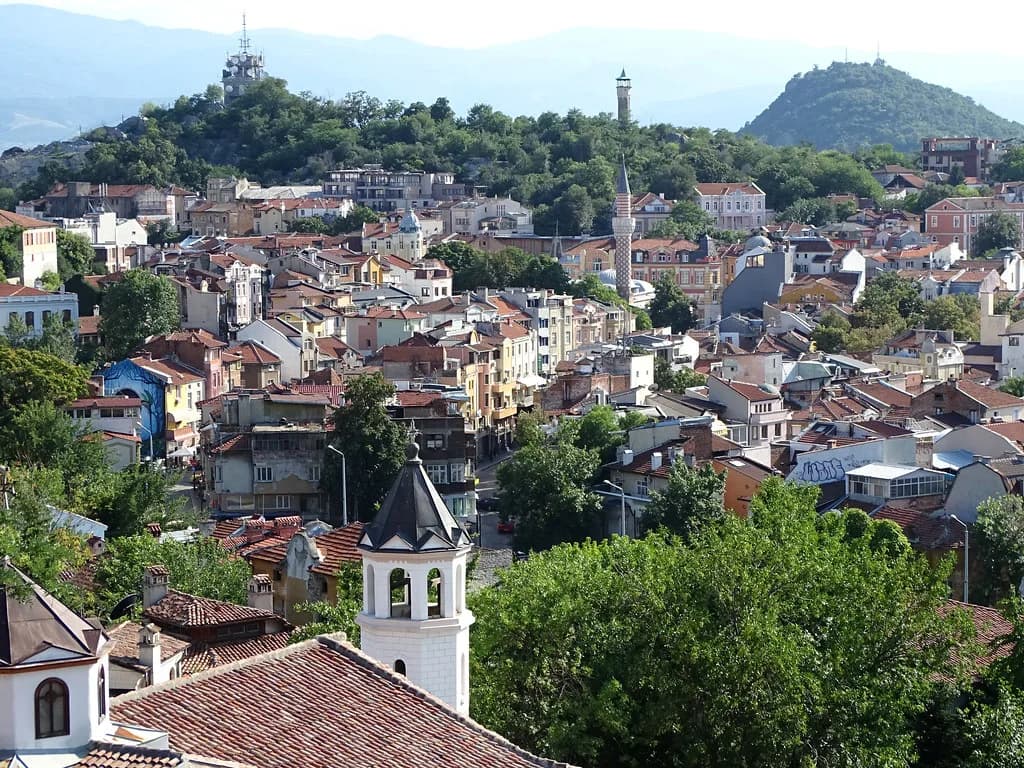
On character, Sofia is a working capital of commuters and broad boulevards; Plovdiv is a seven-hill historic town of rooftops and lanes. On highlights, Sofia brings the Serdica ruins, the Rotunda of St. George, Alexander Nevsky Cathedral, Boyana Church and Vitosha Mountain, while Plovdiv brings the Roman Theatre of Philippopolis, the Old Town, Nebet Tepe and Kapana. Typical costs run higher in Sofia for restaurants and capital hotel rates, while Plovdiv concentrates its value in Kapana and the Old Town.
On ideal length of stay, Sofia needs one or two days in the center, three with Vitosha and Boyana; Plovdiv needs two full days plus a day trip. On crowds, Sofia's are commuters and tour groups around the cathedral, and Plovdiv's are seasonal: quiet on a spring weekday, busy on a summer weekend or when a performance runs at the theater.
What Plovdiv does better
Plovdiv wins on walkability: the Old Town, Kapana and the Knyaz Alexander I pedestrian street sit together and are largely car free, so you barely need transport inside the city. It also wins on Roman atmosphere, because a second-century theater still hosts summer concerts above the lanes rather than sitting behind museum glass.
It wins on value concentration, too: dorms start near 20-30 BGN, guesthouses run 40-100 BGN and mid-range city hotels sit at 60-130 BGN, with Kapana mains at 8-22 BGN. Those figures were quoted in leva before Bulgaria adopted the euro on 1 January 2026, so treat them as a guide to the price level in each city rather than a current bill.
What Sofia does better
Sofia wins on depth. It has the country's widest restaurant range, its best museum cluster and the easiest arrival in Bulgaria, which is why so many trips start there. It also wins on scenery within the city limits: Vitosha Mountain is about 30 minutes away, with hiking in summer and skiing in winter and a gondola from Simeonovo up to a cabin restaurant.
It wins on day-trip options as well, since the capital is the transport hub for trains toward Bucharest, Thessaloniki and Istanbul and buses to every Balkan capital. If you want a car for the mountain or the wider region, read our guide to renting a car in Bulgaria, and check current rental prices and dates before you commit, because traffic is the argument against driving in the center.
Plovdiv highlights worth your time
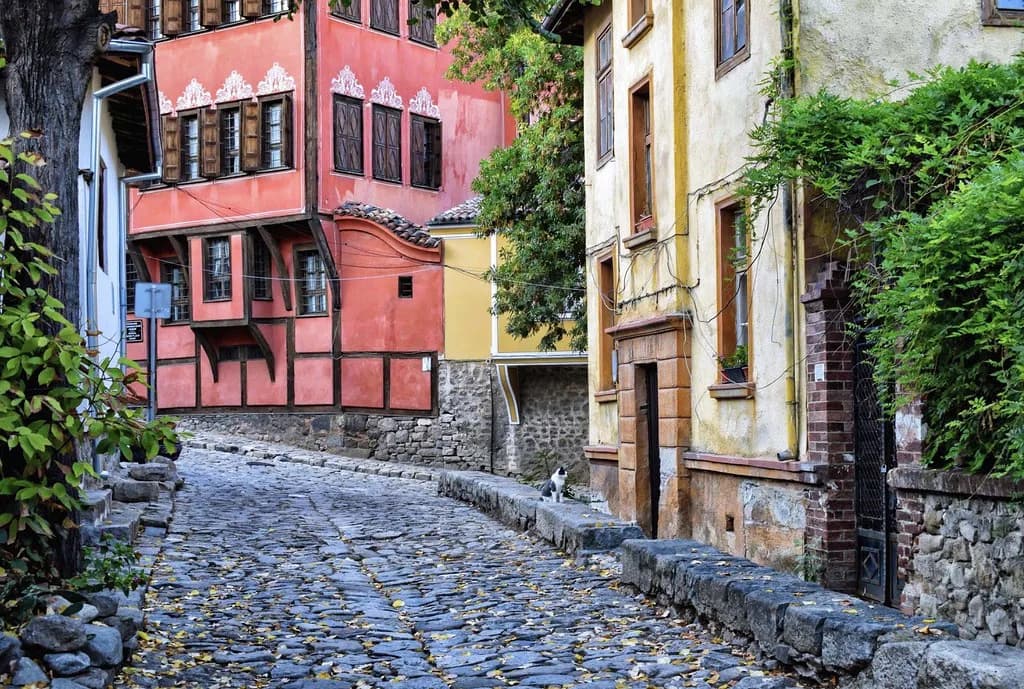
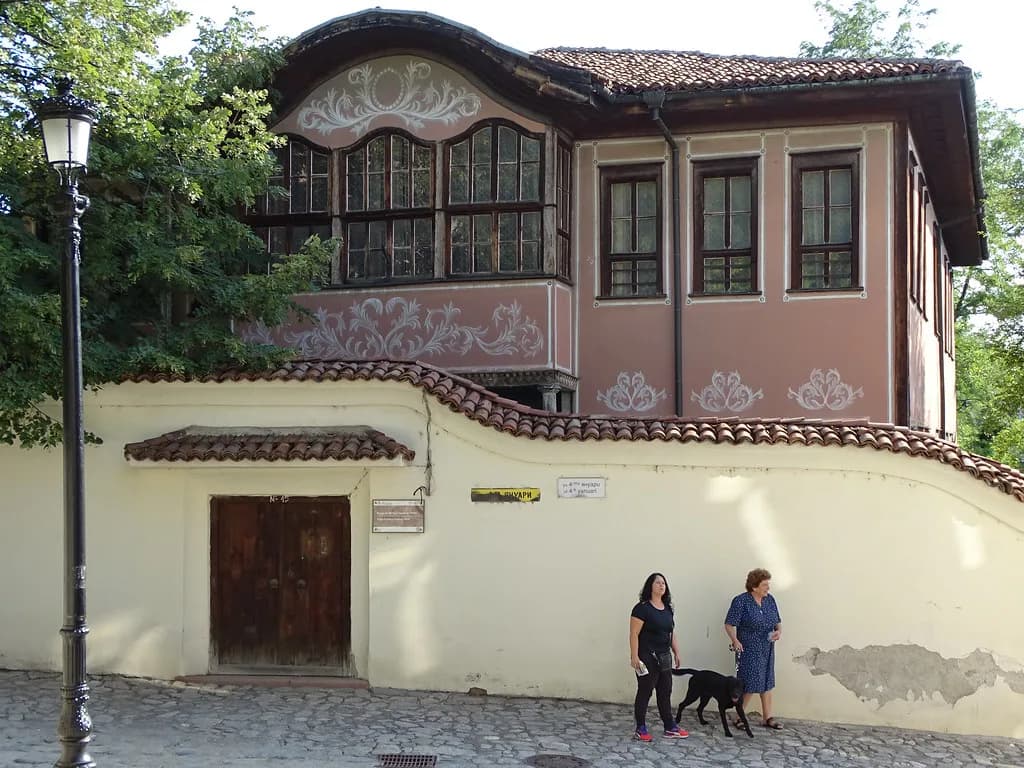
Start at the Roman Theatre of Philippopolis, a second-century structure that seats more than 5,000 and still hosts concerts on summer nights; adult entry was 10 BGN and student entry 5 BGN, with show tickets at 15-40 BGN. Above it, the Old Town is a cobbled maze of National Revival houses, with the Ethnographic and Archaeological Museums at 8 BGN each and a combined Old Town ticket at 12-15 BGN.
Nebet Tepe hill is free and gives the best view of the city, and Kapana, the creative quarter in a loop of streets near the center, fills with galleries, craft breweries, street art and small kitchens. Outside town, Bachkovo Monastery is free with a local bus at 3-4 BGN, and Asen's Fortress is free too.
Be honest about the layout: the Roman heritage is scattered rather than concentrated, with the theater on one hill, the stadium under the main pedestrian street and other fragments near the post office and the basilicas. You will not see it all in one sweep, and the Old Town cobbles and hill approaches are hard work with luggage.
Sofia highlights worth your time
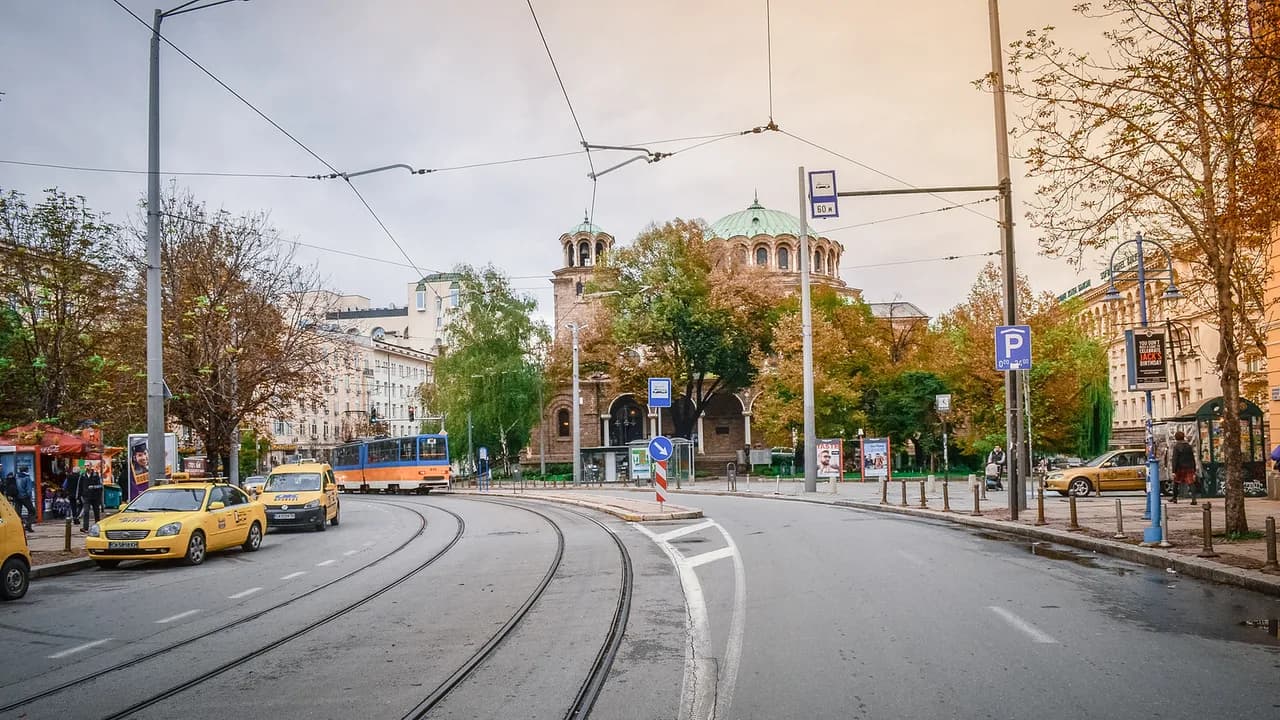
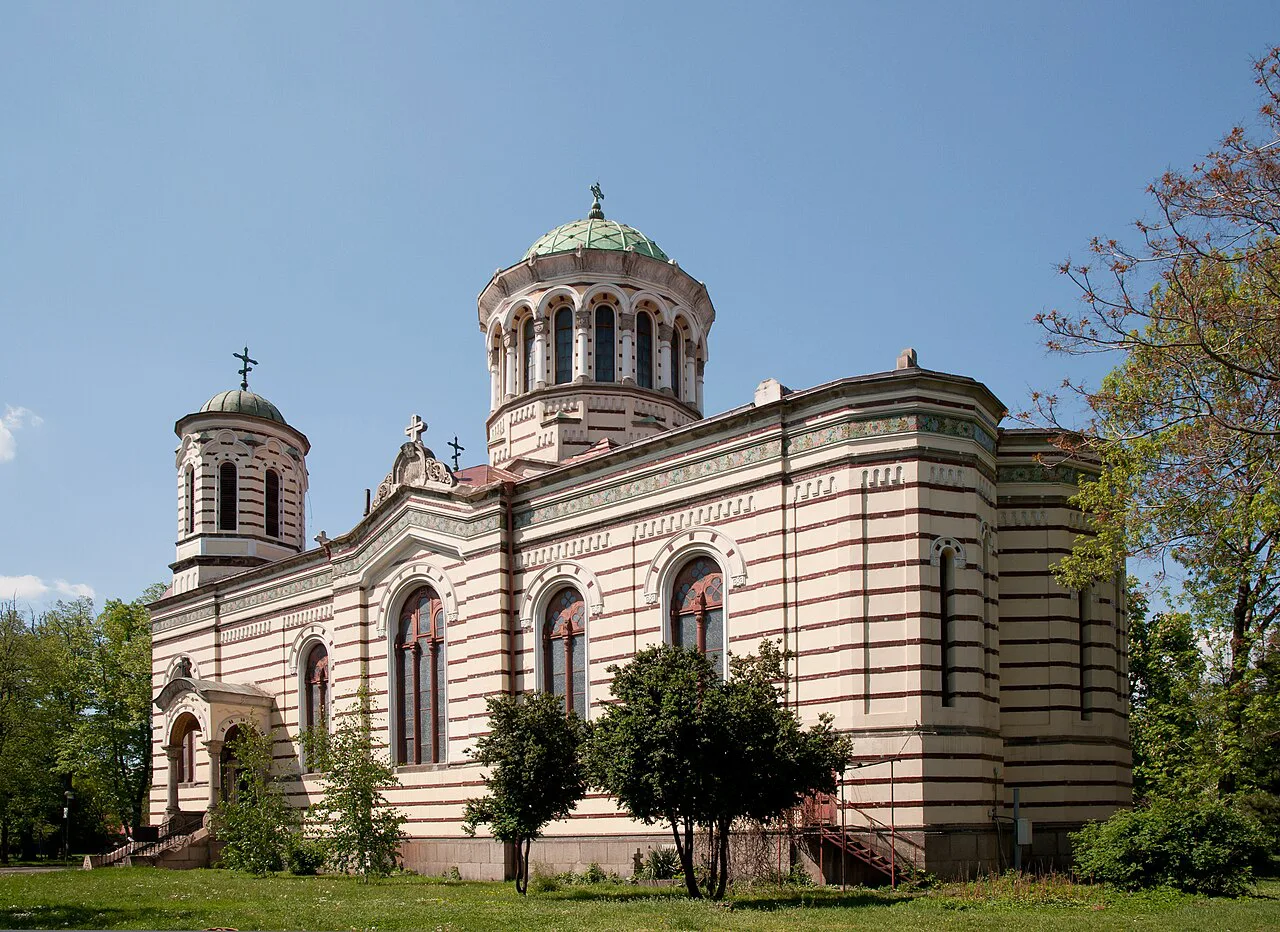
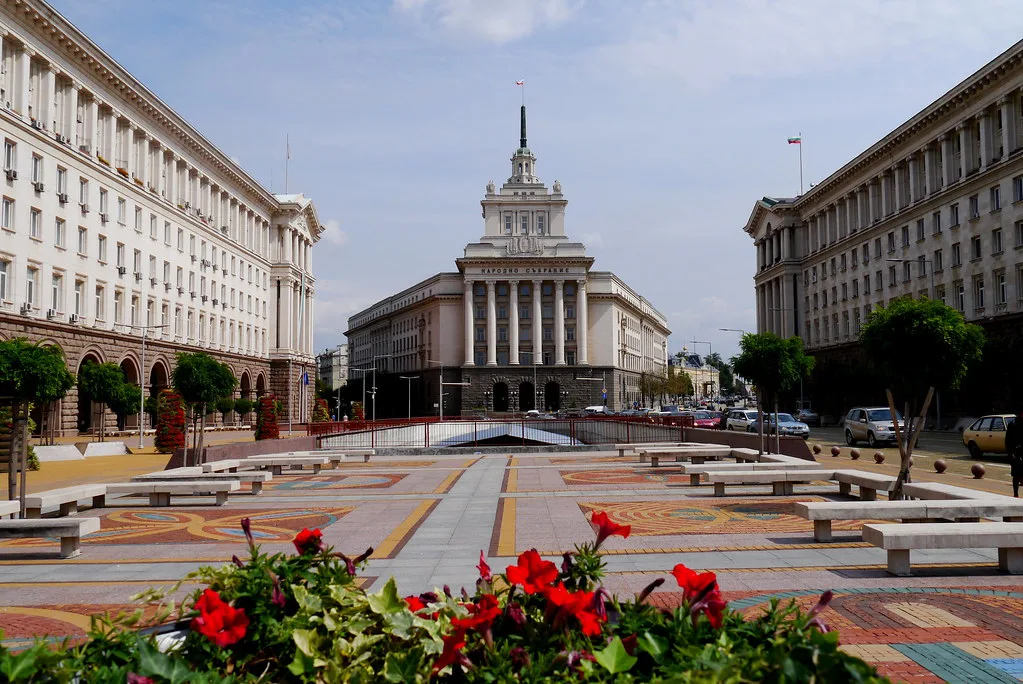
The central walk covers the Serdica ruins open to the sky a few metres below the trams, the fourth-century Rotunda of St. George, Alexander Nevsky Cathedral with space for 10,000 worshippers, and the communist-era Largo. That cluster is compact enough for a single day, but the sights are spread out across a busy boulevard network, so expect to cross more roads than you think.
Boyana Church, a UNESCO site with 13th-century frescoes, needs a bus or taxi, and day two often belongs to Vitosha Mountain. Local taverns serve shopska salata, banitsa, kavarma and rakia, which is the other reason to give Sofia more than a pass-through.
Crowds and atmosphere
Sofia's crowds are commuters, not tourists: away from the cathedral you share space with people going about their day, Vitosha Boulevard fills in the evening, and the free 11 AM walking tour from the Palace of Justice reads the city quickly. Plovdiv is more seasonal, with Old Town lanes and Kapana quiet on a spring weekday and busy on a summer weekend or when a performance runs at the theater.
The practical difference is that Plovdiv's compact center feels its visitors more than Sofia's wide streets do, so a busy weekend there can change the mood of the whole trip. If your dates are fixed, the best time to visit Bulgaria guide explains which months keep the lanes calm and which bring the crowds.
Typical costs in each city
Neither city strains a normal travel budget, but Sofia carries more mid-range and expensive restaurants plus capital hotel rates, while Plovdiv's value sits in Kapana and the Old Town. You can eat and sleep on much the same daily budget in both: Sofia lets you spend more if you want to, Plovdiv gives you fewer reasons to.
For a fuller daily picture across the country, our guide to whether Bulgaria is cheap breaks down food, transport and bed costs by category. Plan in the local currency you will actually pay in, and remember that prices quoted in older leva figures no longer match the notes in your wallet.
How many days each city needs
Give Sofia one or two days in the center, or three if you add Vitosha and Boyana, and give Plovdiv two full days plus a day trip. With under 36 hours total, pick one and skip the other rather than splitting a short stay across two cities.
If you have more time in the country, the best places to visit in Bulgaria maps which towns and regions deserve extra nights beyond these two. That matters most when you are choosing between a longer stay in Plovdiv and a side trip to somewhere like Veliko Tarnovo.
Getting between Sofia and Plovdiv
Buses reach Plovdiv in roughly 2h15-2h30 for 12-18 BGN, fast trains take about 2h20 for 12-14 BGN, and slower trains run about three hours for 7-10 BGN. By car the A1 motorway takes about 1.5 hours, which is the fastest option if you are already driving.
The bus is the simplest choice for most travelers because it drops you close to the compact center, where you barely need transport once you arrive. Treat the ticket as the price of adding a second city rather than a reason to skip one.
Getting there and getting around
Sofia Airport is 10 km from the center, and metro Line 1 covers the trip in about 20 minutes. Inside Sofia, the metro, trams and buses are efficient and very cheap, and walking handles the central cluster; inside Plovdiv, the Old Town, Kapana and the pedestrian street are compact and largely car free.
Entry rules for Bulgaria are set by the government, so use the official Bulgarian government page once before booking flights. Beyond that, the transport decisions are simple: use the metro from the airport in Sofia, and plan on foot in Plovdiv.
Drawbacks nobody mentions
In Sofia, the sights are spread out and the center is a busy boulevard network where you cross more roads than you expect; traffic is the argument against renting a car there. In Plovdiv, the Roman heritage is scattered, the cobbles and hills punish luggage, and the city is smaller than its reputation suggests.
Plovdiv's seasonal rhythm is the other hidden cost: a summer weekend or a theater performance can fill the lanes that were empty on a Tuesday in spring. Neither city is a hardship, but knowing which drawback you can live with is the real decision.
Who should choose Sofia, who should choose Plovdiv
Choose Sofia if you want museums, the widest food range, the mountain and the easiest arrival in the country, and you accept spreading your days across a big capital with heavy traffic. Choose Plovdiv if you want to walk out your door into Roman remains and an evening scene in Kapana, and you are happy with a smaller city you can finish in a couple of days. If you are still weighing which Bulgarian city deserves your days, our guide to whether Varna is worth visiting shows how the Black Sea coast compares.
Travelers with four days should take both, Sofia first because that is where you land. Families and museum-goers lean Sofia; couples and walkers lean Plovdiv; anyone on a tight two-night stop should pick one and return for the other.
Doing both in four days
Book two nights in Sofia and two in Plovdiv, with a morning bus or fast train between them so you arrive in time for an afternoon in the Old Town. Day one in Sofia covers the Serdica ruins, the Rotunda, Alexander Nevsky and the Largo; day two goes to Boyana Church or Vitosha, depending on the season.
In Plovdiv, give the Roman Theatre and the Old Town one day and Kapana plus Nebet Tepe the next, with Bachkovo Monastery or Asen's Fortress as the day trip if you have a third. The four-day shape works in spring and autumn, when the lanes are quieter, and in June, when the days are long enough for an evening at the theater.
Plan Your Visit
If your trip is short, choose one city and do it properly: Plovdiv for walkable history and evenings in Kapana, Sofia for museums, food and the mountain. If you have four days, take both and let the bus between them be the cheapest upgrade on your itinerary.
Explore more Bulgaria trip-decision guides
- Bulgaria in August
- Bulgaria in July
- Bulgaria in June
- Bulgaria in September
- Bulgaria Plug Type
- Bulgaria vs Romania
- Do They Speak English in Bulgaria? A Traveler's Honest Answer
- Money in Bulgaria
- Bulgaria eSIM
- Bulgaria Itinerary
- Getting Around Bulgaria
- The Best Cities in Bulgaria, and Who Each One Suits
Frequently Asked Questions
What is the distance between Sofia and Plovdiv?
They sit on the same corridor about 2h15-2h30 apart by bus, with fast trains taking a similar time and slower trains around three hours. By car the A1 motorway covers the trip in roughly 1.5 hours.
Is Plovdiv worth visiting over Sofia?
Plovdiv is the better choice if you want a compact, walkable city with Roman remains, an Old Town and a creative quarter, and you have two full days plus a day trip. Sofia wins if you want museums, the widest food range and a mountain within half an hour, or if you are flying in and out anyway.
How many days do you need in Plovdiv?
Two full days cover the Roman Theatre, the Old Town, Nebet Tepe and Kapana at a relaxed pace. Add a third day if you want Bachkovo Monastery or Asen's Fortress, both of which sit outside the city.
Should you visit both Sofia and Plovdiv?
Yes, if you have four days: two nights in each, with a morning bus or fast train between them. It gives you Bulgaria's best museums and its most walkable historic center, and the ticket between the cities is the only real extra cost.
Is Plovdiv cheaper than Sofia?
Plovdiv concentrates its value in Kapana and the Old Town, with cheaper meals and beds, while Sofia has the country's widest range and more mid-range and expensive restaurants. You can eat and sleep on much the same daily budget in both, but Sofia gives you more ways to spend.
Sources
Trip-decision notes
Optional updates when we publish or revise a destination verdict.
You might also like
Continue reading
More guides you'll find useful