Bulgaria in May: Weather, Crowds and Whether to Go
May is Bulgaria's best-value month for cities, monasteries and low-altitude hikes, with cool Black Sea water, unsettled afternoons and thinner crowds.
On this page
May is a strong month for Bulgaria if your trip is built around cities, monasteries and low-altitude hiking, and a mediocre one if you are chasing beach days. The country is warm but not yet baking, the big resorts are still quiet, and the headline event of the month, the oil-rose harvest around Kazanlak, is genuinely time-sensitive. Decide what kind of trip you want first, because May rewards culture and walking far more than swimming.
The verdict
Go in May for Plovdiv, Sofia, Veliko Tarnovo, the Rila and Bachkovo monasteries, and forest-belt trails in the Rhodope Mountains, Vitosha and Stara Planina. Skip May if your plan is a Black Sea beach holiday, because the air is warm while the water stays cold until midsummer. If you want a single trip that mixes old towns, mountain walks and a few coastal days, May works well as long as you treat the coast as a place to walk and eat rather than swim.
The month also sits at a useful price point: pre-season, before the July and August crowds fill Sunny Beach, Golden Sands and Albena. You trade guaranteed sunshine for thinner crowds and softer heat, which most city and hiking travelers will happily accept.
Who will love Bulgaria in May
City and culture travelers get the best of the month. Plovdiv's old town, the Roman theater and the Revival-era houses of Koprivshtitsa, Bozhentsi, Tryavna and Zheravna are all more pleasant in May than in the 35–40°C [95–104°F] heat that the low plains can reach later in summer.
Hikers who stay in the forest belt, roughly 800 to 2,000 m, find cool, fresh conditions and long days. Above the tree line it is colder and patches of old snow can linger into early summer, so plan lower routes and keep the highest ridges for later in the season.
Travelers who want the Rose Valley at bloom should aim for late May into early June, when the oil-bearing roses around Kazanlak flower. The Kazanlak Municipality sets the festival weekend each year, so treat the bloom window as the reliable part and the celebrations as the variable.
Who should pick a different month
Beach-first travelers should look at July or August, when Black Sea water reaches roughly 25–26°C [77–79°F]. In May the sea is still cool, so a resort stay becomes pool-and-promenade time rather than swimming.
If you want a single month that balances warm sea, dry days and open high trails, September is usually the better answer, and June is the better compromise for coast plus mountains. Use the best time to visit Bulgaria to weigh those options against your dates.
Anyone planning to summit Musala in Rila or the higher Pirin ridges should push that to July or later; in May the tops are cold, exposed and prone to fast weather changes. Travelers who mainly want guaranteed sun should book July or August and accept the crowds.
Weather in May: inland plains versus the Black Sea coast
Bulgaria's May weather is not one story. The Upper Thracian Plain around Plovdiv and Sadovo, the Danubian Plain and Dobrudzha heat up fastest, while the high mountains stay cool and the coast is moderated by the sea. Plan by terrain zone, not by a national average.
Expect changeable days rather than a steady ramp into summer. Cool, humid spells and thunderstorms are more common in May and June, while the sustained hot waves that push the plains to 35–40°C [95–104°F] mostly arrive from the second half of July.
On the coast around Burgas, May days typically average about 21°C [70°F] with nights near 12°C [54°F], which means pleasant walking weather and chilly evenings. Pack a light layer for the evening even if midday feels like summer.
Sea temperature and the Black Sea in May
The Black Sea warms slowly. It is cool through May and June and only reaches the mid-20s Celsius in July and August, so May swims are for the hardy rather than the holidaymaker.
Sea conditions can change quickly even in calm-looking months. Northerly and northeasterly winds can build heavy surf and rip currents along sandy beaches at any point in summer, so follow lifeguard flags and treat rough days as promenade days.
Why May afternoons turn stormy in the mountains
May mornings often start humid and warm, with cumulonimbus clouds building by midday and thunderstorms following. In the mountains that makes early starts the sensible pattern, with a descent or shelter before the afternoon.
Hail and sudden temperature drops are the practical risks on exposed ground, and summits and forest edges are the worst places to be caught. Build a shorter morning route and keep a town or monastery as an afternoon backup rather than pushing a long ridge day.
Where May works best: Plovdiv and the old towns
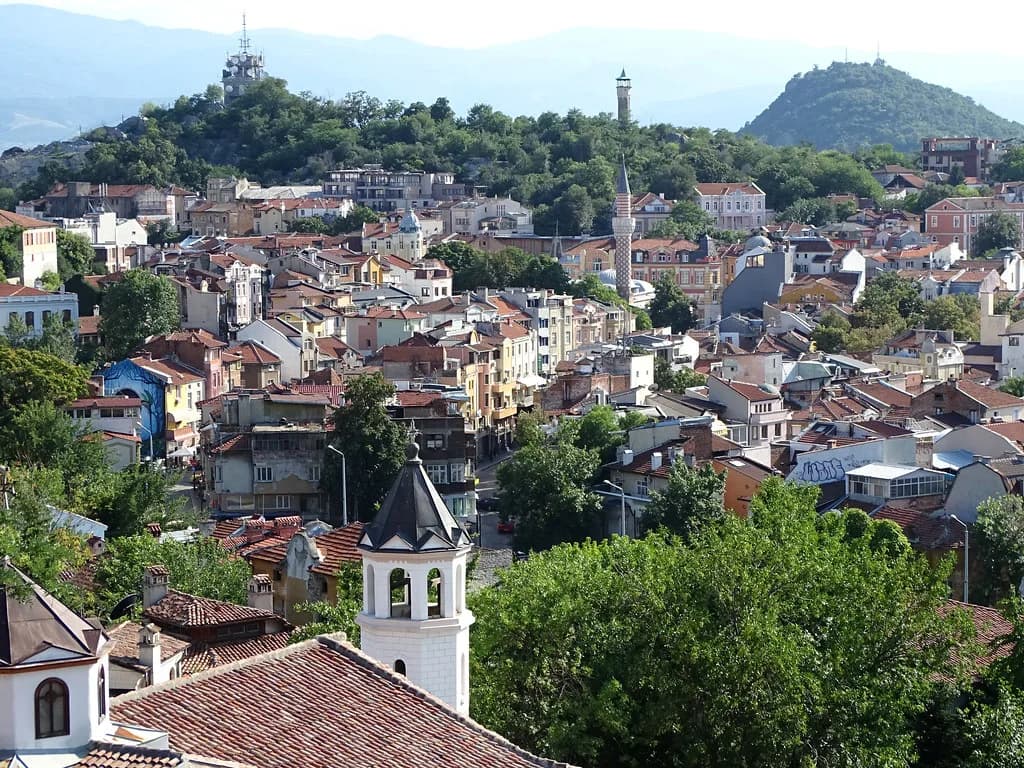
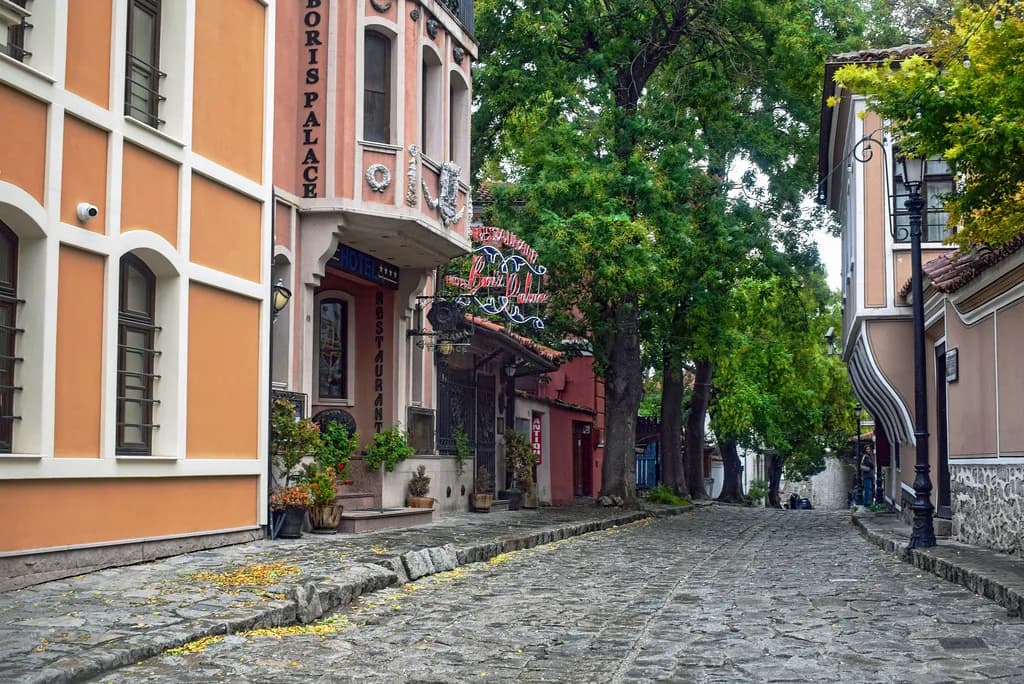
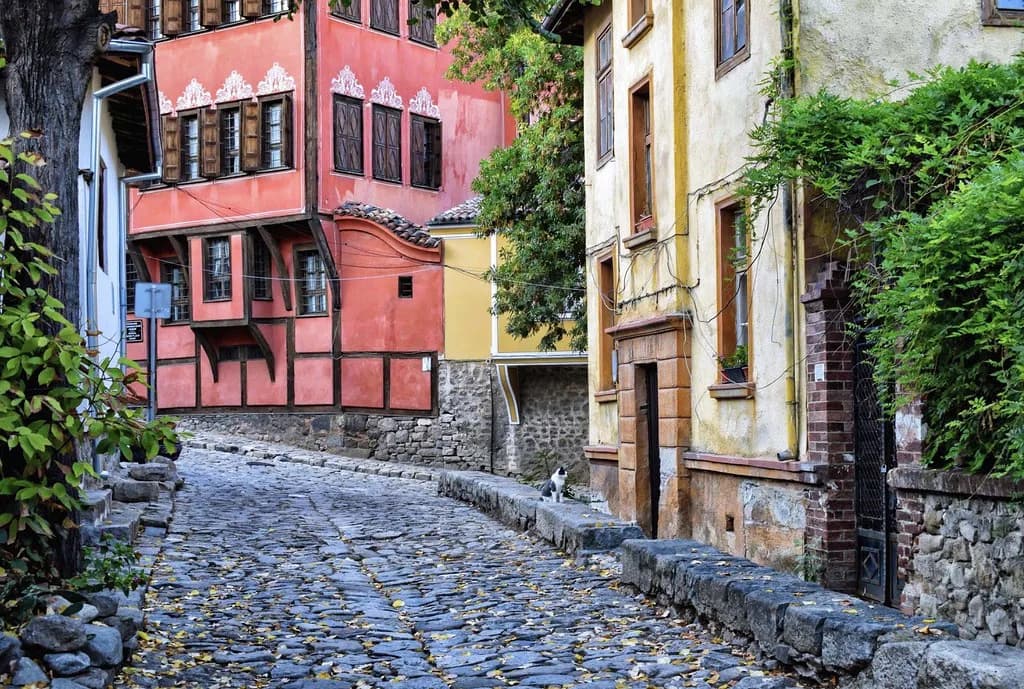
Plovdiv is the anchor. The old town, the Roman theater and the Kapana quarter give you a compact day of history and food, and May temperatures make walking between them comfortable. Locals tend to retreat indoors at the hottest midday hours in high summer; in May that rhythm is milder but still worth copying, with a long lunch and a late-afternoon walk.
Pair the city with the small Revival towns: Koprivshtitsa, Bozhentsi, Tryavna, Zheravna and Etara sit in greener, higher surroundings and stay cooler than the plains. They reward slow wandering through wooden houses and cobbled lanes rather than checklist sightseeing.
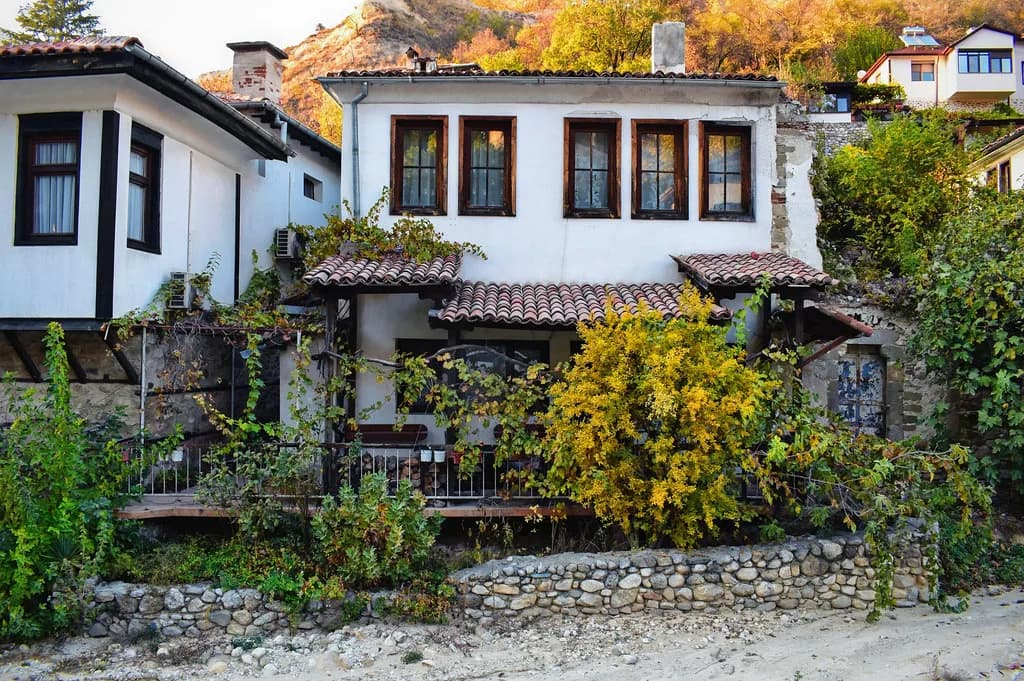
Melnik, in the southwest, is a good add-on for wine and the sandstone pyramids nearby, and it fits naturally into a Plovdiv-to-Rila loop. Allow a full day for the drive and short walks rather than treating it as a quick photo stop.
Sofia, Rila Monastery and Vitosha as a May add-on
Sofia works as a two-day base: the center, the Alexander Nevsky Cathedral and the markets are easy on foot, and Vitosha rises directly south of the city for a half-day of forest walking. In May the lower slopes are green and the upper mountain can still be cold, so pick a route by altitude.
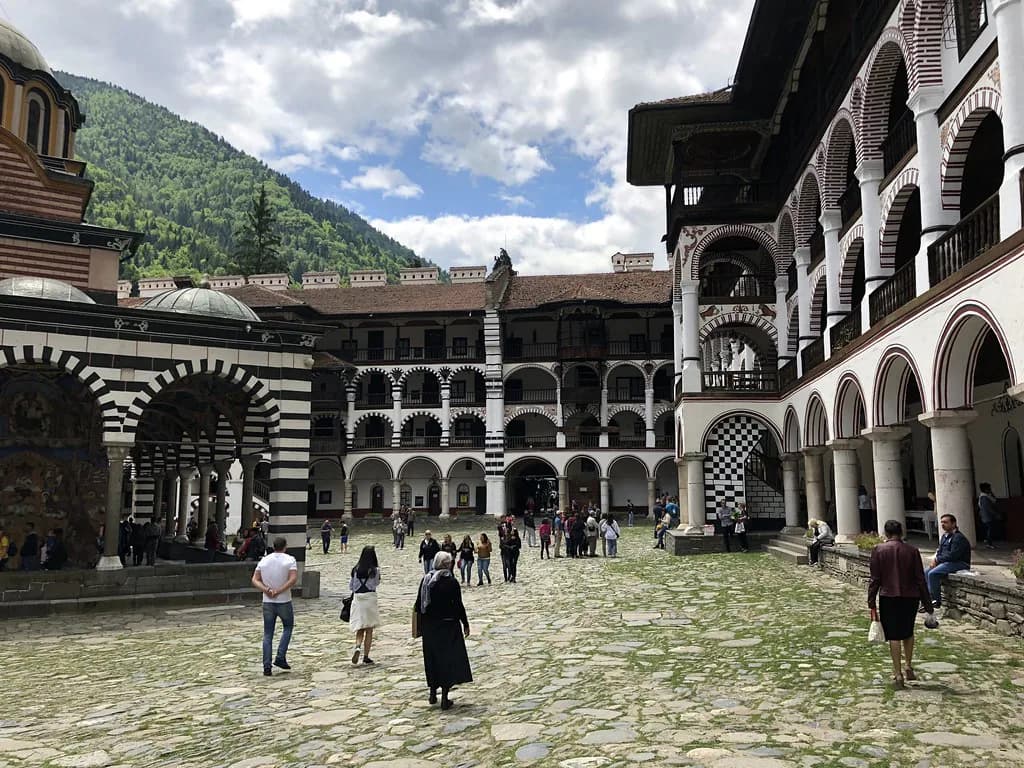
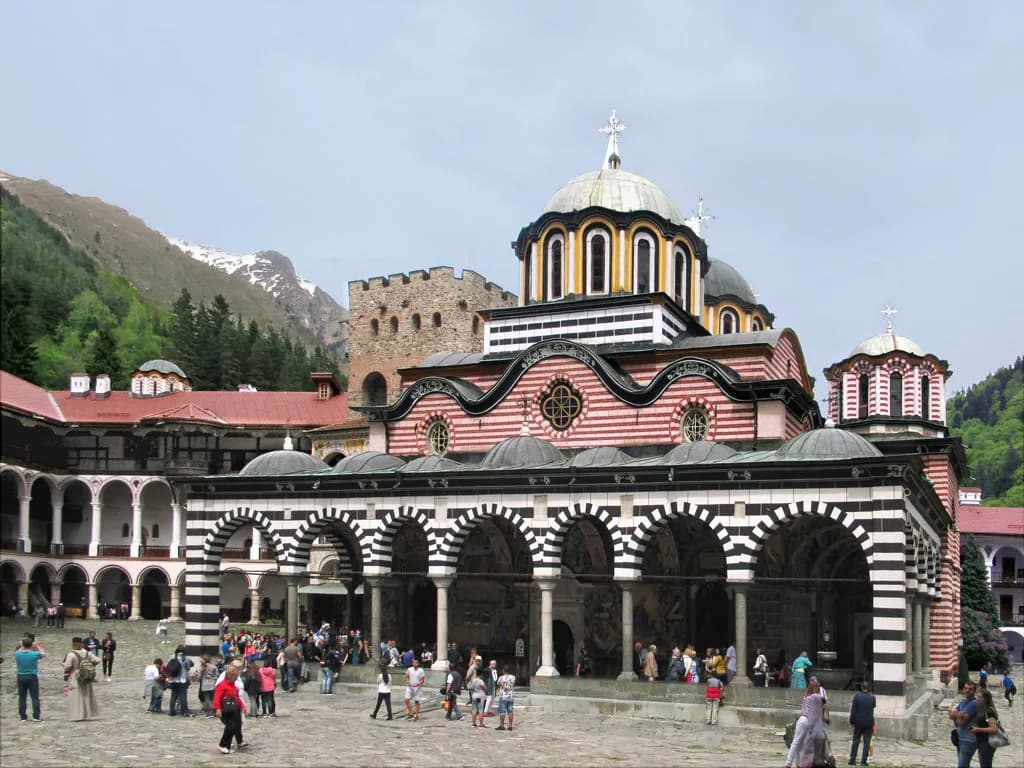
Rila Monastery, a UNESCO site in the Rila Mountains, is the standard day trip from Sofia and is at its most comfortable before the summer heat and crowds. Combine it with a short walk in the surrounding forest rather than rushing back the same afternoon.
If you plan to drive this loop, renting a car in Bulgaria opens up Rila, Melnik and the Rhodope villages far more efficiently than buses. Mountain roads are slow and winding, so budget more time than the distance suggests.
The Rose Valley and the Kazanlak rose harvest
The oil rose, known as Rose Otto, blooms from late May to mid-June in the plain between Stara Planina and Sredna Gora, centered on Kazanlak. That bloom window, not a fixed date, is what you should plan around.
The Rose Festival weekend, including the election of the Rose Queen, is set by Kazanlak Municipality and shifts each year, so check its dates before booking. Related events can begin earlier in the season, and the fields themselves are the most reliable draw.
Kazanlak also sits within easy reach of the Thracian tomb and the Shipka Pass, so a two-night stay lets you see the harvest, the tomb and a Stara Planina walk without long drives. Book early for festival weekends, when rooms in the valley fill.
Veliko Tarnovo and the monasteries of the north
Veliko Tarnovo, the old capital on its steep gorge above the Yantra, is one of Bulgaria's most dramatic townscapes and suits May's mild walking weather. Add the nearby Dryanovo Monastery and the rock-hewn complex at Ivanovo for a full day.
Bachkovo Monastery, south of Plovdiv in the Rhodope foothills, makes a natural link between the Thracian Plain and the mountains. Its frescoed refectory and shaded courtyard are a good midday stop before afternoon storms build.
The Rhodope Mountains and village folklore
The Rhodopes are Bulgaria's most atmospheric mountain region, with villages such as Shiroka Laka and Smolyan, forests above 800 m that stay cool in May, and a strong folklore tradition. The bagpipe contest at Gela is held on the first weekend of August, so it is not a May event, but village life and smaller local gatherings run through the season.
The Rozhen folklore gathering is a bigger, more commercial event but is not held every year, so check whether an edition is scheduled before planning around it. In May, focus on walking, village guesthouses and the landscapes rather than big festivals.
Black Sea resorts in May: Varna, Nesebar and Sozopol
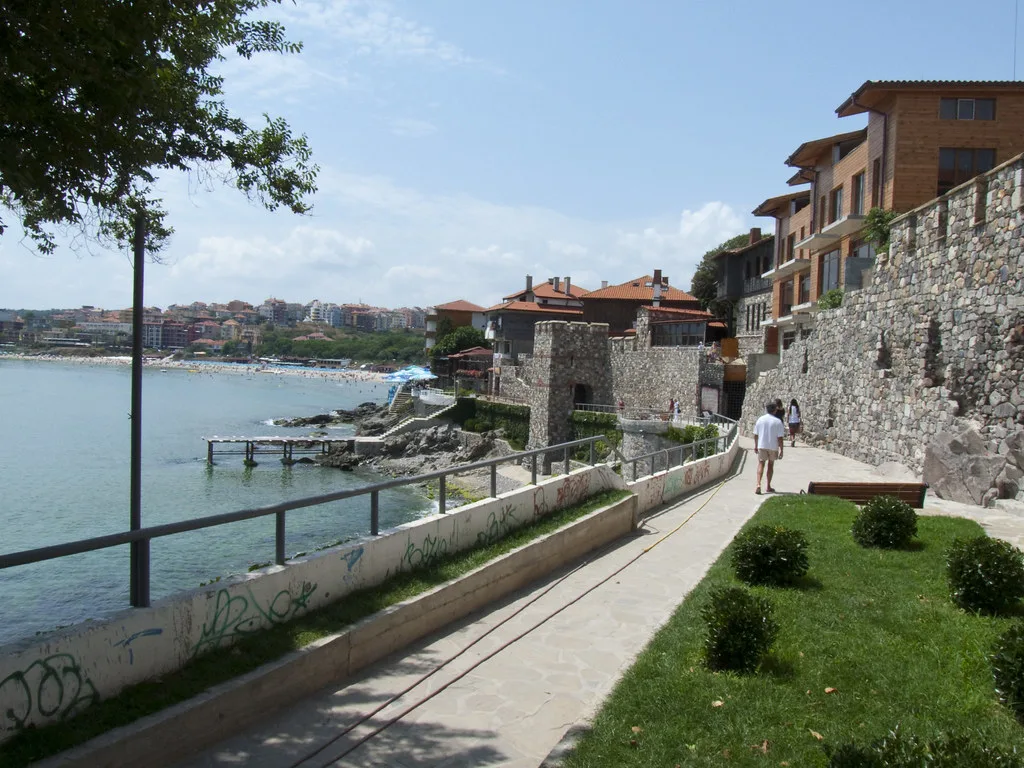
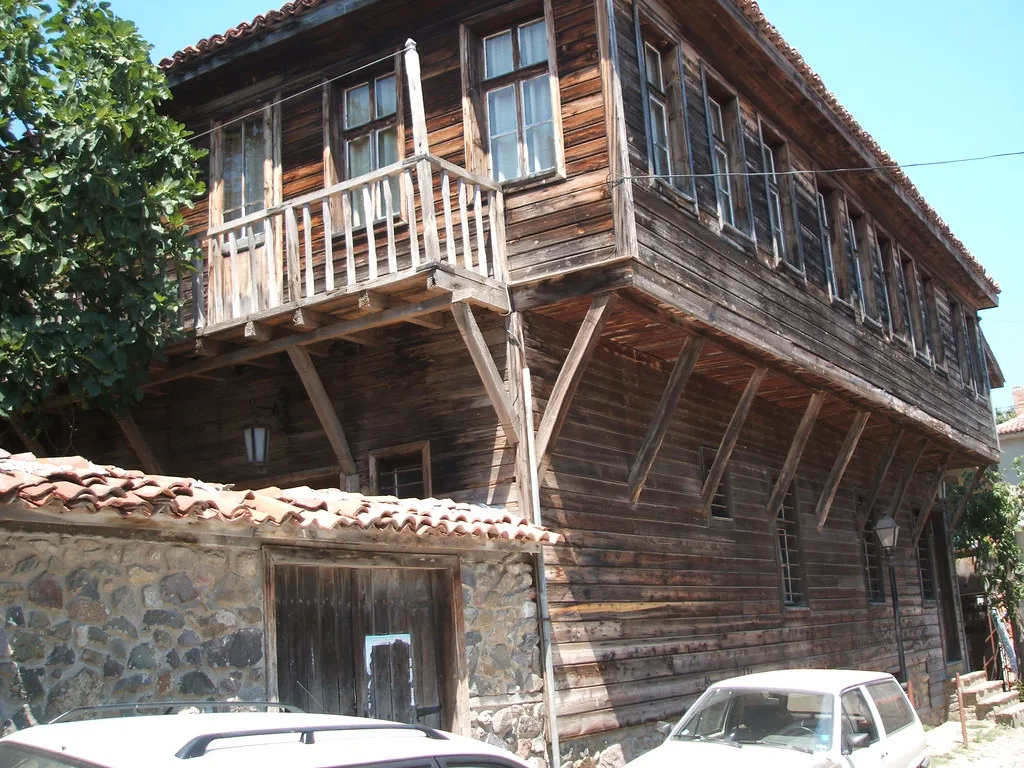
Treat the coast in May as a culture and walking trip. Varna gives you the Sea Garden, the Roman baths and the archaeological museum, while Nesebar's UNESCO-listed old town on its isthmus and Sozopol's wooden houses are best explored before the summer crush.
Sunny Beach and Golden Sands are built for high-season volume, and in May they are quiet, cheaper and a bit hollow, with some seasonal businesses still opening. That quiet is an advantage if you want a base for day trips and a drawback if you want a full resort experience.
Burgas is the practical southern gateway, with the Sea Garden and boat trips to St. Anastasia Island, and it links easily to Sozopol, Primorsko and the quieter southern coves. For the same pre-season coastal trade-offs further north, see Varna in May. A car makes the small coastal towns far easier to reach than the bus network does.
How many days you need in May
Give Bulgaria at least ten days in May to cover Sofia, Rila, Plovdiv, the Rose Valley and Veliko Tarnovo without rushing. Seven days works for a tighter Sofia–Plovdiv–Rhodope loop, and two weeks lets you add the coast and the northern monasteries.
Build in a weather buffer of one afternoon per mountain day, because May storms are common. Keep city days flexible so you can swap a wet afternoon for a museum or a long lunch rather than losing the day.
Typical costs and what May saves you
May is cheaper than July and August across the board, especially on the coast and in Sunny Beach and Golden Sands, where pre-season rates are lower and availability is wider. Inland cities and monasteries are modestly priced year-round.
Bulgaria has used the euro since 1 January 2026, so prices you see in older guides in lev are out of date. Carry some cash for small village businesses and mountain huts, and confirm card acceptance locally.
For real daily budgets, use a current costs guide rather than old lev figures. Transport and entry tickets vary by operator, so confirm at the ticket office or operator website when you book.
Getting there and getting around
Sofia Airport is the main international gateway, with Varna and Burgas serving the coast. From Sofia, buses and trains reach Plovdiv and Veliko Tarnovo, but mountain monasteries and Rhodope villages are far easier with a car.
Driving gives you the Rose Valley, Rila and the Rhodopes on your own schedule, at the cost of slow mountain roads and parking in old towns. Buses are cheap and frequent on main corridors, but thin out in rural areas.
For entry rules, use your own government's official travel page once and leave it at that. For everything else, a venue's own website is the reliable source, and it is worth checking current prices and dates before you go.
Drawbacks: rain, closed mountain trails and cool evenings
The main drawbacks are honest ones: unsettled afternoons with thunderstorms, especially in May and June; cool sea water; and cold evenings in the mountains, where temperatures can drop to around 10°C [50°F] or lower above 2,000 m. Some high routes and mountain huts open later in the season.
Old snow can linger on the highest ground into early summer, closing or complicating the top trails. Below the tree line, the walking is generally open and pleasant, so plan accordingly.
May versus June and September: the trade-offs
June is warmer and greener, with the rose harvest finishing and the sea still cool. September is the strongest all-round month, with warm water, drier days and fewer crowds than July and August. May wins on value and quiet, June on longer days, September on balance.
By traveler type: city and culture travelers should pick May or September; hikers should pick June or September for open high trails; beach travelers should pick July or August; and families tied to school holidays should favor late June or early September.
Plan Your Visit
May is the month to see Bulgaria's cities, monasteries and lower mountains at their most comfortable, with thinner crowds and lower prices than high summer. Book the Rose Valley around the bloom window rather than a fixed festival date, and keep the highest trails for later in the season.
If you want a beach holiday, wait for July or August. If you want the best all-round balance, look at September. If you want value and quiet, May delivers it for culture and walking trips.
Explore more Bulgaria trip-decision guides
- Bulgaria in August
- Bulgaria in July
- Bulgaria in October
- Bulgaria in September
- Bulgaria Plug Type
- Bulgaria vs Romania
- Do They Speak English in Bulgaria? A Traveler's Honest Answer
- Money in Bulgaria
- The Best Places to Visit in Bulgaria, and Who Each One Suits
- Bulgaria eSIM
- Bulgaria Itinerary
- Getting Around Bulgaria
Frequently Asked Questions
Is May a good time to visit Bulgaria?
Yes, for cities, monasteries and low-altitude hiking. The plains are warm without the 35–40°C [95–104°F] heat waves of high summer, the resorts are quiet and rates are lower. It is a weaker choice for beach holidays, because the Black Sea stays cool until July and August.
What is the weather in Sofia, Bulgaria in May?
Sofia sits on a high plain and has changeable May days with warm afternoons, cool evenings and a real chance of thunderstorms. Use a national weather service or climate normals for typical figures rather than a single forecast, and keep an afternoon buffer for rain.
What is the hottest month in Bulgaria?
July and August are the hottest months, when hot waves from the south can push the low plains to 35–40°C [95–104°F]. The country's reported record of 45.2°C [113.4°F] was set at Sadovo, near Plovdiv, on 5 July 1916.
Is the sea warm enough to swim in Bulgaria in May?
Usually not comfortably. The Black Sea is cool through May and June and only reaches about 25–26°C [77–79°F] in July and August. May is better for coastal walks, old towns and seafood than for swimming.
Is May a good month for hiking in Bulgaria?
Yes, in the forest belt between roughly 800 and 2,000 m, where conditions are cool and fresh. Above the tree line it is colder, old snow can linger, and afternoon thunderstorms are common, so start early and keep high ridges for midsummer.
When does the Rose Festival in Kazanlak take place?
The oil roses bloom from late May to mid-June, and that bloom window is the reliable part. The festival weekend is set by Kazanlak Municipality each year, so confirm the dates with the municipality before booking.
Should I choose May or June for Bulgaria?
Pick May for lower prices and fewer crowds, and June for warmer days and a greener landscape. Both are better for culture and hiking than for swimming, because the sea stays cool until July. Beach travelers should look at July or August.
Sources
Trip-decision notes
Optional updates when we publish or revise a destination verdict.
You might also like
Continue reading
More guides you'll find useful