Money in Slovenia: Currency, Cards and Cash (Euro Guide)
Slovenia uses the euro, so there is no currency conversion to plan. Here is how cards, cash, ATMs and tipping work on a Slovenian trip.
On this page
Slovenia uses the euro, so you arrive with the right money in your pocket and no conversion arithmetic at the till. The real planning decisions are narrower: how much cash to carry, where cards fail, and what tipping actually looks like.
This guide covers the currency, the defunct tolar, card acceptance, ATMs, exchange options and tipping, and points out which costs are fixed and which depend on your own bank. If you are still weighing the trip itself, our take on whether Slovenia is worth visiting sets the wider context.
The verdict: what money you need in Slovenia
Bring a normal mix: a debit or credit card for the bulk of spending and a modest amount of euros in cash for the edges. Slovenia is a euro-area economy with widespread card use in towns, but small vendors and machine-based payments still reward having notes and coins.
Do not buy euros before you leave if you already hold them, and do not budget for exchange-rate surprises on arrival. Exchange-rate risk is off the table; what remains is what your own bank charges for foreign transactions and ATM withdrawals, which varies too much to generalise.
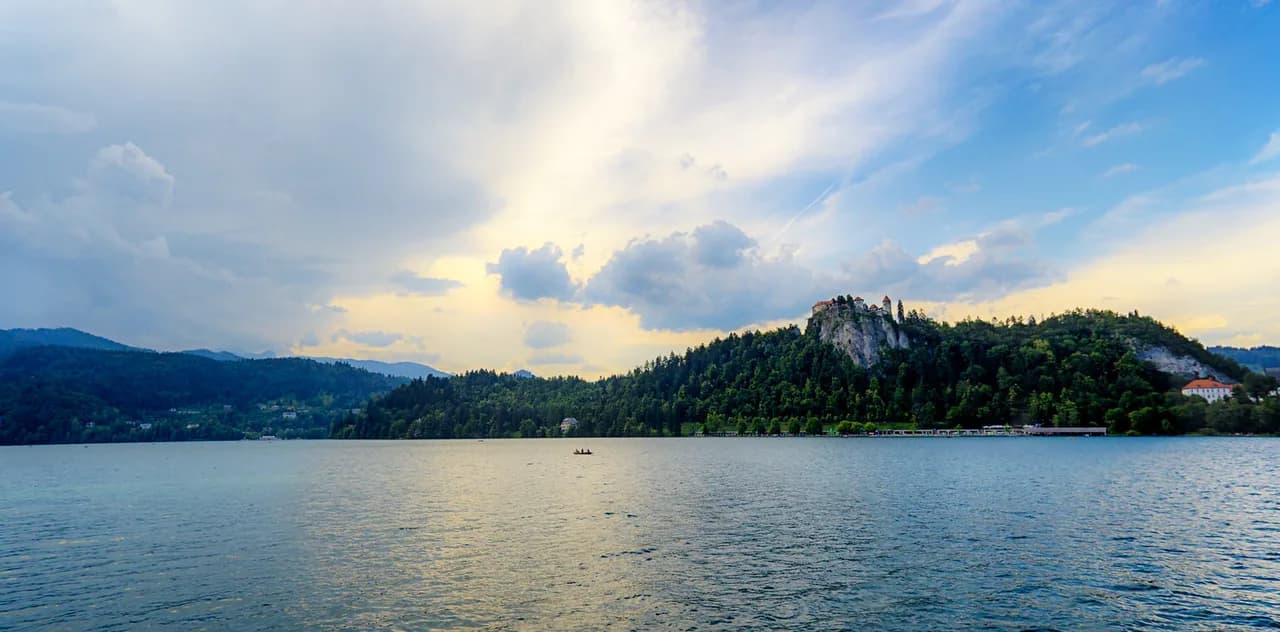
Where the trip goes matters more than the country. A city break built around Ljubljana, Lake Bled and the coast can run almost entirely on cards, while a hiking trip through the Julian Alps needs more cash for huts, stalls and small guesthouses. The same rule holds over the border, so if you are weighing other stops on a wider Balkan or Adriatic itinerary, our Pula trip guide covers how cash and cards work there.
What currency Slovenia uses today
Slovenia has used the euro since 1 January 2007, when it became the first of the EU countries that joined in 2004 to adopt the single currency. There is no separate Slovenian currency in circulation today, so prices, cards and ATMs are all in euros.
If you want a reference point for converting your own currency, the European Central Bank publishes daily reference rates, republished by Banka Slovenije, which are quoted as the amount of foreign currency per one euro. Treat them as a daily reference rather than a rate you will be offered; the rate at a bank counter or ATM includes that provider's margin.
Prices in Slovenia are shown in euros with a comma as the decimal separator, so 4,50 means four euros fifty. Card terminals and receipts follow the same convention, which occasionally trips up visitors reading a total quickly.
The tolar: Slovenia's currency before the euro
The Slovenian tolar was replaced at a fixed rate of one euro to 239.640 tolar, and both currencies circulated side by side from 1 to 14 January 2007. Old price lists, guidebooks and family stories from that era make far more sense once you know the conversion.
If you turn up an old tolar banknote in a drawer, Banka Slovenije still exchanges notes, but coins could only be swapped until 31 December 2016. A single note is a curiosity rather than spending money, so do not plan a trip around it.
Cards: where they work and where they do not
Visa and Mastercard are accepted almost everywhere you would expect in Slovenia: hotels, restaurants in Ljubljana and the larger lakeside towns, fuel stations and supermarkets. Contactless payment is standard, including on city buses in Ljubljana, where you tap a card rather than buy a paper ticket.
The gaps appear outside the main tourist circuit. Small farm stays and tourist farms in wine country, mountain huts in the Julian Alps, produce stalls at markets and some parking machines may take cash only, so keep enough euros to cover a meal and a parking fee.
Renting a car in Slovenia is one case where the card matters beyond payment: rental desks typically require a credit card in the driver's name for the deposit, which a debit card may not satisfy. Check the terms before you book, especially if you land at Ljubljana Jože Pučnik Airport and pick up a car there.
When a terminal offers to charge you in your home currency, decline and pay in euros. That dynamic currency conversion is a convenience priced by the terminal operator, and the euro amount on the receipt is the one the merchant actually asked for.
Cash: how much to carry and where to get it
A sensible approach is to keep a small float of euro notes for the day and top it up as needed rather than carrying a large sum. How small depends on your plans: a city-based trip needs very little, while a week of Alpine walking or village stays needs more.
Pay attention to seasonal patterns if you travel outside summer. Smaller establishments around Lake Bled and Lake Bohinj, and seasonal venues on the coast, can be card-shy or cash-only in the shoulder months, and some close entirely in winter.
Mountain huts are their own case. Many sit above the treeline with unreliable connectivity and no bank nearby, so treat cash as the default there and check your route before setting out.
ATMs and banks
ATMs are easy to find in Ljubljana, Maribor, Celje, Kranj and the main tourist towns, and Slovenian banks operate them under familiar names. Withdraw in euros and use your own bank's card, expecting your bank to set the conversion and any fee.
Use an ATM attached to a bank branch rather than a standalone machine in a bar or shop. Branch machines are more clearly branded, and you can step inside if a card is swallowed or a withdrawal fails.
If the ATM offers to convert your withdrawal into dollars or pounds, refuse and take the amount in euros. The machine's rate is set by the ATM provider and is almost always worse than the rate your own bank applies to the same withdrawal.
Exchanging dollars and pounds in Slovenia
Because Slovenia uses the euro, there is no need to exchange money for everyday spending on arrival. If you still want cash, use a bank branch or an established exchange office in Ljubljana rather than a casual counter in a tourist street.
Compare the rate and the commission before handing over notes, and ask for the total you will receive rather than the headline rate. Rates at counters include a margin that the ECB's daily reference rates do not.
For most travelers the simplest option is to bring a card and withdraw euros from a bank ATM as needed, keeping a little cash from home in case a machine is out of service.
Tipping in Slovenia
Tipping is modest and optional in Slovenia. Locals round up a bill or leave a small amount for good service, and a US-style percentage on every check is not the norm.
Restaurant bills often include only the listed price, so state the amount you want to pay when you hand over your card or cash. For a taxi, rounding up is a common and sufficient gesture.
In cafes and bars, loose change left on the tray is normal, and nobody will follow you down the street if you leave nothing. Service charges, where they appear on a menu, are written into the price list.
Typical costs and how to read prices
Slovenia sits in the middle of the European price range: cheaper than Italy or Austria for many everyday items, but not a budget destination in peak season, when lakeside accommodation and coastal towns charge the most.
Prices are always displayed in euros, and tourist areas around Lake Bled and Piran run higher than inland towns such as Celje or Ptuj. Accommodation is the biggest variable, with July and August well above spring and autumn.
Shifting your dates changes the money side more than any other single decision. Our guide to the best time to visit Slovenia covers when prices and crowds rise and fall across the lakes and coast.
Paying for transport, tickets and tolls
For the motorway network you need a vignette, sold in Slovenia in digital and physical form; the e-vignette is tied to the vehicle's registration plate, so your rental car's details must be entered correctly. Buy from the official source or a fuel station rather than a reseller, and keep the confirmation.
Buses in Ljubljana accept contactless card payment, and rail tickets can be bought online or at station counters in euros. Keep the card you used for online purchases with you when you collect tickets.
Car parks in popular spots increasingly use machines that take cards, but some mountain and village lots take coins. Carry a handful of small euro coins in the car for these.
Money mistakes to avoid
The most common mistake is over-preparing: changing large sums into euros before the trip when the country is already euro-based and cards are widely accepted. The second is the opposite, arriving with no cash and meeting a cash-only parking machine or hut.
Another is accepting dynamic currency conversion at ATMs and card terminals. Always choose the euro amount, and check your bank's foreign transaction fee before you go so the final cost does not surprise you.
Finally, do not plan around old guidebooks or prices quoted in tolars. Anything published before 2007 needs converting at the fixed rate, and even recent prices should be treated as indicative.
Who this applies to
If you are traveling from the US or UK, you can arrive with your normal cards and a small amount of euro cash. There is nothing to exchange on arrival and no parallel-currency confusion.
If your trip centers on a single city and a lake, cards will cover almost everything. If you are hiking, cycling or staying on farms, add a deliberate cash float and check the payment terms of each place before you book.
For a full sense of what the country offers beyond the lakes, our selection of the best places to visit in Slovenia helps you decide where your euros will go.
Seasonal money notes
In spring, small operators may still be opening and some coastal and lakeside places run limited hours. Confirm payment methods when you book rather than relying on what a summer visit would suggest. In April you will often find quieter streets and lower demand outside Ljubljana.
July and August bring the highest prices and the widest card acceptance, simply because more businesses are open. Our guide to Slovenia in July outlines the trade-offs between peak-season convenience and cost.
June and September are often the practical middle ground: most businesses are open, prices are below peak and the weather is suited to the mountains and lakes.
Plan Your Trip Around the Money Question
Money is the least complicated part of a Slovenia trip: the euro is in use, cards cover most spending and a small cash float handles the rest. Focus your planning on when to go and where to base yourself.
Decide your dates and route first, and the money logistics follow naturally. Check your bank's fees, carry a modest amount of cash for huts and small vendors, and decline conversion offers at terminals and ATMs.
Explore more Slovenia trip-decision guides
Frequently Asked Questions
What is the currency in Slovenia today?
Slovenia uses the euro and has done since 1 January 2007. Prices, card terminals and ATMs are all in euros, so there is no separate national currency to convert into when you arrive.
Can I use US dollars in Slovenia?
No. Shops, restaurants and transport operators price in euros, and dollar notes are not accepted at the till. Your bank's card will convert your spending automatically, or you can withdraw euros from a bank ATM on arrival.
Should I bring cash to Slovenia?
Bring a modest amount of euro cash and rely on cards for the rest. Small farm stays, mountain huts, market stalls and some parking machines may not take cards, so a small float covers those gaps without tying up a large sum.
How much should I tip in Slovenia?
Tipping is modest and optional. Rounding up a bill or leaving a small amount for good service is the usual practice, and a US-style percentage on every check is not expected in restaurants, cafes or taxis.
What was Slovenia's currency before the euro?
The Slovenian tolar, which was replaced at a fixed rate of one euro to 239.640 tolar when the euro was adopted in January 2007. Banka Slovenije still exchanges old tolar banknotes, while coins could only be swapped until the end of 2016.
Are cards widely accepted in Slovenia?
Yes in towns and tourist areas, where Visa and Mastercard work almost everywhere including contactless payments on Ljubljana city buses. Acceptance is patchier in rural guesthouses, mountain huts and at small market stalls, where cash is safer.
Sources
Trip-decision notes
Optional updates when we publish or revise a destination verdict.
You might also like
Continue reading
More guides you'll find useful