Romania Itinerary: How Many Days You Need and Where to Go
A Romania itinerary that fits the days you actually have, from a Bucharest and Transylvania week to a two-week loop through Maramures and Cluj-Napoca.
On this page
Seven days is the floor for a Romania itinerary worth the flight. That buys you Bucharest, Sinaia, Brasov and Sibiu without the kind of one-night stands that turn a holiday into a driving shift. Two weeks lets you add Maramures, Cluj-Napoca and one eastern prize, either the painted monasteries of Bucovina or the Danube Delta.
The single biggest decision is the car. A route through the big Transylvanian cities works on trains and buses, but the countryside, the national parks and the Transfagarasan Highway effectively require your own wheels. Driving is manageable, though you should expect speed limits that drop suddenly as highways thread through villages.
The verdict: a week minimum, and a car unlocks most of it
If you are still weighing the country itself, is Romania worth visiting answers that quickly: yes, for travellers who want medieval towns, Carpathian hiking and a price level below Western Europe. If you are also comparing neighbours, our Moldova trip guide weighs the same question for the country just across the border. The return on those things depends almost entirely on how many nights you give each region rather than how many sights you tick off.
Romania is a large country and long transfers are exhausting, so the better itinerary is built around three or four bases rather than a new town every night. Keep the car if you want Maramures, Rodnei National Park or the Transfagarasan. Drop it, and take trains and buses, if your trip is Bucharest, Brasov, Sibiu and Sighisoara.
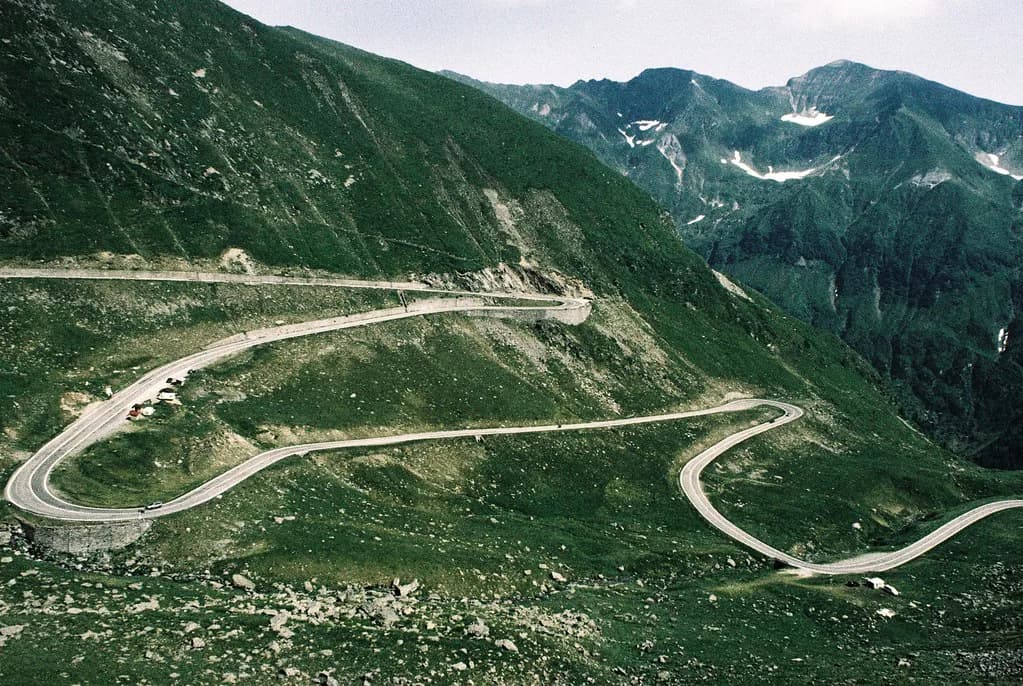
The hard calendar limit is the Transfagarasan Highway, the 90-kilometre stretch of road between Curtea de Arges and Sibiu that crosses the Fagaras Mountains. The full route opens roughly June to October, and winter snow closes part of it. Everything else in this itinerary can flex; that road cannot.
How many days you need: 4, 7, 10 or 14
Four days is a city break, not a Romania itinerary. Pick one base, either Bucharest with a Peles Castle day trip or Brasov with Bran Castle and a walk up Tampa Mountain, and accept that you are seeing a slice rather than the country. Trying to bolt on Sibiu and Sighisoara in that window leaves you with four half-days in a car.
Seven days is the first honest version. Spend two nights in Bucharest, stop at Sinaia for Peles Castle on the way to Brasov, take two nights in Brasov and two in Sibiu, with Sighisoara as a day trip or an overnight on the Sibiu-to-Cluj leg. That keeps transfers under half a day each and leaves time for the Tampa Mountain trails above Brasov.
Ten days lets you add either Maramures or a slower run through Sighisoara and Cluj-Napoca without dropping anything from the core. Two weeks, the version most first-timers regret not booking, allows Transylvania plus Maramures plus Cluj, and still leaves one of Bucovina or the Danube Delta as a realistic addition.
The classic failure is to attempt both Maramures in the north and the Danube Delta in the east inside a fortnight. They sit at opposite ends of the country, and the drive between them eats a full day in each direction. Choose one.
The one-week plan: Bucharest, Sinaia, Brasov, Sibiu, Sighisoara
Start with two nights in Bucharest, then pick up a car at the airport and drive north to Sinaia, about two hours, for Peles Castle. The castle, built in the late 1800s as a royal summer residence and now a museum, is the draw, and Sinaia gets busy with day-trippers from both Bucharest and Brasov, so an early arrival matters more than a long stay.
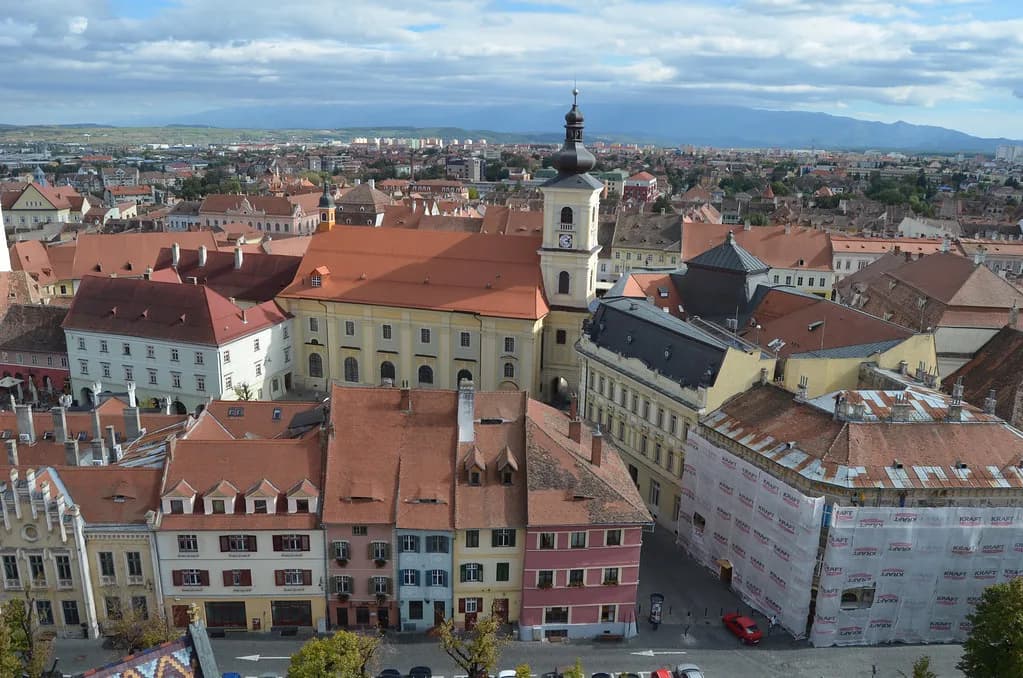
Brasov deserves two nights as your Transylvania base. The old town sits at the foot of Tampa Mountain, hiking trails start minutes from the centre, and Bran Castle is roughly a 30-minute drive away if you want the Dracula association. The town's convenience is the point: you are not spending your days in transit.
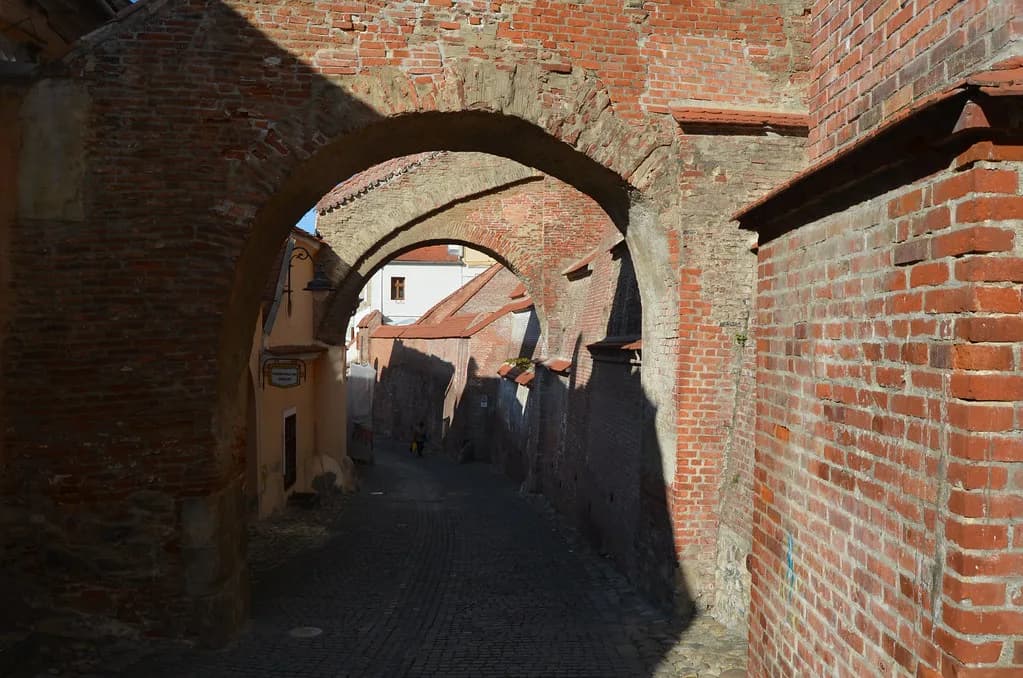
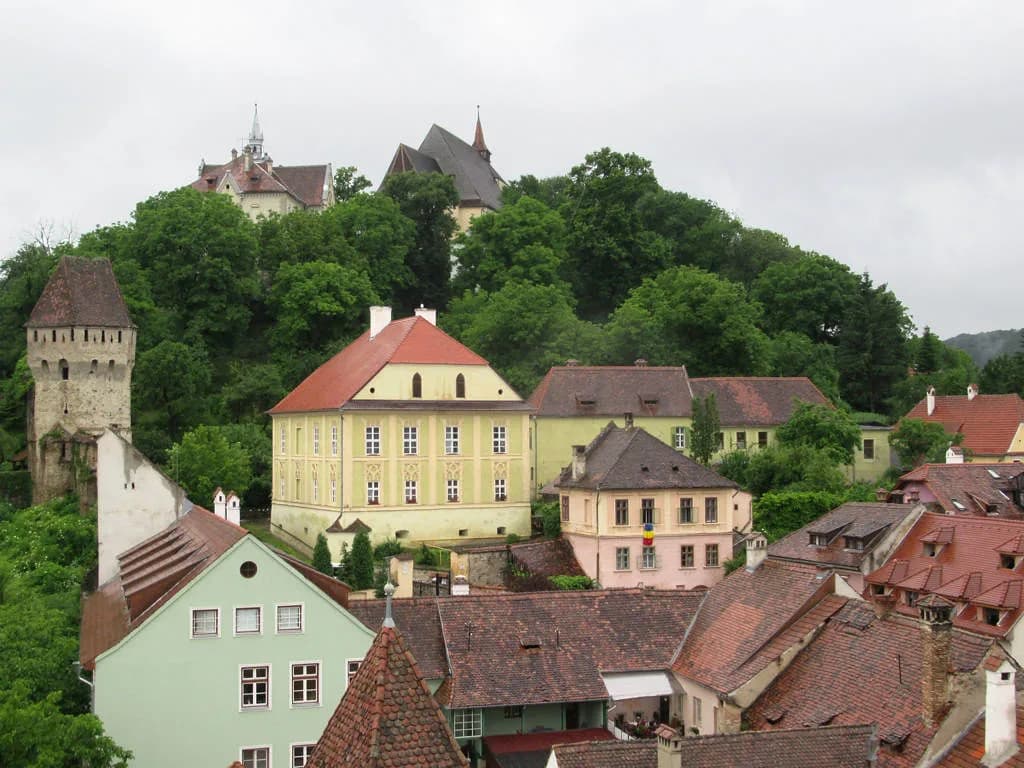
Move on to Sibiu for two nights, breaking the journey with a stop in Sighisoara or at the fortified church in Biertan. Sighisoara is the most intact of Transylvania's medieval citadels and holds UNESCO World Heritage status, with most of its original wall and nine of its fourteen watchtowers still standing. Its old town is small enough to cover in an afternoon, so one night is enough unless you plan hikes from the area.
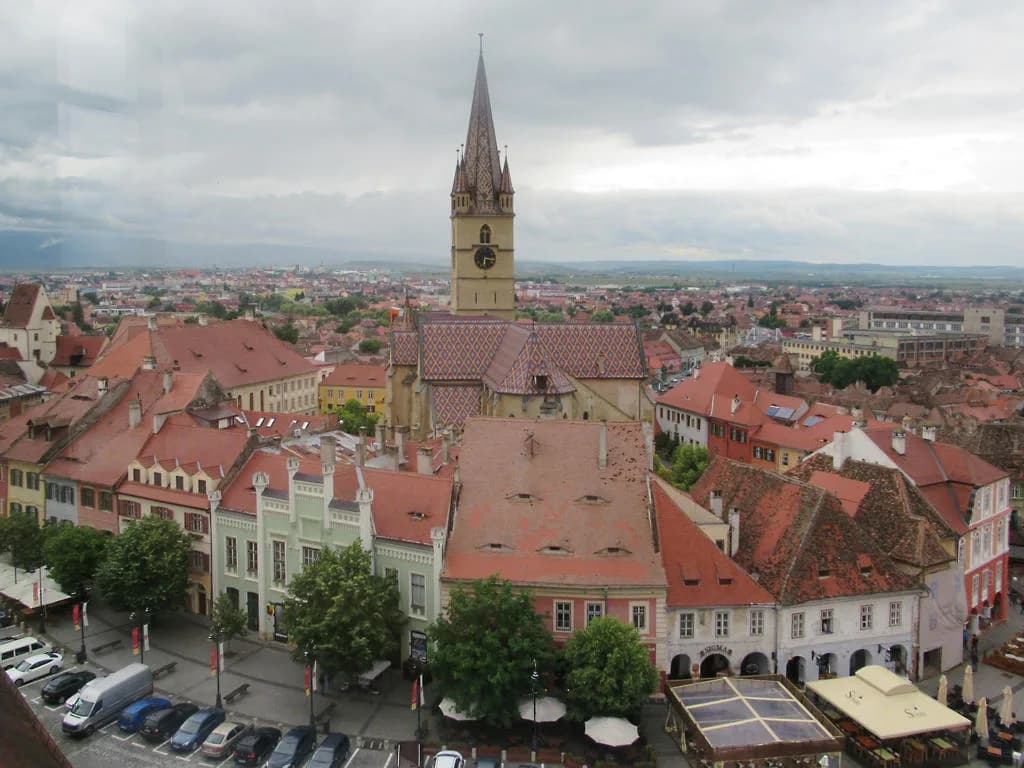
Sibiu rewards the time you give it: cobbled squares, the attic windows nicknamed the city's eyes, and a summer calendar of open-air events. Accommodation in Sibiu runs higher than elsewhere in the country, and staying in a neighbouring town such as Cisnadie, about 15 minutes away, is a common workaround. Budgets are in the Romanian leu, and cards are widely accepted in the cities.
The two-week plan: add Maramures, Cluj-Napoca and Bucovina or the Danube Delta
From Sibiu, head north through Sighisoara and on to Maramures, based either in Sighetu Marmatiei near the Sapanta Merry Cemetery and Barsana Monastery, or in Breb for a village guesthouse. Four nights in the region gives you the wooden churches, horse-drawn carts on the back roads and hiking in Rodnei National Park. This is the section that justifies keeping the car.
Finish the loop in Cluj-Napoca, the unofficial capital of Transylvania, with a compact old town, a strong art and food scene and an airport that makes a one-way rental practical. From there you have a genuine choice. Bucovina, the smallest region in the northwest, holds the painted monasteries whose exteriors are covered in Byzantine murals. The Danube Delta, reached by boat from Tulcea, is a UNESCO-listed maze of canals, lakes and marshes best visited between April and September for wildlife.
A Black Sea add-on is possible but not recommended inside two weeks. The 150-kilometre coast, with Mamaia, Constanta and the bohemian southern villages of Vama Veche and 2 Mai, is a summer beach trip in its own right, and combining it with Maramures means a very long drive south.
Bucharest: two days and no more on a first trip
Bucharest is nicknamed the Paris of the East, and the French influence shows along Victory Avenue, but do not arrive expecting Paris. Two days covers the old centre, the Palace of Parliament area and enough of the city's turbulent twentieth-century history to make sense of the rest of the trip. Plan for more walking than you expect, because the city is larger and more spread out than its centre suggests.
Sinaia and Peles Castle: a half-day stop between Bucharest and Brasov
Sinaia sits in the Carpathians about two hours north of Bucharest and an hour south of Brasov, which makes it the natural first stop on the drive. Peles Castle is the reason to break the journey, and the mountain setting justifies more time than the castle alone. If you are travelling in October, the weather is cooler and the town quieter than in high summer.
Treat Sinaia as a half-day unless you plan to hike. The town becomes a ski resort from December to March, and in summer it fills with day-trippers around midday. Arriving early gives you the castle and a short trail before the coaches arrive.
Brasov: the best base in Transylvania
Brasov works as a base because everything worth seeing in central Transylvania is within an easy drive. Bran Castle, often marketed as Dracula's Castle, is 30 minutes away, and the trails on Tampa Mountain start within minutes of the old town. The city centre is colourful and full of terraces, which makes it pleasant to return to after a day on the road.
Two nights is the minimum, and three is better if you want Bran plus a proper hike. From Brasov, Curtea de Arges, at the southern end of the Transfagarasan, is about three hours by road, so staying overnight there before an early start on the pass is the sensible way to do that drive.
The Transfagarasan Highway: a full driving day, June to October
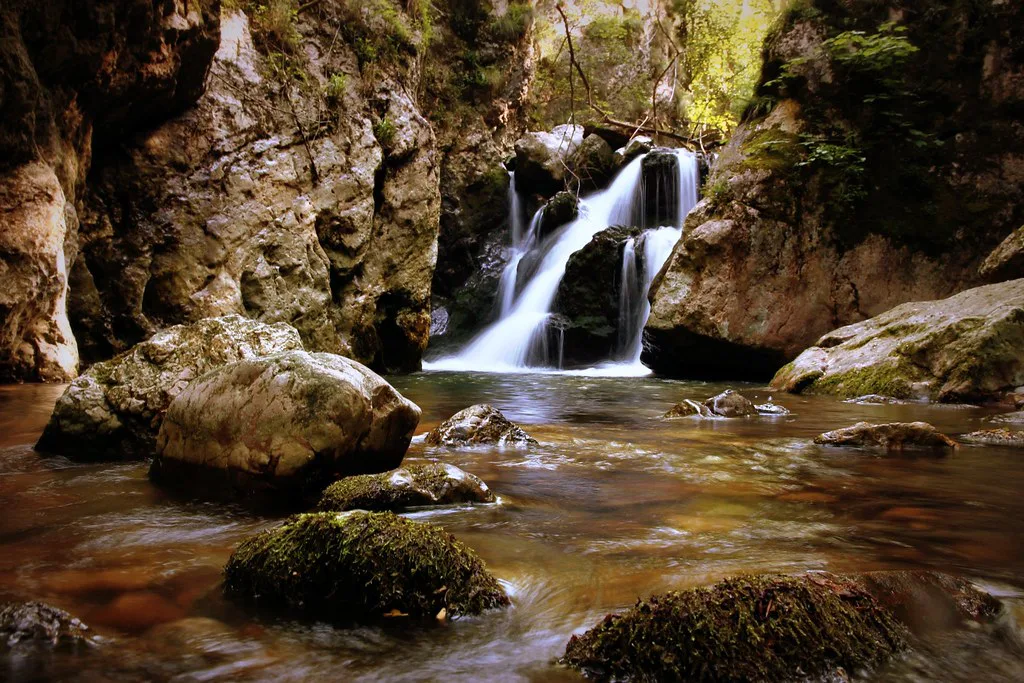
The Transfagarasan is a 90-kilometre mountain road between Curtea de Arges and Sibiu, winding through the Fagaras Mountains. The full route is open roughly June to October, and snow closes part of it outside that window. Start early, ideally around 7am, to stay ahead of traffic on the switchbacks.
Wildlife is part of the drive. Bears, livestock and stray dogs are seen on and near the road, so slow down and let them pass rather than stopping for photographs. Fuel up before you start, since services on the pass are limited. Treat the day as a driving day, not a sightseeing day with a road in between, and the experience is far better.
Sibiu and Sighisoara: the two citadels worth the detour
These two are not interchangeable. Sibiu is the larger, livelier city with a cultural calendar, a thriving square and the famous eye-shaped roof windows. Sighisoara is smaller, more purely medieval, and quicker to see. Giving Sibiu two nights and Sighisoara one, with a lunch stop at Biertan's hilltop fortified church, is the sequence that works.
Sighisoara holds the UNESCO status, most of its defence wall and the majority of its original watchtowers. It is also the birthplace of Vlad the Impaler, and the old town leans into the Dracula connection cheerfully. That makes it crowded by day and atmospheric at night, which is the argument for sleeping inside the walls rather than visiting on a day trip.
Maramures: rural Romania, and the reason to keep the car
Maramures, in the far north, is the Romania of haystacks, horse-drawn carts and wooden churches with pointed spires and painted interiors. You need a car here; there is no practical public transport substitute for the village roads. Base in Sighetu Marmatiei for the Sapanta Merry Cemetery and Barsana Monastery, or in Borsa for access to Rodnei National Park, or in Breb for a slower village stay.
Give the region three or four nights, and plan at least one full hiking day. It is a welcome break from Transylvania's crowds, and the pace is deliberately slow. If you are renting a car in Romania, book the automatic well in advance, because most rental fleets are manual and automatics cost more.
Cluj-Napoca and the western cities: Timisoara and Oradea
Cluj-Napoca closes the loop neatly: a compact old town, a reputation as Transylvania's most liveable city, a strong food and art scene, and an airport for onward flights. Two nights is enough. It is also the launch point for the west if you have extra time.
Timișoara, in the Banat near the Serbian border, is known as the birthplace of the 1989 revolution and for its elegant architecture and parks. Oradea, on the Hungarian border, is the more decorative of the two, with Baroque and Art Nouveau buildings and thermal spas. Both are add-ons for a third week, not core stops on a first itinerary.
Bucovina, the Danube Delta and the Black Sea Coast: pick one, not three
Bucovina is the smallest region in the country, in the northwest, and the most rewarding for culture, with painted monasteries covered in Byzantine murals and well-preserved folk traditions. The Danube Delta, reached by boat from Tulcea, is the wildlife option, with April to September the best window for birds and a visitor permit required to enter. The Black Sea Coast is the beach option, and in summer it is the affordable alternative to an overcrowded Mediterranean.
Each one adds two to three days and a long transfer. Within two weeks you choose one, and the choice depends on whether you want painted churches, birdlife or sand. Trying to include two is how two-week itineraries turn into four days of driving.
Getting around: car versus train and bus
Trains and buses connect the main cities well enough for a Bucharest-Brasov-Sibiu-Cluj route, but they do not reach Maramures villages, Rodnei National Park or the Transfagarasan. If you plan the rural sections, drive. If you are sticking to cities and the main tourist corridor, public transport is simpler and cheaper.
Bucharest Henri Coanda International Airport is the main entry point, with Cluj-Napoca, Sibiu, Brasov and Suceava useful for regional starts, and Constanta serving the coast and delta. A one-way rental between Bucharest and Cluj saves you retracing your route, though expect a surcharge. Rental firms typically require drivers to be at least 21 with a valid licence.
Our guide to renting a car in Romania covers insurance, one-way fees and licence rules in more detail. Note that the country drives on the right, speed limits change fast through villages, and night driving on rural roads is best avoided; street lighting is sparse and the roads carry livestock.
Where the days go wrong: backtracking, night driving and one-night stands
Backtracking is the first trap. Any itinerary that returns to Bucharest to fly out after reaching Maramures loses a day to the return drive. Book an open-jaw route, in through Bucharest and out through Cluj-Napoca, and you get that day back. The second trap is night driving: unlit rural roads, animals and slow vehicles make dusk the worst time to be moving between bases.
The third trap is one-night stands. Each one costs you half a day of packing, driving and settling in, and Romania's distances are longer than the map suggests; the source route alone includes a four-hour transfer from Sighisoara to Maramures. Two nights minimum per base is the rule that keeps a two-week trip from feeling rushed.
Typical costs on a two-week road trip
Romania is budget-friendly by Western European standards, even with a rental car. One couple's two-week self-drive, in British pounds, put a small car in peak season at about £110 for seven days, with total car expenses including one-way fees, full insurance, petrol and parking at £615. Their non-car spending, covering accommodation, food, groceries, transport and activities, came to £1,137.77, or £71 per day. Treat these as one party's reported figures as published by The Travel Escape Plan, not a national average.
When to go: season by season
Summer in Romania sees maximum temperatures rise to 35°C (95°F) in the source's account, which suits the Black Sea Coast and means early starts for hiking in the Carpathians. Peak season also brings the highest prices and the heaviest crowds at Peles Castle and Sighisoara. Shoulder seasons, April to May and September to October, are better for hiking and far quieter.
Winter, December to February, is for snow sports in the Carpathians, with Sinaia turning into a ski resort. Spring and autumn close some higher mountain routes, and the Transfagarasan is only fully open between roughly June and October. Check the weather service forecast for your dates; average conditions are not a plan.
Who this itinerary suits, and who should choose a shorter trip
First-timers with a week or two and an interest in history, landscapes and hiking get the most from this route. Drivers and slow travellers do well, since the itinerary is designed around a few bases and a car. Families should keep the city stretches short and add Brasov's mountain trails rather than long transfers.
If you only have four days, pick one region and skip the loop; a Brasov-and-Sibiu trip beats racing across the country. If you want a beach holiday, base on the Black Sea Coast and treat Bucharest as a two-day stopover. If you have three weeks, add both Bucovina and the Danube Delta, and put Timisoara and Oradea on a separate western trip.
Plan Your Visit
Build the trip around a week in Transylvania if that is all you have, then treat Maramures, Bucovina and the delta as expansions, not obligations. The road through the Fagaras Mountains sets your calendar: June to October for the full Transfagarasan, and a full day with an early start to do it properly.
Before you book, read our Romania verdict for the bigger picture on whether the country matches your travel style, and check official Romanian government sources for entry requirements. Then lock the car, the open-jaw flight and the two nights per base, and the rest of the itinerary falls into place.
Explore more Romania trip-decision guides
- Best Places to Visit in Romania
- Do They Speak English in Romania? Language for Travelers
- Getting Around Romania
- Is Romania Expensive? A Candid 2026 Cost Breakdown
- Romania eSIM
- Romania in April
- Romania in August
- Romania in July
- Romania in June
- Romania in May
- Romania in September
- Romania Plug Type
- Romania vs Hungary
Frequently Asked Questions
How many days do you need for a Romania itinerary?
Seven days is the practical minimum for Bucharest, Sinaia, Brasov, Sibiu and Sighisoara without constant driving. Ten days lets you add Sighisoara or Cluj-Napoca comfortably, and two weeks is what you need for Transylvania plus Maramures and Cluj-Napoca. Give each base at least two nights.
Is a week enough for Romania?
A week covers the core Transylvanian route: two nights in Bucharest, two in Brasov and two in Sibiu, with Sinaia on the transfer day and Sighisoara as a stop or an overnight. It does not reach Maramures or the Danube Delta, both of which need their own days.
Should you rent a car for a Romania itinerary?
Rent a car if Maramures, Rodnei National Park or the Transfagarasan Highway is on your list. For a city-focused route between Bucharest, Brasov, Sibiu and Cluj-Napoca, trains and buses are sufficient and cheaper. Rental firms usually require drivers to be at least 21 with a valid licence.
When is the Transfagarasan Highway open?
The full 90-kilometre route between Curtea de Arges and Sibiu is open roughly June to October, with snow closing part of it outside that window. Check the current status before you commit to the drive, and start early to avoid traffic on the pass.
What is the best month to visit Romania?
April, May, September and October give you the best hiking weather and fewer crowds than summer. June to August brings temperatures up to about 35°C (95°F) and peak prices, but also the full opening of the Transfagarasan and the Black Sea beach season.
Is Romania cheap to travel around?
Romania is budget-friendly compared with Western Europe, and one couple's reported two-week self-drive, including a peak-season rental, a one-way fee and full insurance, gives a sense of the level. Check current rental quotes and daily spending against the leu when you set a budget.
Sources
Trip-decision notes
Optional updates when we publish or revise a destination verdict.
You might also like
Continue reading
More guides you'll find useful