Do They Speak English in Bosnia? What Travelers Will Find
English carries a Bosnia and Herzegovina trip in Sarajevo, Mostar and the main sights, then thins out in villages and with older generations. Plan for both.
On this page
Yes, English gets you through a Bosnia and Herzegovina trip. You can book rooms, order food, ask for a bus platform and handle a taxi in Sarajevo or Mostar without learning the language, and younger staff in tourism-facing jobs usually switch to English as soon as they hear your accent.
The limits are geographic and generational rather than national. English is thickest in the big cities, the old towns and the hostels and agencies that serve foreign visitors, and thinnest in villages, small-town cafés and conversations with people past retirement age.
Plan on English for the logistics and a handful of local phrases for the human moments, and you will rarely be stuck. If you are still weighing the trip itself, our answer to whether Bosnia is worth visiting covers the payoff and the drawbacks before you commit.
The verdict: English carries the trip, with limits
Treat English as your working language for transport, accommodation and restaurants on the main tourist circuit, and as a coin flip once you leave it. That split is the single most useful thing to know: the same country that produces fluent English speakers in a Sarajevo hostel bar can leave you miming in a village bakery an hour outside town.
Practically, this means you do not need to study Bosnian before you arrive, but you should arrive with a translation app installed and offline language data downloaded, plus your accommodation address written down in the local language. Those two steps cover almost every awkward moment a non-speaker meets.
Language is rarely the reason a Bosnia and Herzegovina trip goes wrong; transport timing, mountain roads and summer crowds matter far more. If you want the fuller picture before booking, the verdict on whether Bosnia is worth visiting sets out what the country rewards and what it asks in return.
The three official languages and how they relate
Bosnia and Herzegovina has three official languages: Bosnian, Croatian and Serbian. They are so closely related that they are often grouped under one name, and linguists treat them as a single central South Slavic continuum rather than three separate systems.
The standard varieties rest on different dialects of the same base: Bosnian and Croatian build on the Ijekavian variant, while Serbian standard leans on the Ekavian one. In everyday speech the differences show up mostly in vocabulary, and Bosnian carries more loanwords from Arabic, Turkish and Persian than its neighbors, a legacy of Ottoman rule.
For a visitor this is good news. A phrase learned from a Croatian app will be understood in Sarajevo, and a word a Mostar waiter uses may differ from the one a Banja Luka shopkeeper prefers without either being wrong. Bosnian is also spoken beyond the borders, in parts of Serbia, Montenegro, Croatia and Kosovo, which is why the same phrases keep working as you move around the region.
Where English works well: Sarajevo, Mostar and the tourist centres
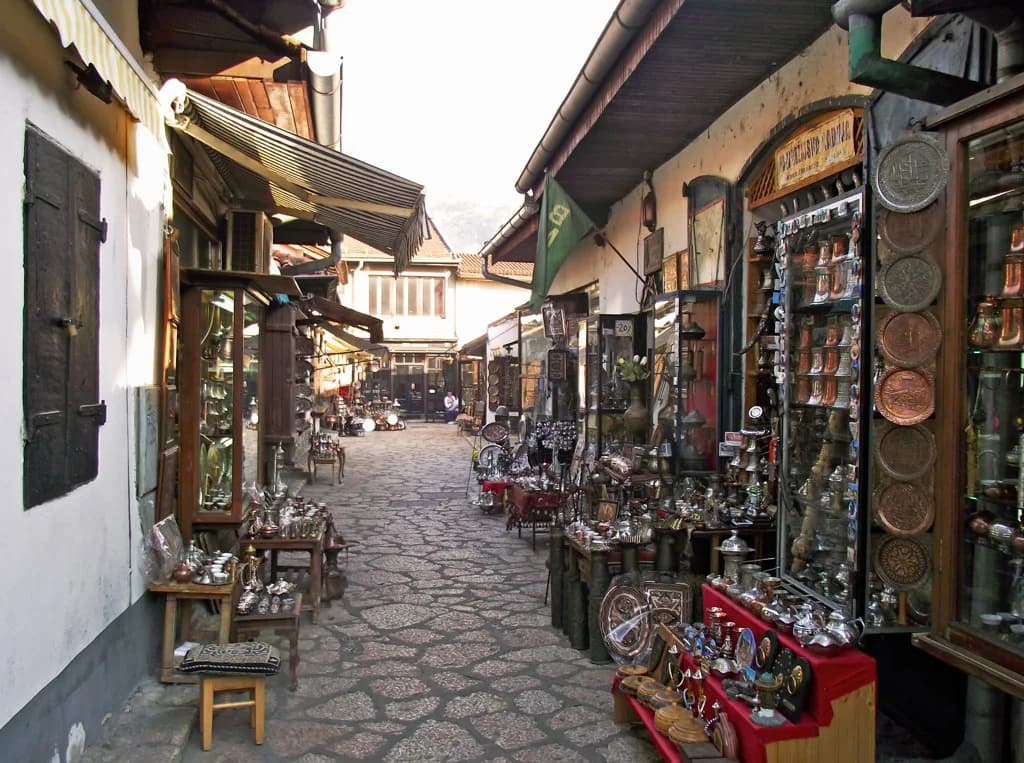
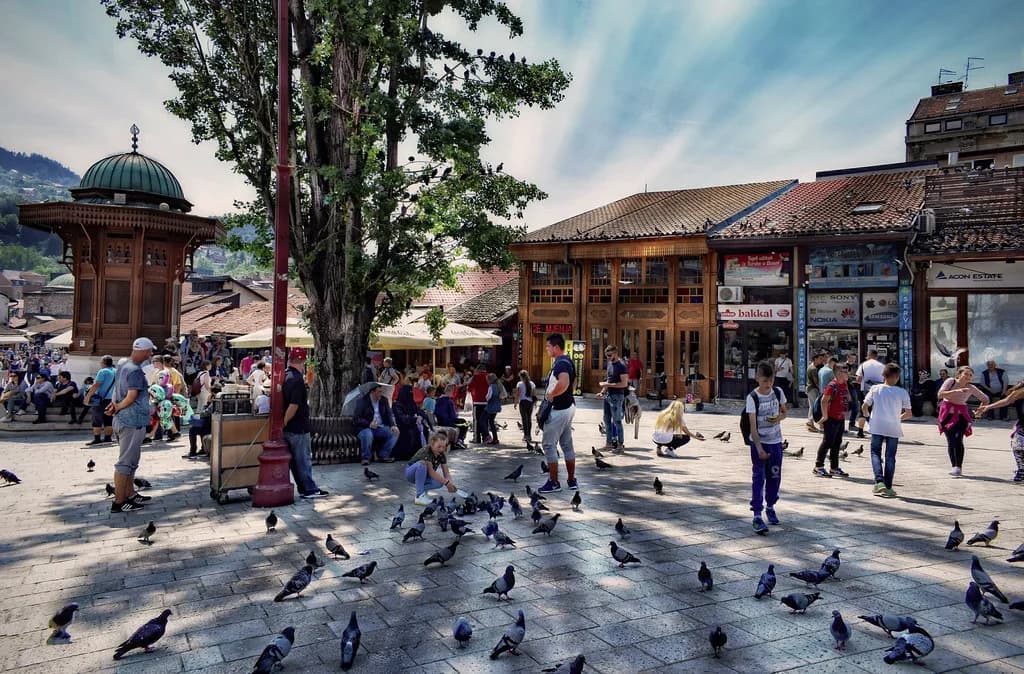
Sarajevo is the easiest place in the country to travel in English. Hostels in the old town, guided walking tours of Baščaršija, the cable car up to Trebević and the agencies running war-history tours all operate in English as a matter of course, and cafés around Ferhadija handle foreign orders daily.
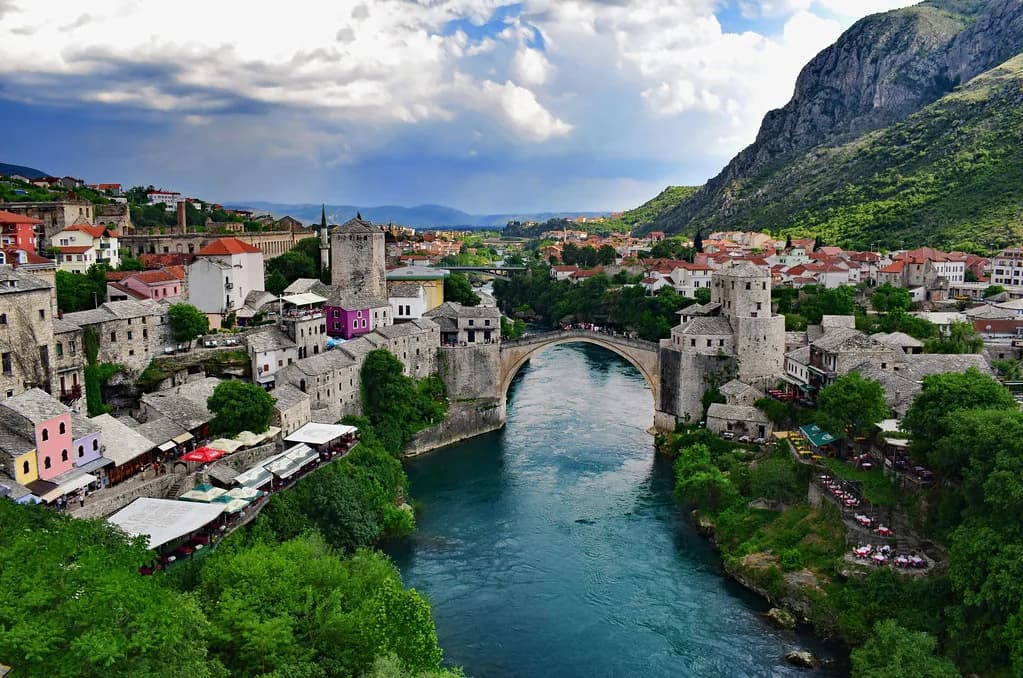
Mostar runs on the same logic, concentrated around the Old Bridge and the reconstructed old town, where restaurant touts will greet you in English before you reach the menu. The same applies in the resort towns along the Una and in the Kravice waterfalls area, where seasonal staff deal with foreign visitors all summer.
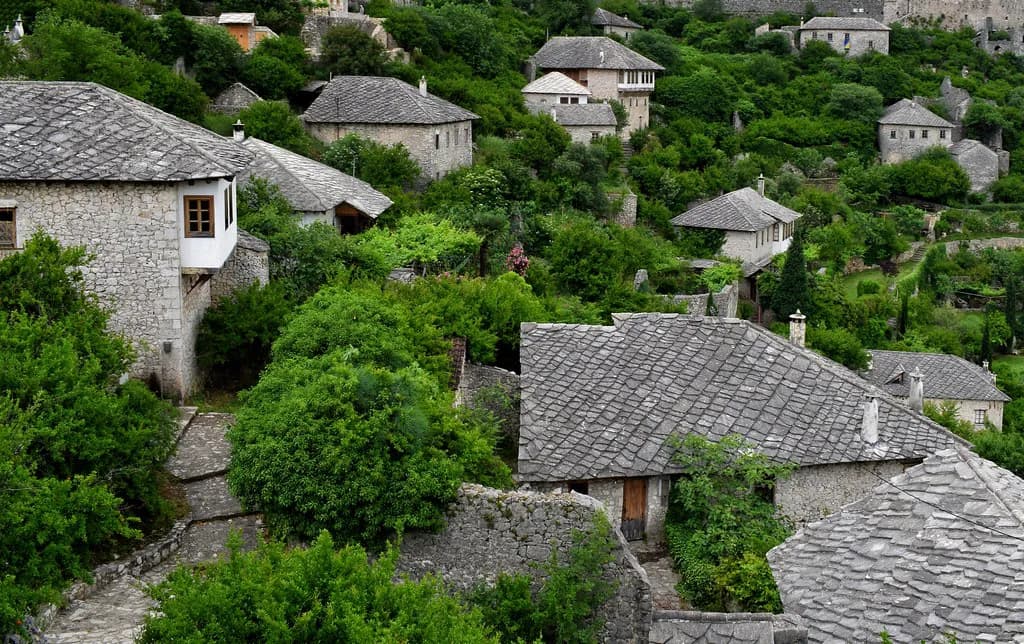
Smaller heritage stops such as Jajce, Travnik, Počitelj and Višegrad are used to day-trippers, so ticket offices at the main sights usually manage English. The further you get from a ticket window, however, the more English depends on who happens to be behind the counter.
Where English thins out: smaller towns, villages and older generations
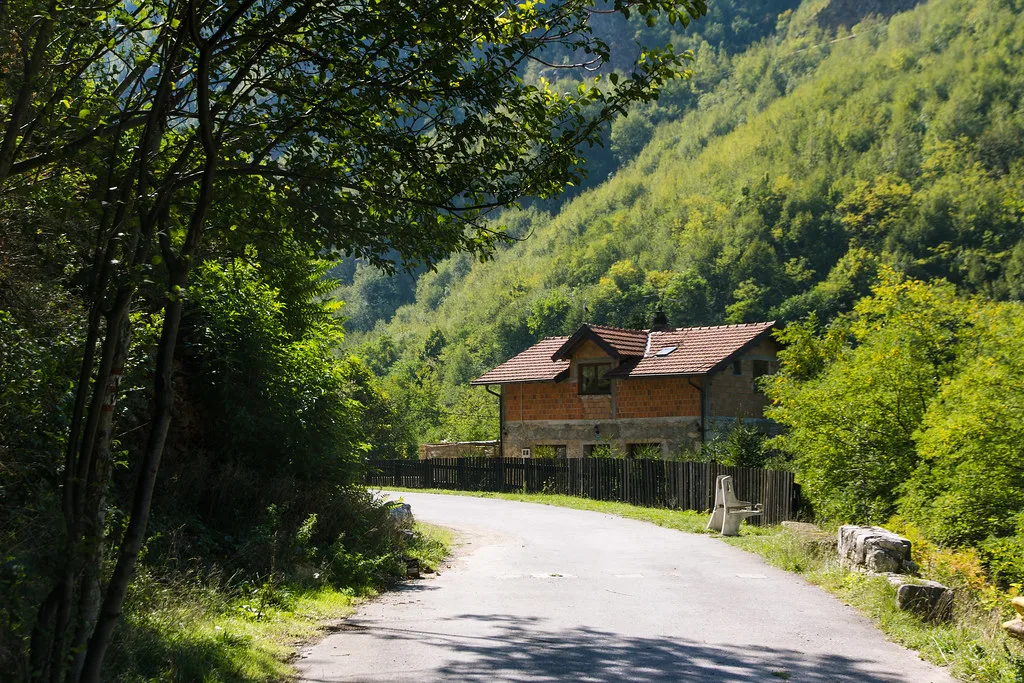
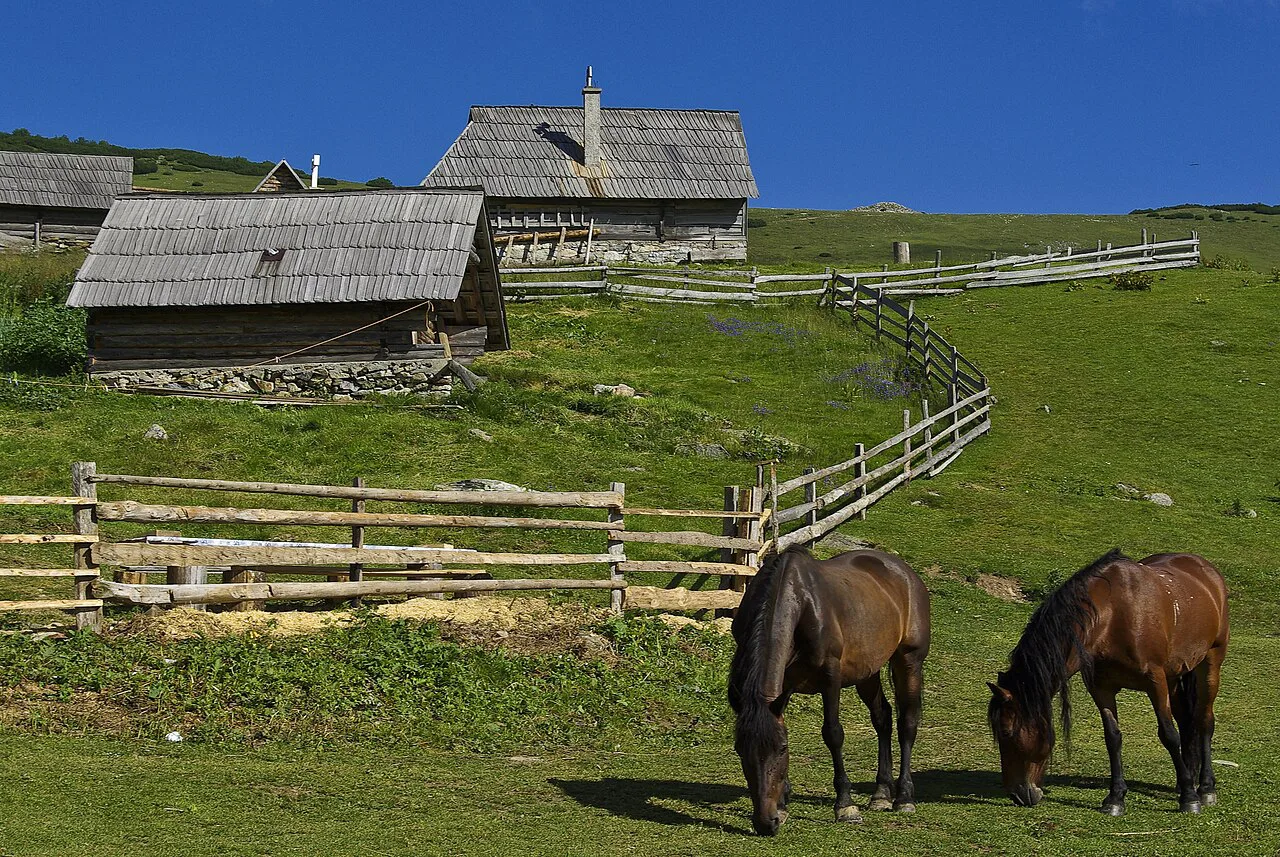
Rural Bosnia and Herzegovina is where the language gap opens. Village bakeries, petrol stations on secondary roads, family-run guesthouses in the hills and bus drivers on regional routes may have no English at all, and a friendly exchange can stall at the first question. If you are comparing rural stays across the region, our Montenegro verdict weighs the same trade-off between authentic villages and easy logistics.
Age is the bigger variable than geography. Younger people grew up with English-language music, films and the internet and often speak it well even outside tourism, while many people who finished school before the 1990s learned other foreign languages at school instead and have had little reason to keep up English since.
The practical response is preparation rather than anxiety. Have your destination written in Latin script, keep a translation app ready and approach small shops with a smile and a greeting in Bosnian before switching to English, which generally gets you further than launching straight into a question.
The Bosnian, Croatian and Serbian question: which word to use
Do not spend energy trying to pick the politically correct variety. The three standards are mutually intelligible to the point that Bosnia and Herzegovina's own institutions list all three as official, and locals switch between words from all of them in ordinary conversation.
If you learn a few phrases, learn the local ones used where you are staying, and expect that a Croatian phrasebook word and a Serbian one may both be perfectly understood in the same Sarajevo café. Regional vocabulary variation is a normal part of daily life, not a test you can fail.
Where it does matter is in how you talk about the country. Saying Bosnia rather than Yugoslavia, and referring to the country by its full name Bosnia and Herzegovina, keeps things neutral and is what people there expect from a visitor.
Latin and Cyrillic script: what signs and menus look like
Bosnia and Herzegovina uses two alphabets, and you will see both. Bosnian is written in Latin and Cyrillic, and the split follows the population: Bosniaks and Croats more commonly use Latin, while Bosnian Serbs more often use Cyrillic, particularly in the Republika Srpska.
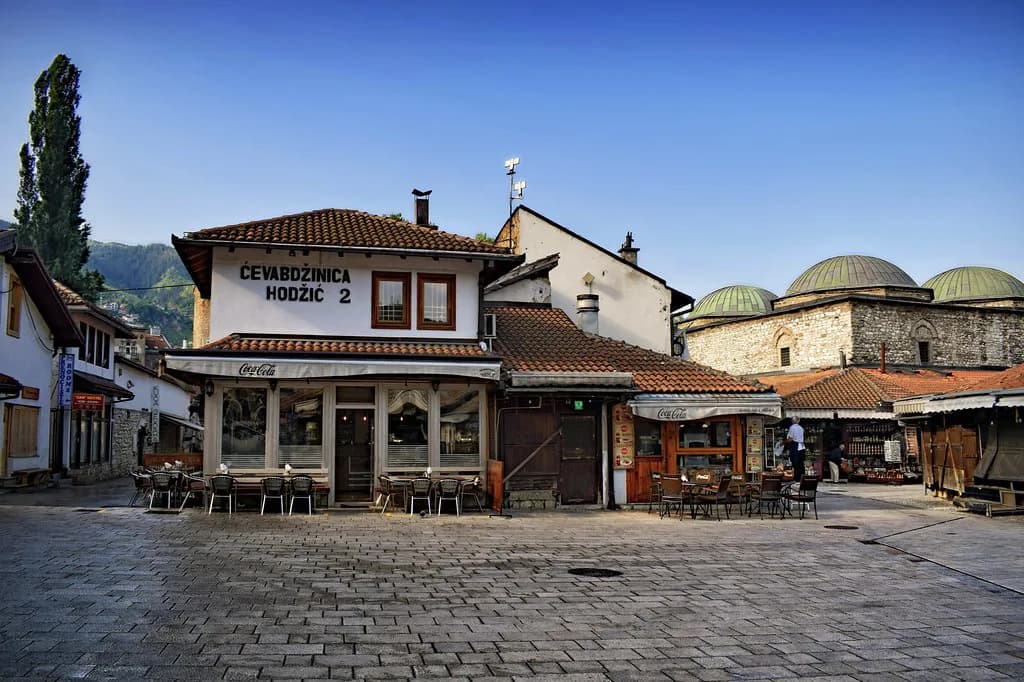
In practice, Sarajevo, Mostar and the main tourist towns put Latin script first on menus, timetables and shop signs, so reading is rarely a problem. Head into eastern parts of the country and Cyrillic appears on official signs, bus station boards and some restaurant menus, often alongside Latin lettering.
Learn to recognise a handful of Cyrillic letters and you can decode most of what matters: the letters that look like Latin but sound different, such as the Cyrillic P and C, cause the confusion rather than full words. The Latin and Cyrillic alphabets were deliberately mapped one to one in the nineteenth century, so transliteration is consistent once you know the pairs.
A handful of phrases worth knowing
You need very few words, but the right few carry weight. Start with dobar dan (good day), hvala (thank you), molim (please), izvinite (excuse me) and govorite li engleski (do you speak English), and you can open almost any encounter politely.
For logistics, numbers and place names matter more than grammar. Learn the numbers one to ten, how to ask the price, and the local names for bus station and train station, and you can handle a ticket counter even if the clerk has no English at all.
Ordering follows the same logic. Kafa means coffee, voda means water, and račun means the bill, which is the one word you will use every day; a request for the bill in Bosnian usually earns a nod before you finish the sentence.
Getting around and ordering in English: transport, bakeries, taxis
The transport network is where written English matters most, and it is uneven. Main bus stations in Sarajevo and Mostar have staff used to foreigners, but regional buses and rural stops often run on local-language signage and an announcement you will not catch, so confirm the platform and departure with your accommodation before you leave.
Taxis are straightforward: drivers in the cities generally handle basic English, and using a ride-hailing app or agreeing the fare before you get in removes most of the conversation. Bakeries and fast food are point-and-pay, which needs no language at all, while sit-down restaurants in tourist areas usually have English menus.
If you plan to drive, language matters less than paperwork and road conditions. Our guide to renting a car in Bosnia covers the practical side of getting behind the wheel, from border formalities to mountain roads.
Carry some convertible marks in cash for small purchases, since not every village shop or bakery takes cards. Our guide to money in Bosnia explains the currency, typical card acceptance and how to handle cash day to day.
If English fails: gestures, translation apps and written addresses
The fallback kit is simple and it works. Download offline translation for Bosnian before you travel, keep your accommodation address and any destination typed in Latin script on your phone screen, and you can solve directions, taxi rides and ticket purchases without a shared language.
Numbers are the universal bridge: write the price or the time on paper, or show it on a calculator, and most transactions resolve quickly. Photograph your bus ticket and your accommodation details so you can point rather than explain.
For internet access on the move, a local or regional eSIM keeps translation apps and maps working without hunting for Wi-Fi. A Bosnia eSIM set up before you fly covers the arrival and the rural stretches where signal is your only interpreter.
Common mistakes visitors make
The most common mistake is assuming English is universal and skipping the greeting. Opening with dobar dan and then asking in English changes the tone of the exchange, and locals respond noticeably better to the small effort.
The second is assuming one phrasebook covers the whole country in a single correct form. Bosnia and Herzegovina is officially trilingual, and vocabulary shifts by region, so treat variation as normal rather than as correction.
The third is over-relying on Russian because it is a Slavic language. Some older people studied it at school and may still manage a little, but it is not a substitute for English in most encounters, and younger people generally have no Russian at all.
Finally, visitors underestimate the script issue. Assuming everything is in Latin leaves you stuck in front of a Cyrillic bus board in the east of the country, so learn to read a few letters before you travel beyond the main tourist circuit.
Verdict by traveler type
Independent travelers on the Sarajevo–Mostar–Jajce circuit will find English sufficient and should not delay a trip over language. Culture-focused visitors who want to talk with people in villages and small towns get far more out of ten words of Bosnian than from any app.
Families and older travelers should stay in the cities and main sights, where English is reliable and logistics are simple, and use organised tours for the harder-to-reach places. Budget travelers heading for rural guesthouses should plan for less English and more pointing.
If your dates are flexible, pair the language question with the best time to visit Bosnia, since summer crowds and winter closures shape the trip more than English ever will. Decide the season, pack a translation app and a few phrases, and go.
Explore more Bosnia and Herzegovina trip-decision guides
Frequently Asked Questions
Is English widely spoken in Bosnia and Herzegovina?
In Sarajevo, Mostar and the main tourist towns, English is widely used in hotels, restaurants, tours and transport hubs. In villages and smaller towns it is much less reliable, so plan on English for the main circuit and a translation app for everywhere else.
Do young people in Bosnia and Herzegovina speak English?
Younger people generally speak the best English, having grown up with English-language media and the internet. That makes cafés, hostels and youth-oriented businesses easy to navigate, while conversations with older generations are more likely to need gestures or a translation app.
Is Bosnian the same as Croatian and Serbian?
They are closely related standards of the same South Slavic base and are mutually intelligible. Bosnia and Herzegovina lists Bosnian, Croatian and Serbian as official languages, and locals mix vocabulary from all three in daily speech, so you do not need to pick one correct form.
Do I need to learn Bosnian phrases to visit?
You can travel on English alone in the main tourist areas, but a handful of phrases go a long way. Dobar dan, hvala, molim and izvinite cover greetings and politeness, and račun for the bill is the one you will use daily.
Is Russian useful in Bosnia and Herzegovina?
Only marginally. Some older people studied Russian at school and may remember a little, but it is not a substitute for English in most encounters and younger people generally have none. English, gestures and a translation app are far more useful.
Which alphabet will I see on signs?
Both. Sarajevo, Mostar and tourist areas lean on Latin script for menus and signs, while Cyrillic appears on official signage and bus boards in the east and in Republika Srpska. Learning a few Cyrillic letters makes those signs readable.
Sources
Trip-decision notes
Optional updates when we publish or revise a destination verdict.
You might also like
Continue reading
More guides you'll find useful