Is Lithuania Worth Visiting? An Honest Verdict for Travelers
Yes, Lithuania is worth visiting for its Baroque capital, dune-backed coast and heavy history without the crowds. Here is who it suits and who should skip it.
On this page
Yes, Lithuania is worth visiting, and the strongest reason is density: two UNESCO World Heritage sites, a walkable Baroque capital and a coast of moving sand dunes packed into a country smaller than Ireland. The caveat is that Lithuania rewards planning more than its neighbors do, because the best places sit far apart and the rural bus network is thin. Treat it as a week-long destination with a car, or as a three-day city break built around Vilnius, and the value is obvious.
The country joined the Eurozone in 2015, so prices are quoted in euros and the currency question is one less thing to plan. Vilnius Old Town covers 3.6 square kilometres and holds more than 1,500 historic buildings, which is why the capital alone can absorb three days without filler. What Lithuania does not offer is a beach-and-sunshine holiday with guaranteed weather; the Baltic coast delivers dramatic scenery and cold water. For the practical details, see the Kaunas vs Vilnius.
The verdict: yes for most travelers, with one big caveat
Lithuania suits travelers who want a European capital of real architectural quality without Prague-level crowds, plus a coast and a set of historical sites that most visitors have never heard of. It is less suitable for anyone whose idea of a Baltic trip is beaches and late sunsets, because the summer season on the coast is short and the water stays cold even in August. The one big caveat is geography: Vilnius, Kaunas and the Curonian Spit form a long triangle, and covering all three in a short trip means choosing between time and comfort.
The payoff for that effort is a country that still feels undiscovered. Trakai Island Castle, the Hill of Crosses and the Curonian Spit appear on nearly every list of Lithuanian highlights, and none of them has the queue-and-ticket-machine infrastructure of a major Western European sight. If you have a week and want variety rather than a single-city break, Lithuania delivers more different days per kilometre than almost anywhere in the region.
Who will love Lithuania
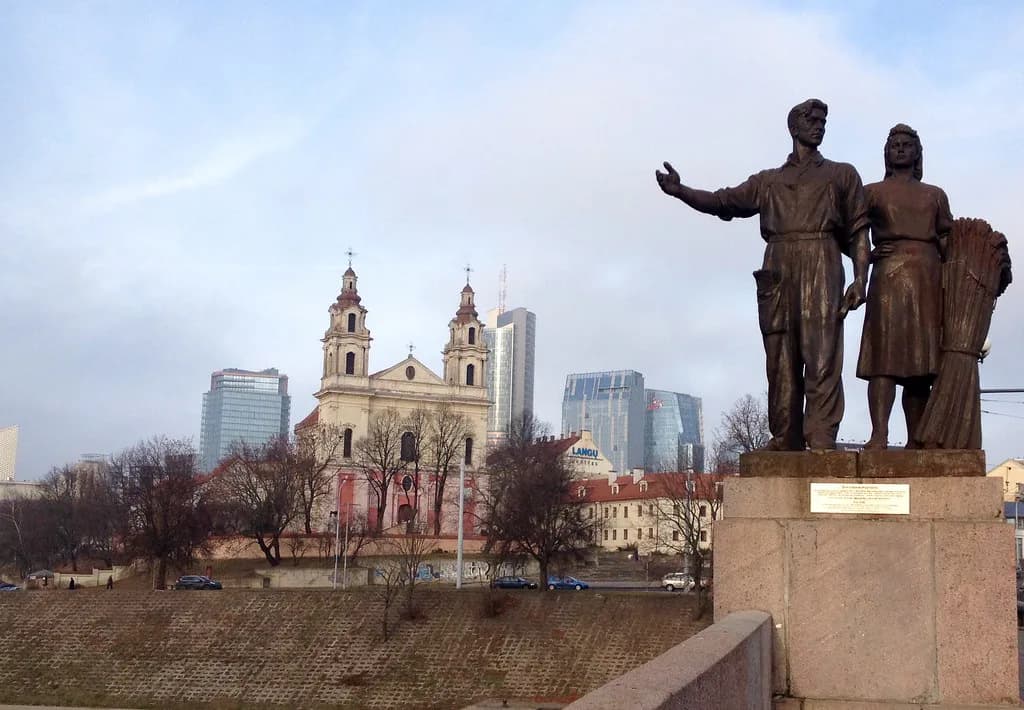
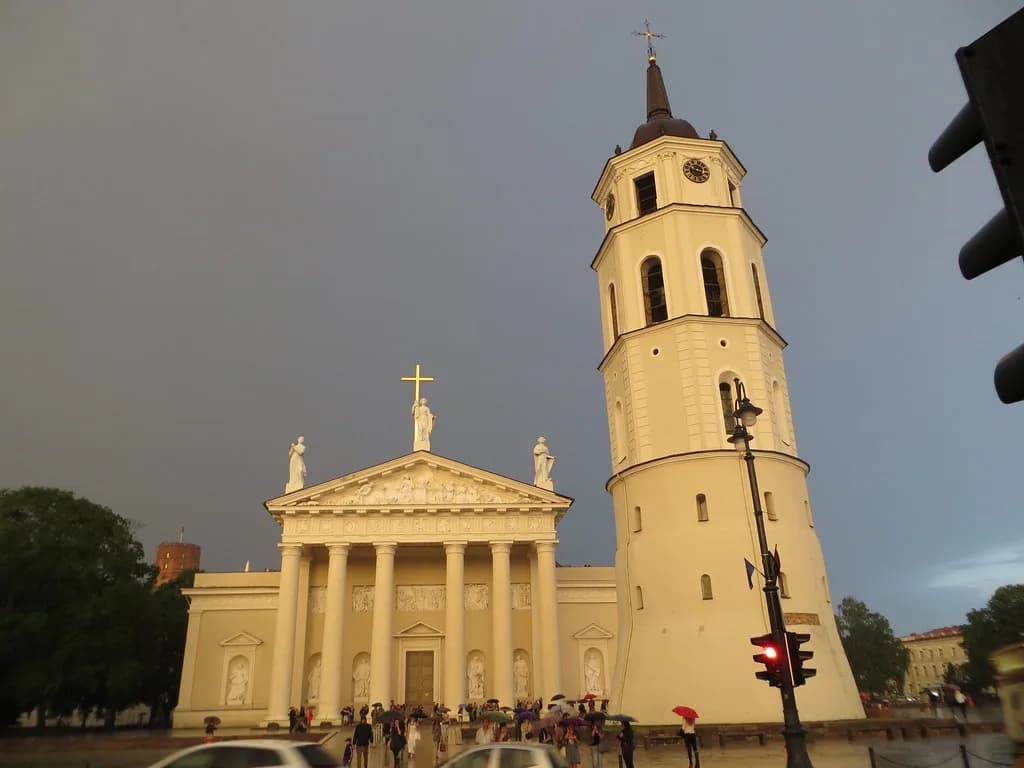
City-break travelers should look at Vilnius first. The Old Town is one of the largest surviving medieval old towns in Northern Europe, with dense Baroque streets, the Cathedral and Gediminas Tower on its hill, and the self-declared artists' republic of Uzupis a short walk across the Angel bridge. Two days is the minimum, and three lets you add the Museum of Occupations and Freedom Fights in the former KGB building without rushing.
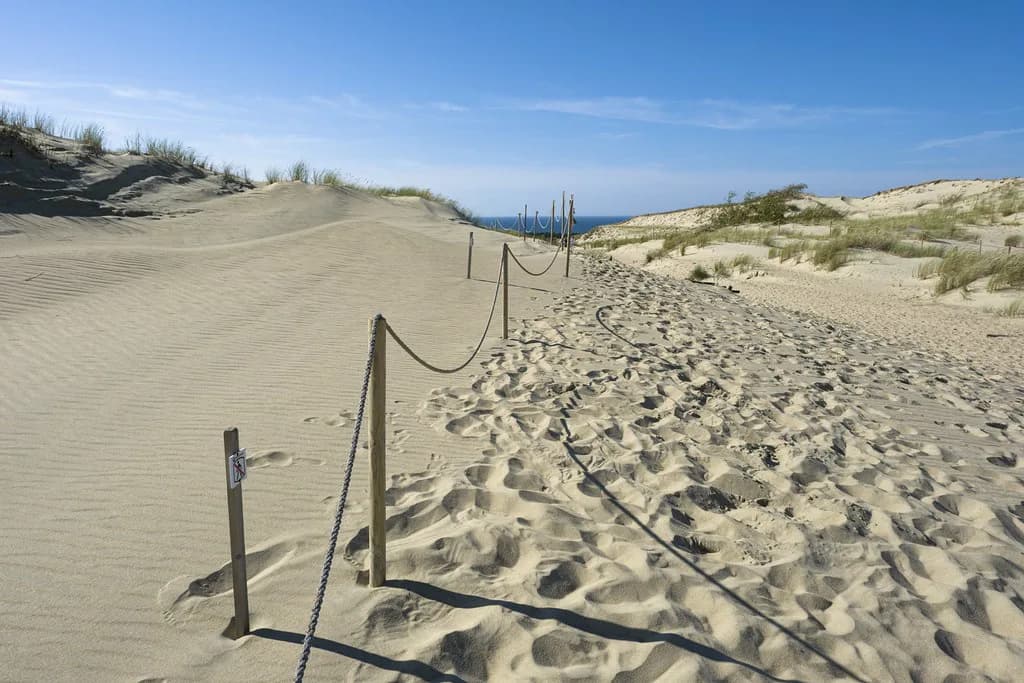
Cyclists and nature travelers get the Curonian Spit, a 98-kilometre sand peninsula shared with Russia where the dunes reach 60 metres and the Lithuanian half is centred on Nida. A dedicated coastal path makes the spit one of the best full-day rides in the Baltics, with the Parnidis Dune and the Thomas Mann House as natural stops. In the northeast, Aukštaitija National Park protects more than 100 lakes connected by rivers and forest trails, with kayak routes from half-day paddles to multi-day expeditions.
Travelers drawn to difficult history will find Lithuania unusually concentrated. Paneriai, in the forest outside Vilnius, is where 70,000 to 100,000 people, most of them Jews, were killed between 1941 and 1944, and the Ninth Fort in Kaunas marks another mass murder site. These are reasons to come, not footnotes, but they require emotional room in the schedule rather than a quick stop between attractions.
Who should choose somewhere else
Skip Lithuania if you want reliable warm-weather swimming, a resort strip or a trip built around restaurants and nightlife. The coast is at its best for walking and cycling, and the summer window when Lithuanians themselves fill Nida is short, which pushes guesthouse demand into a few weeks. Families with small children should think hard about a winter visit, when temperatures can drop below -15°C (5°F) with heavy snow.
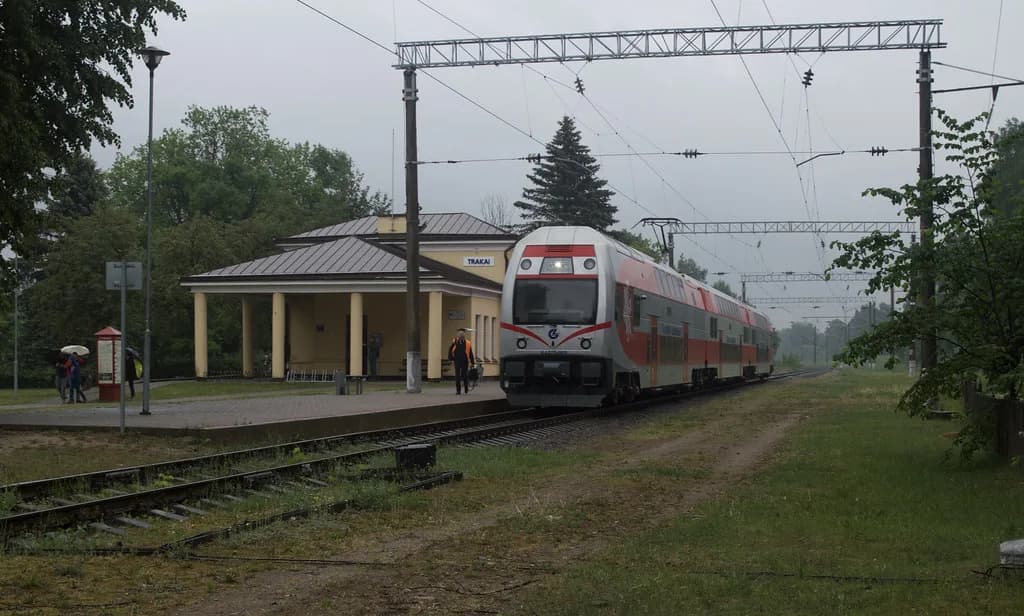
Anyone unwilling to drive should also weigh the plan carefully. Buses from Lux Express and Eurolines link Vilnius, Kaunas, Šiauliai, Klaipeda and Panevėžys frequently and comfortably, and the train network is slower but scenic. Smaller places, including the national parks and the approach to Grutas Park, are where public transport thins out and a hire car changes what is possible.
Vilnius: the reason most trips start here
Vilnius is the correct first stop for nearly every itinerary, and not only because the international airport is there. The Cathedral Square has anchored public life for eight centuries, Gediminas Tower gives the rooftop view that explains the city, and St Anne's Church is a red-brick Gothic showpiece worth the detour on its own. Allow half a day simply to walk the lanes without a target.
The city is genuinely walkable: crossing the Old Town on foot takes 20 to 30 minutes, and most of what you came for sits inside that radius. That makes Vilnius an easy base for day trips rather than a place you need to move around by taxi. English is widely spoken in the city, so language is rarely the obstacle that first-time visitors from the US or UK worry about.
Trakai and the island castle day trip
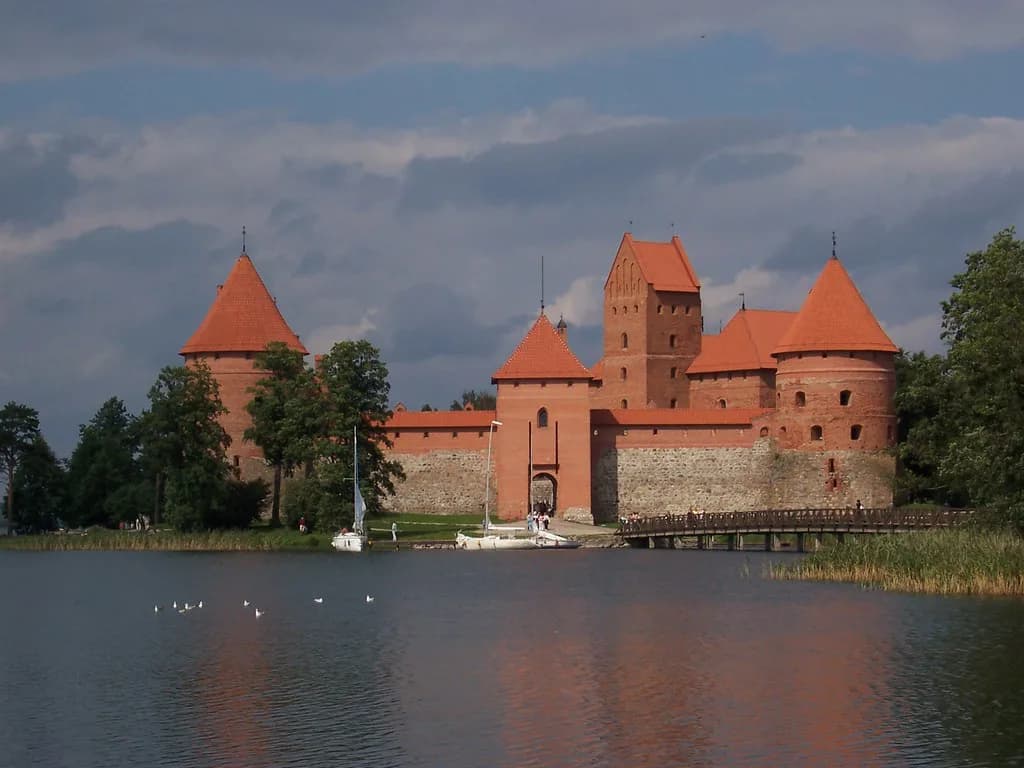
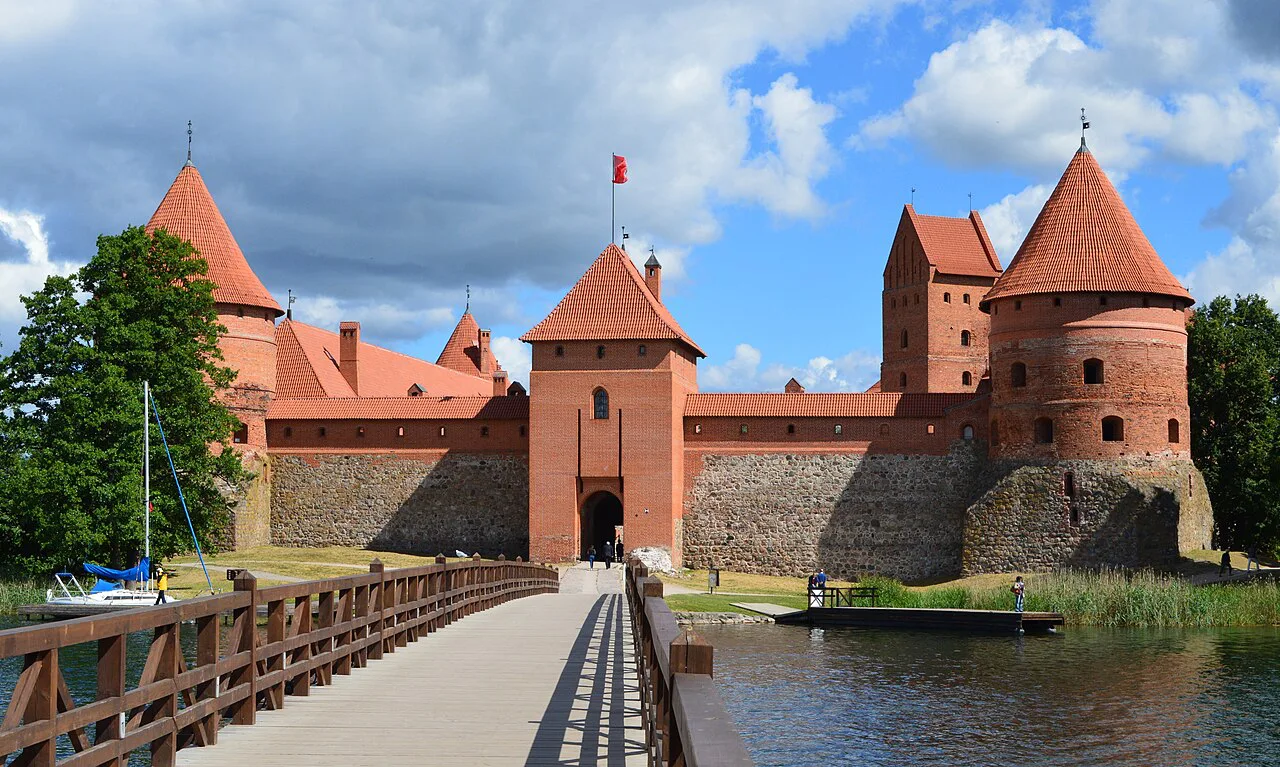
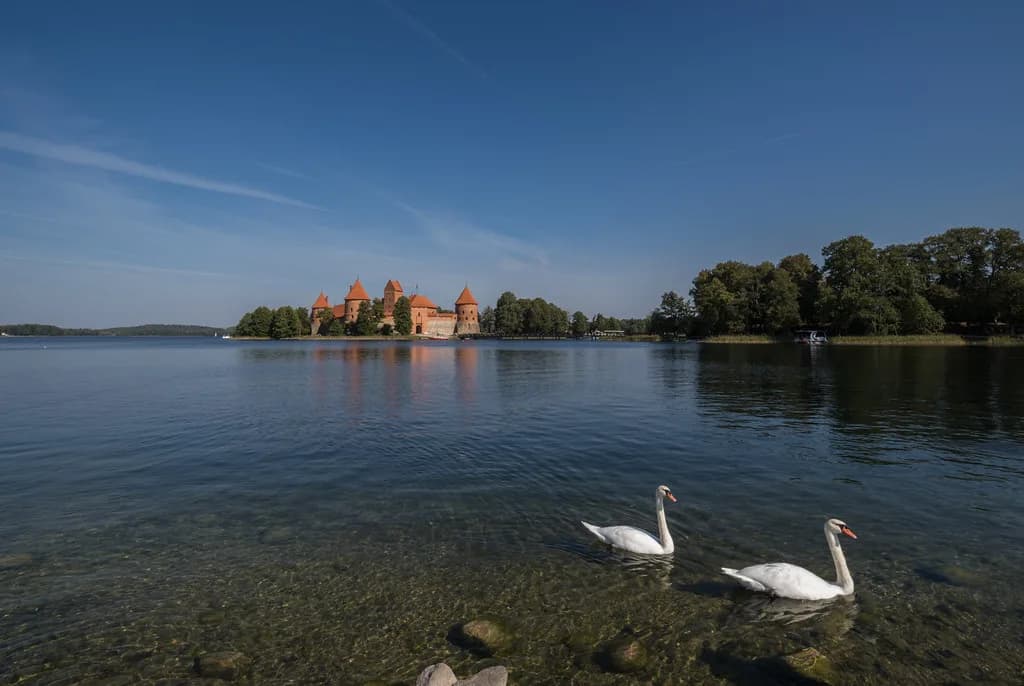
Trakai Island Castle sits on an island in Lake Galve, 28 kilometres from Vilnius, and is the most recognisable image in Lithuanian tourism. Built in the 14th and 15th centuries as a residence of Grand Duke Vytautas the Great, it was fully restored in the 20th century and connects to the shore by two wooden footbridges. The result is a castle that looks exactly as a castle should, with no scrambling over ruins.
The town beyond the castle justifies more than a photo stop. Trakai is home to the Karaites, a small Turkic ethno-religious community brought here in the 14th century, whose wooden houses line Karaitų Street and whose kibinai pastries are found almost nowhere else in Europe. Buses and trains from Vilnius cover the trip in roughly 45 minutes to an hour, which makes this the easiest day out from the capital.
Kaunas and interwar modernism
Kaunas was Lithuania's provisional capital from 1920 to 1939 while Vilnius was under Polish administration, and it used that period to build one of Europe's most intact collections of modernist and Art Deco architecture. Laisvės Alėja, a 1.6-kilometre pedestrian boulevard, is the spine of it, lined with interwar buildings under steady restoration. The city also has a large student population, which keeps the centre livelier than its size suggests.
Two museums justify a full day rather than a half. The Ninth Fort Museum, just outside the city, commemorates the roughly 50,000 Jews killed there between 1941 and 1944, and the Devil's Museum holds over 3,000 devil-themed objects from around the world, an eccentric counterweight to the morning's seriousness. Kaunas is well connected by bus and train to Vilnius, so it works as a day trip, but an overnight gives the museums room.
The Curonian Spit and Nida
The Curonian Spit is the single strongest argument for adding the coast to a Lithuania trip. A 98-kilometre sliver of land between the lagoon and the Baltic, it is never more than four kilometres wide and holds Europe's highest moving dunes, with the Parnidis Dune just outside Nida. UNESCO listed it in 2000 for both the landscape and the centuries of human effort needed to stabilise sand that had threatened to bury settlements.
Base yourself in Nida, four kilometres from the Russian border, and give the spit two nights if you can. The Thomas Mann House, where the Nobel laureate spent three summers in the 1930s, is a museum, and the cycle path toward Juodkrantė is a full day of forest, water and sand. Book guesthouses well ahead for July and August, when Lithuanian summer visitors fill the peninsula.
Hill of Crosses and Šiauliai
The Hill of Crosses, 12 kilometres north of Šiauliai, is one of the most singular pilgrimage sites in the Catholic world: a low hill covered so densely in crosses that it reads as a single structure. The tradition began in the 19th century, and Soviet authorities bulldozed the site three times, each time rebuilding overnight as an act of national resistance. Pope John Paul II visited in 1993, and pilgrims still add crosses daily.
Logistically it fits neatly between the capital and the coast, since it sits roughly halfway along the main A1 road linking Vilnius with Klaipeda. Coming by public transport means a train or bus to Šiauliai, then a local bus and a walk of about two kilometres to the site. It is a stop of an hour or two rather than a destination, so build it into a driving day rather than a dedicated trip.
Soviet history: Grutas Park, Paneriai and the Ninth Fort
Grutas Park, near Druskininkai, gathers Soviet-era statues and monuments removed after independence into an open-air collection, with loudspeakers that make the experience deliberately uncomfortable. It is a strange, thought-provoking stop rather than a fun one, and the easiest way to reach it is a Druskininkai-bound bus from Vilnius with a short walk from the highway.
Paneriai, ten minutes by train from Vilnius plus a kilometre walk into the forest, is the most accessible of the memorial sites and the heaviest. The museum there documents the murders in graphic detail, and its opening days vary through the year, so the memorial grounds rather than the building should anchor your plan. Combine it with a Vilnius afternoon rather than treating it as a separate excursion.
Nature beyond the coast: Aukštaitija and Dzukija
Lithuania is roughly a third forested, one of the highest proportions in the EU, and its two main national parks show what that means in practice. Aukštaitija in the northeast protects more than 100 lakes linked by rivers and forest trails, with kayaking routes from a half-day to five days. Dzukija in the south is gentler: mushroom and berry country, traditional villages, and some of the most intact pre-Soviet vernacular culture in the country.
Both parks reward a car and a tolerance for low infrastructure. Kayak and bicycle hire is available locally, but guided options for international visitors are limited, so plan routes before you arrive rather than improvising at the park gate. One park, not both, is the realistic choice on a week-long trip.
Drawbacks: cold winters, thin rural transport, heavy memorials
The winters are the clearest drawback. From November to March temperatures can fall below -15°C (5°F) with heavy snow, which rules out the coast, the dunes and most cycling, and pushes the trip indoors to museums and city streets. Spring and autumn are unpredictable rather than bad, so travelers fixed to a cold-weather window should plan a city break rather than a national tour.
Public transport between smaller towns is limited, and a hire car significantly expands what you can reach; without one, the Curonian Spit, the national parks and Grutas Park all become awkward. The memorial sites also carry an emotional cost that itinerary planning tends to ignore. Stacking Paneriai, the Ninth Fort and Grutas Park into two days is technically possible and practically exhausting.
How many days you need
Three days covers Vilnius properly, with one of them spent at Trakai. Five days adds Kaunas and either the Hill of Crosses on the drive west or a slower morning at Paneriai. A full week is where Lithuania starts to make sense as a country rather than a city break: Vilnius, Kaunas, the Hill of Crosses and two nights on the Curonian Spit fit without rushing.
Ten to fourteen days lets you add the national parks without cutting anything, which is the version most travelers would choose if time allowed. The trade-off is straightforward: a compact two-city trip of Vilnius plus Kaunas gives depth and comfort, while a coast-focused trip built around the spit gives landscape and space at the cost of longer transfers. Vilnius to the coast is under four hours by car.
When to go: month-by-month conditions
May through September is the practical window for a first visit, with the warmest weather and everything open. July and August are the busiest weeks on the coast and in Nida, so book guesthouses early; late May and early June give you the same green landscape with fewer people. The shoulder weeks are the best value of the year for city travel.
December brings Christmas markets and a dark, atmospheric capital, while January and February deliver the snowy landscape some travelers come for, along with the risk of disrupted transport. The Baltic coast in winter is bleak rather than photogenic, and the spit's cycle paths are out of use. If your trip depends on the dunes, do not gamble on an off-season visit.
Typical costs and value
Lithuania is one of the better-value destinations in the EU, with food, accommodation and transport costing clearly less than in Western Europe. Mid-range double rooms in Vilnius average roughly 60 to 100 euros per night, and prices drop outside the capital and outside July and August. The euro keeps budgeting simple for anyone arriving from the eurozone.
Guided cycling holidays in the Baltics run into the high hundreds of euros for a week or more, so independent travel is where the savings are. Beyond accommodation, the main variable costs are a hire car and fuel if you leave the cities, and museum tickets that stay modest by Western European standards. Check current fares and entry prices with the rail and bus operators and individual museums themselves, since they change with the season.
Getting there and getting around
Vilnius Airport is the main gateway, served by Ryanair, Wizz Air, LOT and Lufthansa from hubs across the UK, Germany, the Netherlands and Scandinavia. Kaunas Airport handles additional budget traffic and sits about 1.5 hours from Vilnius by bus. Overland, Riga and Tallinn are within four to five hours by bus or car, which makes a three-country Baltic circuit genuinely practical.
Inside the country, buses are the reliable option for intercity travel, with Lux Express and Eurolines connecting the main cities frequently, and trains slower but more scenic. For the spit, the parks and Grutas Park, a hire car is the difference between a comfortable trip and a logistical puzzle. Driving is straightforward on the main roads, and the country's compact size keeps daily distances short.
Lithuania vs Latvia and Estonia: which Baltic state fits your trip
Estonia offers the most photogenic single old town in Tallinn and a digital-city sheen, Latvia splits the difference with Riga's grand architecture and Gauja National Park, and Lithuania brings the strongest combination of capital, coast and difficult history. Lithuania is also the cheapest of the three for most travelers and the least crowded outside midsummer. For a one-country trip built on variety, it is the strongest pick.
Choose Estonia if you want one beautiful city and a short trip; choose Latvia if Riga's food and architecture scene is the draw and you want a compact capital break; choose Lithuania if you have seven days and want cities, dunes and memorials in one loop. Travelers with ten days or more should consider all three, since the bus connections between the capitals are short and frequent, and it is worth reading whether Estonia is worth visiting before committing to the northern leg.
Plan Your Visit
Lithuania is worth visiting for the combination rather than any single sight: a Baroque capital that rewards three days, a dune coast that feels like nowhere else in the Baltics, and memorial sites handled with the seriousness they deserve. The country is affordable, English-friendly in the cities and compact enough to cover properly in a week, as long as you accept that a car or careful bus planning is part of the deal.
Go between May and September for the full range of places, and consider late May or early June if you want the coast without the August rush. For official entry requirements, check your own government's travel page for Lithuania once before booking. Everything else, from Trakai to the Parnidis Dune, is a matter of building a route that respects the distances.
Explore more Lithuania trip-decision guides
- Best Places to Visit in Lithuania
- Is Lithuania Expensive? What a Trip Really Costs
- Lithuania in April
- Lithuania in August
- Lithuania in July
- Lithuania in June
- Lithuania in May
- Lithuania in October
- Lithuania in September
- Lithuania Plug Type
- Renting a Car in Lithuania
- The Best Time to Visit Lithuania
- Do They Speak English in Lithuania? What to Expect as a Traveler
- Getting Around Lithuania
- Kaunas vs Vilnius
- Lithuania Itinerary
- Lithuania Travel Tips
- Money in Lithuania
- The Best Cities in Lithuania, Ranked by What You Actually Want
- Tipping in Lithuania
Frequently Asked Questions
Is Lithuania worth visiting?
Yes. Lithuania combines a UNESCO-listed Baroque old town in Vilnius, the dune landscape of the Curonian Spit and a set of Holocaust and Soviet memorial sites that few European countries concentrate so densely. It is also quieter and cheaper than Prague or Krakow, which makes it a strong choice for a week-long trip. The main condition is that rural transport is thin, so plan around a car or accept a city-focused itinerary.
Is Lithuania expensive for travelers?
It is one of the better-value destinations in the European Union, with food, transport and accommodation generally below Western European levels. Mid-range double rooms in Vilnius sit in a moderate bracket, and prices fall outside the capital and outside July and August. A hire car is the main added cost if you want to reach the coast and national parks independently.
How many days do you need in Lithuania?
Three days covers Vilnius and Trakai comfortably. Five days adds Kaunas and the Hill of Crosses, and seven days lets you include two nights on the Curonian Spit without rushing. Ten to fourteen days is the version that also fits Aukštaitija or Dzukija National Park.
Is Vilnius walkable?
Yes. The Old Town takes 20 to 30 minutes to cross on foot, and the Cathedral, Gediminas Tower, Uzupis and the main museums all sit within easy walking distance. Vilnius works well as a base for day trips to Trakai and Paneriai rather than a city that needs public transport.
Do you need a car to see Lithuania?
Not for Vilnius, Kaunas, Trakai or the Hill of Crosses, which are reachable by bus and train. A car becomes close to essential for the Curonian Spit at your own pace, the national parks and Grutas Park, where rural connections are sparse and slow.
Is the Curonian Spit worth the trip?
Yes. The 98-kilometre peninsula holds Europe's highest moving dunes, a dedicated coastal cycle path and the resort town of Nida with the Thomas Mann House. Give it two nights rather than a day trip, and book guesthouses early for July and August when Lithuanian visitors fill the peninsula.
When is the best time to visit Lithuania?
May through September is the practical window, with the warmest weather and everything open. Late May and early June give green landscapes with fewer visitors than midsummer. Winter is cold enough to close off the coast and the dunes for most travelers.
Should you visit Lithuania or Latvia and Estonia?
Pick Lithuania for variety across a week: capital, coast and memorial sites in one loop, at the lowest prices of the three. Pick Estonia for a short trip centred on Tallinn, and Latvia for a Riga-focused break with Gauja National Park nearby. With ten days or more, all three combine easily by bus.
Sources
Trip-decision notes
Optional updates when we publish or revise a destination verdict.
You might also like
Continue reading
More guides you'll find useful